
1. INTRODUCTION
Agriculture faces a persistent threat from frequent pest and disease outbreaks, accounting for up to 40% of annual crop losses, adversely affecting farmer livelihood [1]. Farmers extensively use the chemical pesticides which affect non-target organisms including beneficial insects, birds, fish, and soil microorganisms that are vital for healthy ecosystems [2,3]. Beyond environmental damage, pesticides pose considerable risk to human health through food residues, skin contact, and inhalation [4,5].
Growing concerns regarding environmental protection and food safety have spurred interest in regulating microbiomes using organic formulations harboring beneficial microbes [6]. During the course of evolution, microorganisms adapted to inhabit higher organism developing symbiotic associations ranging from beneficial to harmful. The term plant microbiome refers to the native microbial community which dynamically interacts with the plant host, influencing plant health by improving nutrient uptake, boosting stress resilience, and strengthening defenses against pathogens [Figure 1]. The application of bioinoculants and biostimulants has emerged as an effective strategy to enhance crop productivity [7]. Sufficient literature is available on the effects of beneficial microorganisms on plant health, yet limited research is there on their effect on native microbial communities [8].
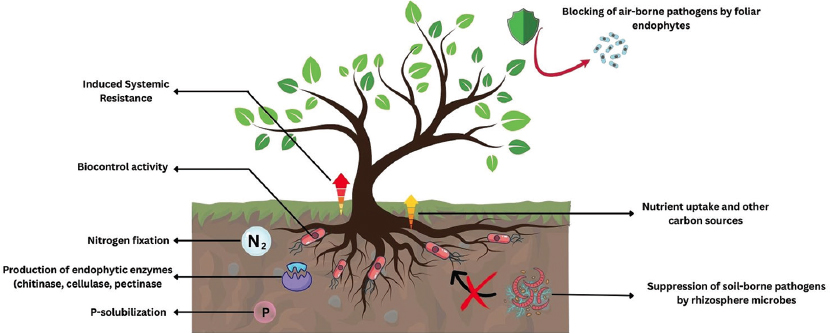 | Figure 1: Function and impact of plant-microbiome on the host plant (Source: Made by authors). [Click here to view] |
Mutual interactions between plants and microbes foster a harmonious micro-ecological environment [9]. Endophytic microbes bridge below and above-ground microbiomes, drawing specific microbes from the rhizosphere and phyllosphere into plant tissues [10].
Interest in agricultural microbiomes is rising because of their capacity to enable sustainable and eco-conscious crop management [11]. This review consolidates the current literature on microbial communities inhabiting plant tissues and surfaces. It explores microbiomes’ role in plant health and disease control and the emerging potential and challenges of integrating them into contemporary farming.
2. MICROBIAL HABITATS ON AND IN PLANTS
A large number of microorganisms colonize the inner and outer surfaces of the plant. The organization of different microbial communities varies across plant tissues [12]. The microbes living in the rhizosphere, endosphere, and phyllosphere are key to maintaining plant health and suppressing pathogens [13]. Microbiomes act as an extended layer of defense in the plant system [14,15]. There are a number of factors affecting plant microbiomes including environmental and metabolic activities of the plant [16]. Metabolites secreted from the plant roots aid in attracting beneficial microbes or deterring harmful ones, influencing pathogen invasion [17-19].
2.1. Rhizosphere: The Root Microbiome
The soil region adjacent to plant roots is referred to as the rhizosphere. This confined zone hosts bacteria, fungi, archaea, and other microorganisms that participate in nutrient cycling, enhance mineral uptake, and provide protection against pathogens [20]. Root-zone microorganisms are majorly influenced by root exudates such as sugars, amino acids, organic acids, enzymes, and secondary metabolites [21]. Apart from the physiological functions, root exudates signal the microbes of its root zone. These signals affect the microbial community in the rhizosphere by either attracting beneficial microbes or deterring harmful ones [22]. This plant-microbe signaling is bidirectional and the rhizospheric communication is classified into three major types: microbe-to-microbe, plant-to-microbe, and microbe-to-plant signaling [23].
Certain rhizosphere microbes release compounds that inhibit weed growth and soil-borne pathogens without harming crops [24]. Studying the rhizosphere microbiome helps in understanding their nature and developing sustainable alternatives to chemical pesticides. Rhizosphere microbes enhance nutrient availability by converting organic and inorganic compounds into forms usable by plants, thereby improving growth, yield, and quality [25].
The rhizospheric biocontrol agents suppress the plant pathogens by various mechanisms, namely antibiosis, competition for nutrients and space, mycoparasitism, and siderophore-mediated competition for iron acquisition [26]. Trichoderma species are proved to act as biocontrol agents as well as bio stimulants [26].
The rhizosphere sustains a complex microbial consortium that contributes to the overall well-being of the plant. Rhizosphere-derived microbial metabolites are emerging as key regulators of plant growth, development, and resilience to environmental stresses. This diverse group of metabolites, such as phytohormones, VOCs, antibiotics, siderophores, and exopolysaccharides, differentially influences the plant performance and the local rhizosphere environment. Phytohormones including auxins (IAA), gibberellic acid (GA), abscisic acid (ABA), and cytokinin (CK), directly influence root development, nutrient acquisition, and plant responses to stress [44]. Bacillus velezensis GB03, a plant growth-promoting rhizobacterium from wheat fields, enhances growth through auxin biosynthesis and volatile compounds like 2,3-butanediol, and its resilience as endospores has enabled its use in commercial biostimulants [45]. Many studies have demonstrated that diazotroph inoculation boosts plant growth, often as a result of nitrogen (N2) supplied by the bacteria [46].
Likewise, antibiotics and VOCs help in defending the pathogenic organisms and environmental stressors [47]. Siderophores make the iron available by acting as iron-chelating compounds [48]. Exopolysaccharides contribute to improved soil aggregation and moisture retention, supporting plant growth under drought conditions [49].
Plant growth-promoting rhizobacteria group is also one such example which is involved in plant growth promotion and protection [26]. The rhizosphere stands out among plant-associated microbiomes as a dynamic hub of microbial activity which helps in overall development of the plant and provides protection against disease-causing pathogens [Table 1].
Table 1: Rhizospheric biocontrol agents.
| S. No. | Host | Rhizospheric biocontrol agent | Pathogen controlled | Mechanism of action | References |
|---|---|---|---|---|---|
| 1. | Tomato | B. subtilis SL44, Enterobacter hormaechei Wu15 | Colletotrichum gloeosporioides | Production of VOCs and mycolytic enzyme activity (chitinase, β-1,3-glucanase, cellulase) causing fungal cell wall damage and disrupts ergosterol-dependent membrane integrity | [27] |
| 2. | Tomato | P. fluorescens Pf1 | F. oxysporum, Sclerotium rolfsii | Production of DAPG antibiotic, siderophore, HCN, and other metabolites collectively inhibit fungal mycelial growth | [28] |
| 3. | Tomato | Chitinophaga, Bacteroidetes, Sphingobacterium, Actinobacteria | R. solanacearum | Production of hydrolytic enzymes, nutrient competition, ISR induction, and quorum-sensing disruption | [29] |
| 4. | Tomato | Leifsonia aquatica | R. solanacearum | Production of antimicrobial metabolite, antibiotics, nutrient/space competition, with protective biofilms blocking pathogen colonization | [29] |
| 5. | Cucumber | B. subtilis 1JN2 | F. oxysporum f. spp. cucumerinum | Production of mycolytic enzymes (chitinase, glucanase), antibiotics that suppress the pathogen by degrading hyphae and competing for nutrients | [30] |
| 6. | Cucumber | Paenibacillus polymyxa J2-4 | Meloidogyne incognita | VOCs with contact and fumigant nematicidal effects, including “honeytrap” attraction, followed by killing and repellent action against invading nematodes | [31] |
| 7. | Lettuce | Pseudomonas jessenii RU47 | Rhizoctonia solani | Antibiosis through DAPG and phenazine production; siderophore-mediated iron competition; enzymatic lysis of fungal cell walls; PISR | [32] |
| 8. | Potato | Bacillus velezensis Y6 | Streptomyces scabies | Lipopeptide antibiotics (fengycin, bacillomycin), antimicrobial VOCs, rhizosphere niche competition, and induction of plant defense responses | [33] |
| 9. | Kiwifruit | Paenibacillus polymyxa YLC1 | P. syringae pv. actinidiae | Antibiotic biosynthesis, siderophore production limiting iron availability to pathogen; HCN production, quorum sensing disruption, and enzymatic degradation of virulence factors | [34] |
| 10. | White clover | Bacillus cereus B1, P. fluorescens P2 | Heterodera trifolii | Nutrient and niche competition, along with ISR through SA/JA/ET signaling and direct antibacterial antagonism | [35] |
| 11. | Thale cress | B. subtilis | P. syringae | Antagonistic VOCs, biofilm-mediated exclusion, iron competition, and activation of plant defense genes | [36] |
| 12. | Grape | Bacillus velezensis | B. cinerea | Antimicrobial lipopeptides (fengycin, bacillomycin) that compete with pathogens and can trigger SAR in the host plant | [37] |
| 13. | Agarwood | Glomus fasciculatum | Pythium aphanidermatum | Mycoparasitism with hyphal coiling and CWDEs (chitinase, β-1,3-glucanase), antibiotic metabolites, and competition for carbon and nitrogen | [38] |
| 14. | Wheat | B. subtilis | F. oxysporum, B. cinerea | Mycolytic enzymes (chitinase, cellulase, β-1,3-glucanase), siderophore-based iron chelation, VOCs, and nutrient competition suppress fungal growth | [39] |
| 15. | Wheat | P. fluorescens | F. oxysporum | 2,4DAPG, phenazines, pyrrolnitrin, siderophores, HCN, and lytic enzymes jointly damage fungal cells and block their growth | [39] |
| 16. | Maize | Trichoderma atroviride | Spodoptera frugiperda | Produces insecticidal metabolites, digestive enzymes, parasitizes fungal pathogens, and releases toxins causing larval death | [40] |
| 17. | Rice | Bacillus atrophaeus, Bacillus cabrialesii | Xanthomonas oryzae | Produces antibiotics, antimicrobial enzymes, and volatiles, suppresses pathogen genes, and outcompetes pathogens for iron | [41] |
| 18. | Cannabis | Paenibacillus mobilis, Paenibacillus polymyxa | Alternaria, Aspergillus, Fusarium, Penicillium spp. | VOCs, bacteriocins/peptides, and lytic enzymes that attack fungi, compete for space, and stimulate plant defenses | [42] |
| 19. | Cannabis | Bacillus spp., Paenibacillus spp. | F. oxysporum, B. cinerea | Lipopeptide antibiotics (fengycin, bacillomycin), enzyme-based mycoparasitism, nutrient and niche competition, and biofilm-mediated secondary metabolite antibiosis | [43] |
HCN: Hydrogen cyanide, PISR: Pseudomonas-induced systemic resistance, VOCs: Volatile organic compounds, B. cinerea: Botrytis cinerea, B. subtilis: Bacillus subtilis, F. oxysporum: Fusarium oxysporum, P. fluorescens: Pseudomonas fluorescens, P. syringae: Pseudomonas syringae, R. solanacearum: Ralstonia solanacearum, SA: Salicylic acid, JA: Jasmonic acid, ET: Ethylene.
2.2. The Endosphere: Microbial Life Inside Plant Tissues
Some microorganisms penetrate into the plants and reside in the tissues forming the endospheric microbiome. These endophytic microbes employ different strategies to penetrate and colonize plant tissues [39]. The series of events involved in successful colonization are attachment, entry, motility, transmission, and multiplication within the host plant [43]. The microbes produce hydrolytic enzymes such as pectinase, xylanases, cellulase, and proteinase to help penetrate the plant tissues [50]. Colonization of the endosphere by beneficial microorganisms is highly rewarding to sustainable agricultural production but also brings to the fore unique challenges. Endophytes and pathogens also follow the same methodology of entry and therefore induce competition that motivates plants to develop mechanisms for selective microbial penetration [51].
Endophytes engage with plants in ways that extend from mutual benefit to minor pathogenic influence [52]. Plants supply carbohydrates, essential for endophyte growth, while endophytes provide metabolites that help plants tolerate stresses like drought and salinity [53]. Recent metabolic profiling of endophytes has revealed a rich array of secondary metabolites such as flavonoids, alkaloids, carotenoids, terpenoids, phenolics, and peptides, with antimicrobial, anticancer, and pesticidal properties [54]. Endophytes are well known to produce VOCs themselves and stimulate VOC production in plants through the jasmonic acid (JA) pathway [55].
Endophytic fungi belonging to the phylum Ascomycota are recognized for synthesizing a wide range of bioactive compounds that enhance plant growth [56] and strengthen tolerance to environmental stresses [Figure 2]. The fungal genera Fusarium and Trichoderma synthesize secondary metabolites that help plants develop resistance to pathogenic infections [57,58]. These fungi expand their hyphal networks into the soil, enhancing the plant’s absorption of key nutrients such as phosphorus and N2 [50].
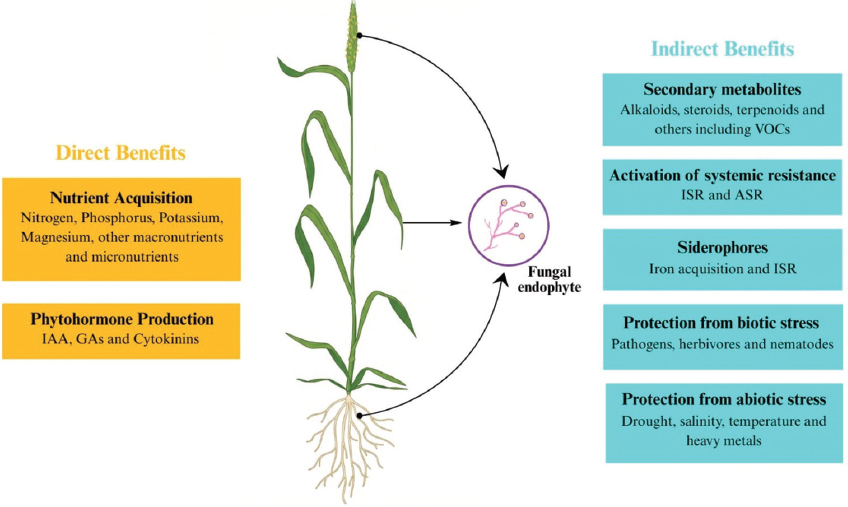 | Figure 2: Benefits of endophytic colonization by fungi (Source: Made by authors). [Click here to view] |
Most dominant endophytic bacteria belong to the proteobacteria, firmicutes, and Actinobacteria phyla, and dominant genera include Bacillus, Pseudomonas, and Burkholderia [59]. Endophytic bacteria have been proven to improve plant growth, suppress the growth of pathogens [Table 2] and enhance stress tolerance [60]. Two endophytic isolates, i.e., Staphylococcus warneri and Bacillus velezensis from Gnetum gnemon successfully controlled the bacterial wilt disease [61]. The growth of Phytophthora parasitica was inhibited by over 80% due to volatiles produced by Pseudomonas taiwanensis [62].
Table 2: Endospheric biocontrol agents.
| S. No. | Host | Endospheric biocontrol agent | Pathogen controlled | Mechanism of action | References |
|---|---|---|---|---|---|
| 1. | Tomato | Bacillus pseudomycoides HP3d, Bacillus velezensis A6, Paenibacillus polymyxa PGSS1 | A. solani | Production of siderophore, HCN, and VOCs. | [63] |
| 2. | Tomato | B. subtilis | Botrytis cinerea, Colletotrichum gloeosporioides | Hydrolytic enzyme secretion (chitinase, b-1,3-glucanase, proteases) | [64] |
| 3. | Tomato | B. subtilis A9 | P. infestans | ISR, enhanced plant defense-related enzyme activity | [65] |
| 4. | Tomato | F. oxysporum EF119 | P. infestans | Mycoparasitism, Induction of systemic plant resistance | [66] |
| 5. | Tomato | Enterobacter cloacae | A. solani | ISR, Enhanced plant defense-related enzyme activity | [67] |
| 6. | Cucumber | Pseudomonas spp. IALR1619 | P. ultimum | Plant growth promotion, ISR | [68] |
| 7. | Lettuce | Pseudomonas spp. IALR1619 | P. ultimum, Pythium dissotocum | Stress mitigation under pathogen pressure, Plant growth-promoting activity | [68] |
| 8. | Potato | Pseudomonas putida P9 | Pythium spp., R. solani | ISR, Mycoparasitism | [69] |
| 9. | Rice | Streptomyces spp. | Sclerospora graminicola | Competition for nutrients and root niches, ISR | [64] |
| 10. | Rice | Trichoderma harzianum | Magnaporthe grisea | Mycoparasitism, Antibiosis through secondary metabolites | [70] |
| 11. | Passion fruit | B. subtilis | Nigrospora sphaerica | Hydrolytic enzyme secretion (chitinase, b-1,3-glucanase), Plant growth promotion | [64] |
| 12. | Kiwi | Fusarium tricinctum | Pseudomonas syringae pv. actinidiae | Antibiosis through metabolite production, cell membrane, and wall disruption | [64] |
| 13. | Banana | P. indica | F. oxysporum f. spp. cubense tropical race 4 | ISR, Enhanced plant defense enzyme activity | [66] |
| 14. | Cacao | Gliocladium catenulatum | Moniliophthora perniciosa | Mycoparasitism, antibiotic production | [66] |
| 15. | Barley | P. indica | Blumeria graminis, Fusarium spp. | ISR, mycoparasitism | [66] |
| 16. | Wheat | P. indica | Fusarium spp. | Enhanced nutrient assimilation | [66] |
| 17. | Wheat | Streptomyces spp. | R. solani | Production of VOCs | [71] |
| 18. | Wheat | Rhodotorula glutinis | Mycotoxigenic fungi | Yeast-mediated mycotoxin control, microbiome level protection | [72] |
| 19. | Soybean | Trichoderma spp. | Macrophomina phaseolina | Competition for nutrients and space, plant growth promotion | [73] |
HCN: Hydrogen cyanide, ISR: Induced systemic resistance, VOCs: Volatile organic compounds, A. solani: Alternaria solani, B. subtilis: Bacillus subtilis, F. oxysporum: Fusarium oxysporum, R. solani: Rhizoctonia solani, P. indica: Piriformospora indica, P. ultimum: Pythium ultimum, P. infestans: Phytophthora infestans.
Endophytes enhance plant growth through nutrient solubilization, N2 fixation, phytohormone production, and control through biocontrol mechanisms [39,50]. The bacterial endophytes, Pseudomonas spp., Enterobacter spp., and Acinetobacter spp., boost phosphate solubilization by synthesizing growth hormones such as IAA, GA, and CK in plants [74]. Endophytes promote plant growth primarily by producing or stimulating phytohormones, a key mechanism responsible for physiological and structural adaptations in plants [75]. Endophytes influence both the phyllosphere and rhizosphere microbiomes, fostering a more favorable microbial environment for the host plant. The bacterial endophytes, Pseudomonas fluorescens is known to fix atmospheric N2, solubilize phosphate, and produce siderophores for tolerating stress in eggplant [76]. The filamentous hyphae of arbuscular mycorrhizal fungi colonize both the internal and external root surfaces, facilitating improved absorption of water and nutrients [77].
2.3. Phyllosphere: The Above-Ground Surface Microbiome
The phyllosphere of the plant means the aerial or above-ground surfaces of plant. It hosts diverse microbial communities including bacteria, fungi, viruses, and other microorganisms [78], essential for plant growth [79] and protecting plants from harmful pathogens [Table 3]. Phyllospheric biocontrol agents protect plants through direct mechanisms, such as antibiosis, production of reactive oxygen species (ROS), and cell wall-degrading enzymes for mycoparasitism and indirect mechanisms, including induced resistance and growth promotion through effectors and elicitors [80]. Host genotype and phenotype shape the microbial communities of the phyllosphere [81]. In addition to the genotype, the developmental stage and age of the plant modulate phyllospheric microbial communities through the secretion of specific hormones and bioactive compounds [82]. Disruptions in the phyllosphere microbiota, from pathogen, stress, or agricultural practices, can cause dysbiosis, adversely affecting plant health and key ecological functions such as carbon and oxygen cycling [83].
Table 3: Phyllospheric biocontrol agents.
| S. No. | Host | Phyllospheric biocontrol agent | Pathogen controlled | Mode of action | Reference |
|---|---|---|---|---|---|
| 1. | Tomato | Rhizobium spp. b1, B. subtilis b2 | P. syringae pv. tomato, Alternaria solani | Production of protease and cellulase, Induction of SA, JA, ET pathways | [85] |
| 2. | Tomato | Enterobacter cloacae TR1, Bacillus spp. | B. cinerea | Production of volatile compounds and antibiotics | [86] |
| 3. | Tomato | Bacillus amyloliquefaciens | B. cinerea | Biofilm formation and competition | [87] |
| 4. | Rice | Panicle microbes | Ustilaginoidea virens | Modulation of BCAA metabolism, competition | [88] |
| 5. | Rice | Aspergillus cvjetkovicii | Magnaporthe oryzae | Production of antimicrobial compounds and competition | [89] |
| 6. | Rice | Actinomycetes | Pyricularia oryzae | Production of antibiotics and secondary metabolite synthesis | [90] |
| 7. | Tobacco | Stenotrophomonas, Achromobacter, Enterobacter | P. syringae pv. tabaci | Barrier formation and competition | [91] |
| 8. | Tobacco | Bacillus velezensis SYL-3 | Alternaria alternata, tobacco mosaic virus | Production of lipopeptides, ISR | [92] |
| 9. | Chinese cabbage | Brevibacillus brevis | B. cinerea | Lipopeptide antibiotics, Antibiosis | [93] |
| 10. | Chinese cabbage | B. subtilis PMB102 | Alternaria brassicicola ABA-31 | Production of antifungal metabolites | [94] |
| 11. | Maize | B. subtilis DZSY21 | Bipolaris maydis | Production of lipopeptides, ISR | [95] |
| 12. | Wheat | Pseudomonas piscium | Fusarium graminearum | Secretion of phenazine-1-carboxamide | [96] |
| 13. | Lemon | Pseudomonas protegens CS1 | Xanthomonas citri subspp. citri | Siderophore production, iron sequestration, and oxidative stress induction | [97] |
| 14. | Potato | Microbacterium testaceum | Pectobacterium carotovorum | Disruption of quorum sensing | [98] |
| 15. | Thale cress | Albugo laibachii | Moesziomyces bullatus ex Albugo | Secretion of enzymes that inhibit the growth of oomycetes | [99] |
| 16. | Thale cress | Paenibacillus polymyxa | P. syringae | SA and JA-mediated defense pathways | [100] |
| 17. | Thale cress | Sphingomonas spp. | P. syringae | Competition for nutrition | [101] |
| 18. | Apple | Pseudomonas orientalis | Erwinia amylovora | Antibiosis | [102] |
BCAA: Branched chain amino acid, ISR: Induced systemic resistance, B. cinerea: Botrytis cinerea, B. subtilis: Bacillus subtilis, P. syringae: Pseudomonas syringae, SA: Salicylic acid, JA: Jasmonic acid, ET: Ethylene.
Manipulating phyllosphere microbial communities by applying beneficial microbes or their metabolites onto plant leaves can suppress foliar pathogens, occupy ecological niches, and enhance plant resistance to disease and environmental stress [11]. Reduction in foliar diseases in tomatoes and cucumber has been reported due to strategic modulation of the phyllosphere through bacterial antagonists [84].
To explore the inherent microbial resilience, it is essential to design phyllosphere-modulating syncoms. The development which follows a top-down approach, involving simplification of natural microbial communities to understand interactions, or a bottom-up framework that integrates selected beneficial microbiota for predefined objectives. These techniques produce more precise outcomes if combined with artificial intelligence (AI) [103]. As compared to the other two microbiomes, very limited studies are conducted on the phyllosphere microbiome, underscoring the imperative for additional research for better crop productivity [104].
3. ROOT-TO-SHOOT CONNECTIONS: MICROBIAL NETWORKS IN CROP PROTECTION
The co-evolution of plants and microorganisms led to the intricate networks, coordinating recognition, signaling, and physiological responses within the plant system [105]. Such plant-microbe interactions function in multiple hormone-based regulatory processes, especially JA-based signaling, where crosstalk confers both specificity and robustness of plant immunity to multiple pathogens [106]. Microbial bioagents utilize multiple processes such as production of volatile compounds having antimicrobial properties and engage in signaling interactions even without direct pathogen contact [107].
The plant holobiont refers to an integrated set of physically disconnected plant compartments that communicate with each other through communication networks of molecules and metabolic processes that modulate both plant-microbe and microbe-microbe associations during plant development [108]. Elucidation of such communication systems yields promising biotechnologies suitable for sustainable agriculture. Systemic resistance processes allow plants to acquire broad-spectrum protection against pathogens through communication with plant defense-inducing microorganisms.
Activation of plant defenses in a systemic manner results in long-term, broad-spectrum protection and constitutes a safe substitute to the application of fungicides, especially against economically important pathogens such as B. cinerea [109]. There exist two main routes: Systemic acquired resistance, which targets salicylic acid (SA)-based signaling, and induced systemic resistance (ISR), which was originally linked to JA and ethylene (ET) signaling processes [110]. However, it is assumed that SA and JA/ET signaling processes may both participate in ISR, and in such processes, small RNAs have important regulatory functions [111].
Biocontrol organisms including Trichoderma and Pseudomonas species induce plant growth and boost nutrient uptake [110]. Biocontrol agents of the phyllosphere, including Sphingomonas and Methylobacterium, redesign microbial communities and induce plant defense systems through multiple hormone signaling networks including ABA, ET, JA, and SA [112]. In addition, rhizobia contain the potential to induce ISR-like reactions other than the capability to fix N2 and thus boost the health of plants through the mechanism of systemic resistance [113]. Such beneficial microorganisms are elicitors that trigger plant defensive strategies through different mechanisms, including the secretion of enzymes, the biosynthesis of antimicrobial molecules, and the induction of resistance [114].
The signaling mechanism comprises intricate interactions among molecules, wherein microorganisms produce a set of chemical cues, i.e., N-acyl homoserine lactones, phytohormones, and bioactive molecules but plants respond by synthesizing carbon substrates, carbon-derived signals, and secondary metabolites [115]. Recent innovations depict combined strategies including entomopathogenic fungi and mycoparasitic fungi that attack both insect vectors and fungal symbionts in a single shot, such as in ambrosia beetle control [116]. Such eco-intelligent strategies minimize diseases such as bacterial wilt, fire blight, and crown gall while boosting native microbiomes [117].
4. MICROBIOME-MEDIATED MECHANISMS OF PATHOGEN SUPPRESSION
The plant microbiome confers protection against pathogens through both direct and indirect strategies [Figure 3]. Direct suppression occurs through the production of antimicrobial compounds and competition for nutrients and ecological niches, whereas indirect suppression is achieved by stimulating and modulating the plant immune system [16].
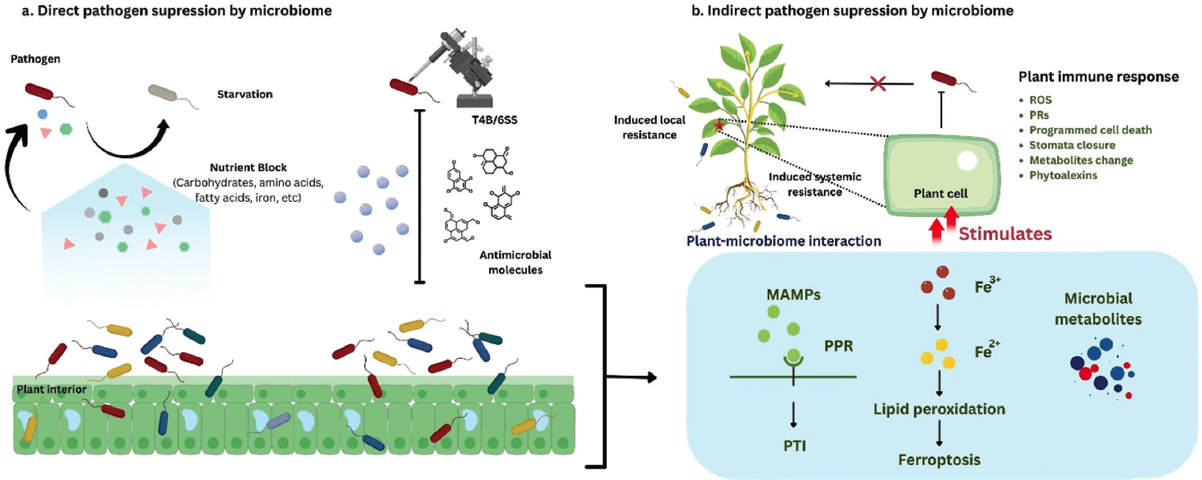 | Figure 3: Mechanism for pathogen suppression by microbiomes (Source: Made by authors). [Click here to view] |
4.1. Direct Pathogen Suppression by Microbiome
Disease-suppressive soils host diverse microbial communities that act as sources of novel antibiotic compounds. Numerous antimicrobial metabolites produced by antagonistic microorganisms isolated from such soils have been identified and characterized. Sulfur-containing VOCs released by Paraburkholderia graminis PHS1 [118], along with VOCs such as methyl 2-methyl pentanoate and 1,3,5-trichloro-2-methoxybenzene produced by Streptomyces spp. [119], have been shown to inhibit Rhizoctonia solani. Similarly, the thiopeptide conprimycin synthesized by strain S4-7 effectively suppressed Fusarium oxysporum [120]. Antimicrobial compounds have also been discovered in microbial isolates obtained from healthy plants. For instance, Bacillus amyloliquefaciens OR2-30 produces iturins that inhibit the growth of Fusarium graminearum [121]. Pseudomonas putida IsoF confers protection to tomato plants against R. solanacearum by employing a type IVB secretion system (T4BSS) to deliver toxic effectors that inhibit the pathogen [122].
Corallococcus spp. EGB produces thiaminase, which reduces the virulence of Phytophthora sojae by degrading thiamine, a compound required for its growth and pathogenicity [123]. Aspergillus cvjetkovicii secretes 2,4-di-tert-butylphenol that scavenges intracellular ROS, leading to the suppression of bZIP-activated AMT1 transcription in R. solani [124]. Pantoea agglomerans ZJU23 produces herbicolin A, which has antifungal activity against both plant and human pathogens, by directly binding to and disrupting ergosterol-containing lipid rafts [125].
Microbiomes suppress pathogens by limiting nutrient availability, with higher microbial diversity strengthening this competitive effect [126]. Iron plays a central role in microbe-pathogen competition, with its uptake being crucial for commensal Pseudomonas to protect against pathogenic strains [127]. Pseudomonas brassicacearum R401 secretes pyoverdine, a siderophore, which inhibits R. solanacearum by restricting the pathogen’s access to iron [128].
4.2. Indirect Pathogen Suppression by Microbiome
Plant-associated microbiomes can stimulate the plant’s immune system, leading to the suppression of pathogens. In particular, native soil microbial communities’ prime plants into a heightened state of defense. To protect itself from the pathogens, plants recruit microbes rather than directly attacking the pathogens [129,130].
The microbiome members are also capable of activating pattern-triggered immunity (PTI) in plants [131]. Activation of PTI through EFR, which recognizes bacterial elongation factor Tu, is essential for B. velezensis FZB42 to confer resistance against R. solani. By priming lateral root development and ROS signaling, FZB42 indirectly promotes bacterial auxin production, resulting in increased plant resistance to R. solani. Auxin mitigated protection against ROS stress in FZB42, enhances root colonization, facilitating the suppression of fungal infection [132].
Colonization of roots by the ISR-inducing bacteria P. fluorescens PTA-CT2 and Bacillus subtilis PTA-271 stimulated camalexin accumulation in leaves, enhancing plant defense against B. cinerea and Pto DC3000 [133]. Stomata act as a passive entry point for pathogens during infection [134], and microbes that induce ISR can block pathogen invasion by triggering stomatal closure. Bacillus species have been shown to prevent pathogen-induced reopening of stomata by regulating the ABA and SA signaling pathways [135]. Microbe-induced ferroptosis can activate plant immune responses. Recent research demonstrated that moderate ferroptosis triggered by the rice endophyte S. hygroscopicus OsiSh-2 is essential for its colonization, and it also primes plant defenses against rice blast disease [136].
5. ROLE OF SYNTHETIC MICROBIAL COMMUNITIES IN CROP HEALTH
Synthetic microbial communities (SynComs) assemble compatible microbial taxa with complementary functional traits that can generate modular consortia with emergent properties to deliver desired outcomes. Engineering synComs helps reveal microbial community structure, function, and environmental factors shaping their development [137]. The steps involved in designing SynComs include finding the origin of microorganisms, selecting the required microbes, and refining the microbial interactions by engineering synergistic microbial networks. SynComs can directly boost plant growth or through reinforcing rhizosphere community functions. For instance, the manipulation of bacterial strain Enterobacter cloacae resulted in a reduction of blight-inciting pathogen (Fusarium verticillioides) in maize [138]. SynComs derived from indigenous endophytes have shown better performance than others [139]. With the tools like NGS, it has become very convenient to identify beneficial crop microbiome [140]. Incorporation of SynComs derived from sugarcane microbiome gave reduced yield loss and improved drought tolerance in maize [141]. Seed application of SynCom resulted in improved germination, plant height, and yield in cotton [142]. Inoculation with SynCom resulted in 36% increase in soybean yield [143]. SynComs provide functional backup, leading to greater stability unlike single strains [144].
6. CHALLENGES AND FUTURE PROSPECTS
Understanding of the intricate associations within diverse microbiomes is difficult because of their complex nature [145]. As these microbiomes are highly influenced by abiotic factors and the host species, they are associated with affecting their efficacy [146]. The incorporation of microbiome research in practical life demands proper strategies [147]. The functional scope of microbial communities often outpaces current sequencing methods, hindering accurate prediction of their behavior in natural settings [148]. Several ethical and regulatory challenges still persist regarding the emerging genetically modified microorganisms. There is a great need to understand the concept of microbial synergy within the plant microbiome. This could help in the production of tailored microbial consortia optimized for particular crops. The combination of microbiome advancements along with genomics and AI may improve predictive model accuracy [43]. Future studies must focus on the interaction between the beneficial microbiomes and the plant immune system and how to make use of these interactions to enhance crop health.
7. CONCLUSION
There are a number of biotic and abiotic stresses substantially affecting the crop yields and threatening the food security. Therefore, it is required to look up for strategies that are efficient as well as sustainable. Exploitation of the potential plant microbiomes is one such strategy. Mindful use of microorganisms associated with plants has the potential of replacing chemicals as these can suppress pathogens, boost nutrient uptake, and improve tolerance to environmental stresses, thus promoting agricultural sustainability. This review talks about the role of microbial communities in regulating plant health through multiple direct and indirect mechanisms. Insights into plant microbiome can be leveraged to understand climate change impacts, addressing agro-economic challenges, and food security. SynComs support the agricultural production by improving plant health and elucidating the functional complexity of phytomicrobiome communities. However, there are certain challenges in transferring in-vitro findings to in-vivo conditions due to variation in climate and host-microbiome compatibility. Therefore, it is essential to evaluate microbiome-based approaches under diverse environmental settings and supported by robust experimental validation and interdisciplinary research efforts.
8. AUTHORS’ CONTRIBUTIONS
All authors made substantial contributions to conception and design, acquisition of data, or analysis and interpretation of data; took part in drafting the article or revising it critically for important intellectual content; agreed to submit to the current journal; gave final approval of the version to be published; and agreed to be accountable for all aspects of the work. All the authors are eligible to be an author as per the International Committee of Medical Journal Editors (ICMJE) requirements/guidelines.
9. FUNDING
The authors declare that no funds, grants, or other support were received during the preparation of this manuscript.
10. CONFLICTS OF INTEREST
The authors report no financial or any other conflicts of interest in this work.
11. ETHICAL APPROVALS
This study does not involve experiments on animals or human subjects.
12. DATA AVAILABILITY
Data is available with the authors and shall be provided upon request.
13. PUBLISHER’S NOTE
All claims expressed in this article are solely those of the authors and do not necessarily represent those of the publisher, the editors and the reviewers. This journal remains neutral with regard to jurisdictional claims in published institutional affiliation.
14. USE OF ARTIFICIAL INTELLIGENCE (AI)-ASSISTED TECHNOLOGY
The authors declare that they have not used artificial intelligence (AI)-tools for writing and editing of the manuscript, and no images were manipulated using AI.
REFERENCES
1. FAO. The State of Food and Agriculture 2020. Overcoming water challenges in agriculture. Rome:FAO;2020. [CrossRef]
2. Oguh CE, Okunowo OW, Musa AD, Osuji CA. Toxicity impact of chemical pesticide (synthetic) on ecosystem a critical review. East Afr Sch J Agric Life Sci. 2020;3(2):23-36. [CrossRef]
3. Steiner M, Falquet L, Fragnière AL, Brown A, Bacher S. Effects of pesticides on soil bacterial, fungal and protist communities, soil functions and grape quality in vineyards. Ecol Solut Evid. 2024;5(2):e12327. [CrossRef]
4. Rani L, Thapa K, Kanojia N, Sharma N, Singh S, Grewal AS, et al. An extensive review on the consequences of chemical pesticides on human health and environment. J Clean Prod. 2020;283:124657. [CrossRef]
5. Zhou W, Li M, Achal V. A comprehensive review on environmental and human health impacts of chemical pesticide usage. Emerg Contam. 2025;11:100410. https://doi.org/10.1016/j.emcon.2024.100410 [CrossRef]
6. Harsonowati W, Narisawa K. Emerging the elusive symbiotic function of dark septate endophyte Cladophialophora chaetospira SK51 in Strawberry, a perennial SD plant:New attempt for flowering and fruiting behavior. AIP Conf Proc. 2024;3055:040021. [CrossRef]
7. Valente IL, Wancura JHC, Zabot GL, Mazutti MA. Endophytic and rhizospheric microorganisms:An alternative for sustainable, organic, and regenerative bioinput formulations for modern agriculture. Microorganisms. 2025;13(4):813. [CrossRef]
8. Gao G, Yin D, Chen S, Xia F, Yang J, Li Q, et al. Effect of biocontrol agent Pseudomonas fluorescens 2P24 on soil fungal community in cucumber rhizosphere using T-RFLP and DGGE. PLoS One. 2012;7:e31806. [CrossRef]
9. Tiwari P, Kang S, Bae H. Plant-endophyte associations:Rich yet under-explored sources of novel bioactive molecules and applications. Microbiol Res. 2023;266:127241. [CrossRef]
10. Santoyo G. How plants recruit their microbiome?New insights into beneficial interactions. J Adv Res. 2022;40:45-58. [CrossRef]
11. Yewste T. The role of microbiomes in plant health and disease management. Front Environ Microbiol. 2025;11(2):26-35. [CrossRef]
12. Bernard J, Wall CB, Costantini M, Rollins RL, Atkins ML, Cabrera FP, et al. Plant part and a steep environmental gradient predict plant microbial composition in a tropical watershed. ISME J. 2021;15:999-1009. [CrossRef]
13. Kumari N, Chaudhary S, Dhiman S, Shukla PK, Gundappa. Biological management of horticultural crop diseases using phyllosphere-, rhizosphere-, and endosphere-derived biocontrol agents. In:Innovative Approaches in Diagnosis and Management of Crop Diseases. Boca Raton:CRC Press;2021. [CrossRef]
14. Pereira LB, Thomazella DPT, Teixeira PJPL. Plant-microbiome crosstalk and disease development. Curr Opin Plant Biol. 2023;72:102351. [CrossRef]
15. Vannier N, Agler M, Hacquard S. Microbiota-mediated disease resistance in plants. PLoS Pathog. 2019;15:e1007740. [CrossRef]
16. Du Y, Han X, Tsuda K. Microbiome-mediated plant disease resistance:Recent advances and future directions. J Gen Plant Pathol. 2025;91:1-17. [CrossRef]
17. Russ D, Fitzpatrick CR, Teixeira PJPL, Dangl JL. Deep discovery informs difficult deployment in plant microbiome science. Cell. 2023;186:4496-513. [CrossRef]
18. Sasse J, Martinoia E, Northen T. Feed your friends:Do plant exudates shape the root microbiome?Trends Plant Sci. 2018;23:25-41. [CrossRef]
19. Trivedi P, Leach JE, Tringe SG, Sa, T, Singh, BK. Plant-microbiome interactions:From community assembly to plant health. Nat Rev Microbiol. 2020;18:607-21. [CrossRef]
20. Tharanath AC, Upendra RS, Rajendra K. Soil symphony:A comprehensive overview of plant-microbe interactions in agricultural systems. Appl Microbiol. 2024;4(2):567-89. [CrossRef]
21. Yu A. Rhizosphere dynamics unraveling the complex interactions beneath the soil. Int Res J Plant Sci. 2024;15(1):1-2.
22. Rizaludin MS, Stopnisek N, Raaijmakers JM, Garbeva P. The chemistry of stress:Understanding the 'cry for help'of plant roots. Metabolites. 2021;11(6):357. [CrossRef]
23. Wankhade A, Wilkinson E, Britt DW, Kaundal A. A review of plant-microbe interactions in the rhizosphere and the role of root exudates in microbiome engineering. Appl Sci. 2025;15(13):7127. [CrossRef]
24. Dahiya A, Chahar K, Sindhu SS. The rhizosphere microbiome and biological control of weeds:A review. Span J Agric Res. 2019;17(4):e15073. https://doi.org/10.5424/sjar/2019174-15073 [CrossRef]
25. Thepbandit W, Athinuwat D. Rhizosphere microorganisms supply availability of soil nutrients and induce plant defense. Microorganisms. 2024;12(3):558. [CrossRef]
26. Sood M, Kapoor D, Kumar V, Sheteiwy MS, Ramakrishnan M, Landi M, et al. Trichoderma:The “secrets”of a multitalented biocontrol agent. Plants. 2020;9(6):762. [CrossRef]
27. Wang J, Deng Z, Gao X, Long J, Wang Y, Wang W, et al. Combined control of plant diseases by Bacillus subtilis SL44 and Enterobacter hormaechei Wu15. Sci Total Environ. 2024;934:173297. [CrossRef]
28. Manikandan R, Saravanakumar D, Rajendran L, Raguchander T, Samiyappan R. Standardization of liquid formulation of Pseudomonas fluorescens Pf1 for its efficacy against Fusarium wilt of tomato. Biol Control. 2010;54(2):83-9. [CrossRef]
29. Yin J, Wu B, Bai J, Zhang W, Chen Y, Wang Q, et al. Heritability of tomato rhizobacteria resistant to Ralstonia solanacearum. Microbiome. 2022;10:243. [CrossRef]
30. Yang F, Wang X, Jiang H, Yao Q, Liang S, Chen W, et al. Mechanism of a novel Bacillus subtilis JNF2 in suppressing Fusarium oxysporum f. sp. cucumerium and enhancing cucumber growth. Front Microbiol. 2024;15:1459906. [CrossRef]
31. Shi Q, Fu Q, Zhang J, Hao G, Liang C, Duan F, Ma J, et al. Paenibacillus polymyxa J2-4 induces cucumber to enrich rhizospheric Pseudomonas and contributes to Meloidogyne incognita management under field conditions. Pest Manage Sci. 2025;81(1):266-76. [CrossRef]
32. Schreiter S, Babin D, Smalla K, Grosch R. Rhizosphere competence and biocontrol effect of Pseudomonas sp. RU47 independent from plant species and soil type at the field scale. Front Microbiol. 2018;9:97. [CrossRef]
33. Tao H, Wang S, Li X, Li X, Cai J, Zhao L, et al. Biological control of potato common scab and growth promotion of potato by Bacillus velezensis Y6. Front Microbiol. 2023;14:1295107. [CrossRef]
34. Wang H, Wang N, Tan Y, Mi Q, Mao Y, Zhao C, et al. Paenibacillus polymyxa YLC1:A promising antagonistic strain for biocontrol of Pseudomonas syringae pv. actinidiae, causing kiwifruit bacterial canker. Pest Manag Sci. 2023;79(11):4357-66. [CrossRef]
35. Kempster V, Davies K, Scott E. Chemical and biological induction of resistance to the clover cyst nematode (Heterodera trifolii) in white clover (Trifolium repens). Nematology. 2001;3(1):35-43. [CrossRef]
36. Korves TM, Bergelson J. A developmental response to pathogen infection in Arabidopsis thaliana. Plant Physiol. 2003;133(1):339-47. [CrossRef]
37. Xiao L, Wang JT, Cao DF, Li H, Fang HY, Qu TL, et al. Biocontrol potential and antifungal mechanism of a novel Bacillus velezensis NH-13-5 against Botrytis cinerea causing postharvest gray mold in table grapes. Postharvest Biol Technol. 2025;229:113710. [CrossRef]
38. Tabin T, Arunachalam A, Shrivastava K, Arunachalam K. Effect of arbuscular mycorrhizal fungi on damping-off disease in Aquilaria agallocha roxb. seedlings. Trop Ecol. 2020;50:243-8.
39. Dubey A, Malla MA, Kumar A, Dayanandan S, Khan ML. Plants endophytes:Unveiling hidden agenda for bioprospecting toward sustainable agriculture. Crit Rev Biotechnol. 2020;40:1210-31. [CrossRef]
40. Contreras-Cornejo HA, Macías-Rodríguez L, Del-Val E, Larsen J. The root endophytic fungus Trichoderma atroviride induces foliar herbivory resistance in maize plants. Appl Soil Ecol. 2018;124:45-53. [CrossRef]
41. Rajer FU, Samma MK, Ali Q, Rajar WA, Wu H, Raza W, et al. Bacillus spp.-mediated growth promotion of rice seedlings and suppression of bacterial blight disease under greenhouse conditions. Pathogens. 2022;11(11):1251. [CrossRef]
42. Dumigan CR, Deyholos MK. Soil and seed both influence bacterial diversity in the microbiome of the Cannabis sativa seedling endosphere. Front Plant Sci. 2024;15:1326294. [CrossRef]
43. Kumar A, Droby S, Singh VK, Singh SK, White JF. Entry, colonization, and distribution of endophytic microorganisms in plants. In:Microbial Endophytes. Amsterdam:Elsevier;2020. 1-33. [CrossRef]
44. Ledger T, Rojas S, Timmermann T, Pinedo I, Poupin MJ, Garrido T, et al. Volatile-mediated effects predominate in Paraburkholderia phytofirmans growth promotion and salt stress tolerance of Arabidopsis thaliana. Front Microbiol. 2016;7:1838. [CrossRef]
45. Jang S, Choi SK, Zhang H, Zhang S, Ryu CM, Kloepper JW. History of a model plant growth-promoting rhizobacterium, Bacillus velezensis GB03:From isolation to commercialization. Front Plant Sci. 2023;14:1279896. [CrossRef]
46. Giller KE, James EK, Ardley J, Unkovich MJ. Science losing its way:Examples from the realm of microbial N?-fixation in cereals and other non-legumes. Plant Soil. 2025;511(1-2):1-24. [CrossRef]
47. Ghanem GAM, Gebily DAS, Ragab MM, Ali AM, Soliman NE, Abd El-Moity TH. Efficacy of antifungal substances of three Streptomyces spp. against different plant pathogenic fungi. Egypt J Biol Pest Control. 2022;32:122. [CrossRef]
48. Lee YH, Jang SJ, Han JH, Bae JS, Shin H, Park HJ, et al. Enhanced tolerance of Chinese cabbage seedlings mediated by Bacillus aryabhattai H26-2 and Bacillus siamensis H30-3 against high temperature stress and fungal infections. Plant Pathol J. 2018;34(6):555-66. [CrossRef]
49. Sher Y, Baker NR, Herman D, Fossum C, Hale L, Zhang X, et al. Microbial extracellular polysaccharide production and aggregate stability controlled by switchgrass (Panicum virgatum) root biomass and soil water potential. Soil Biol Biochem. 2020;143:107742. [CrossRef]
50. Rana KL, Kour D, Kaur T, Devi R, Yadav A, Yadav NR, et al. Endophytic microbes:Biodiversity, plant growth-promoting mechanisms and potential applications for agricultural sustainability. Antonie Van Leeuwenhoek. 2020;113:1075-107. [CrossRef]
51. Priyanka C, Pratibha V, Aradhana M. Bio avengers:How do endophytic microorganisms alter a plant's defense mechanisms?J Plant Sci Phytopathol. 2024;8(1):1-6. [CrossRef]
52. Watts D, Palombo EA, Jaimes Castillo A, Zaferanloo B. Endophytes in agriculture:Potential to improve yields and tolerances of agricultural crops. Microorganisms. 2023;11:1276. [CrossRef]
53. Deshmukh S, Verekar S, Bhave S. Endophytic fungi:A reservoir of antibacterials. Front Microbiol. 2015;5:715. [CrossRef]
54. Caruso DJ, Palombo EA, Moulton SE, Zaferanloo B. Exploring the promise of endophytic fungi: A review of novel antimicrobial compounds. Microorganisms. 2022;10(10):1990. [CrossRef]
55. Choudhary N, Dhingra N, Gacem A, Yadav VK, Verma RK, Choudhary M, et al. Towards further understanding the applications of endophytes:Enriched source of bioactive compounds and biofactories for nanoparticles. Front Plant Sci. 2023;14:1193573. [CrossRef]
56. Afrouz M, Sayyed RZ, Fazeli-Nasab B, Piri R, Almalki WH, Fitriatin BN. Seed bio-priming with beneficial Trichoderma harzianum alleviates cold stress in maize. PeerJ. 2023;11:e15644. [CrossRef]
57. Praveen V, Sudha A, Amala SA, Ramjegathesh R, Kavitha S, Perveen K, et al. Harnessing Trichoderma asperellum:Tri-trophic interactions for enhanced black gram growth and root rot resilience. J Basic Microbiol. 2025;65(3):e2400569. [CrossRef]
58. Sharma S, Kumari P, Shandilya M, Thakur S, Perveen K, Sheikh I, et al. The combination of a-Fe?O?NP and Trichoderma sp. Improves antifungal activity against Fusarium wilt. J Basic Microbiol. 2025;65(3):e2400613. [CrossRef]
59. Goodwin PH. The endosphere microbiome of ginseng. Plants. 2022;11(3):415. [CrossRef]
60. Adeleke BS, Babalola OO. The endosphere microbial communities, a great promise in agriculture. Int Microbiol. 2020;24(1):1-12. [CrossRef]
61. Agarwal H, Dowarah B, Baruah PM, Bordoloi KS, Krishnatreya DB, Agarwala N. Endophytes from Gnetum gnemon L. can protect seedlings against the infection of phytopathogenic bacterium Ralstonia solanacearum as well as promote plant growth in tomato. Microbiol Res. 2020;238:126503. [CrossRef]
62. Iqrar I, Shinwari ZK, Ashraf, Ali GS. Exploration of microbiome of medicinally important plants as biocontrol agents against Phytophthora parasitica. Arch Microbiol. 2021;203:2475-89. https://doi.org/10.1007/s00203-021-02237-2 [CrossRef]
63. Kukreti A, Siddabasappa CB, Krishnareddy PM, Devanna P, Subbanna YB, Channappa M, et al. Comparative study of endophytic bacterial strains from non-host crops for enhancing plant growth and managing early blight in tomato. Front Microbiol. 2024;15:1487653. [CrossRef]
64. Chen X, Liu Y, Wang Z. Biocontrol screening of endophytes:Applications and mechanisms in sustainable agriculture. Front Microbiol. 2023;14:1160551.
65. Zhang Y, Li H, Wang S. Genome characterization of endophytic Bacillus subtilis A9 controlling Phytophthora infestans. Phytopathol Res. 2024;6:12.
66. Silva R, Santos A, Almeida T. Endophytic Fusarium oxysporum EF119 induces systemic resistance against late blight in tomato. Crop Prot. 2021;145:105599.
67. Wang F, Zhou G, Xu H. Exploring the mechanisms of endophytic bacteria for suppressing early blight disease in tomato (Solanum lycopersicum L.). Front Plant Sci. 2023;14:1184343. [CrossRef]
68. Amaradasa BS, Mei C, He Y, Chretien RL, Doss M, Durham T, et al. Biocontrol potential of endophytic Pseudomonas strain IALR1619 against two Pythium species in cucumber and hydroponic lettuce. PLoS One. 2024;19(2):e0298514. [CrossRef]
69. Johnson I, Sreenayana B, Suruthi VP, Manikandan R, Ramjegathesh R, Karthikeyan M. Rhizosphere population dynamics and biocontrol potential of Pseudomonas fluorescens Pf1 against wilt and collar rot pathogens in tomato. Pharma Innov J. 2022;11(5):1042-51.
70. Singh P, Sharma R, Pandey A. Trichoderma harzianum endophytic colonization confers rice blast resistance. Biol Control. 2023;167:104836.
71. Brown JP, Wilson MA, Garcia LS. Biocontrol potential of endophytic Streptomyces species against soil-borne pathogens. Microb Ecol. 2022;84(3):678-89.
72. Solanki MK, Abdelfattah A, Sadhasivam S, Zakin V, Wisniewski M, Droby S, et al. Analysis of stored wheat grain-associated microbiota reveals biocontrol activity among microorganisms against mycotoxigenic fungi. J Fungi (Basel). 2021;7(9):781. [CrossRef]
73. Larran S, Simón MR, Santamarina MP, Caselles JR, Consolo VF, PerellóA. Endophytic Trichoderma strains increase soya bean growth and promote charcoal rot control. J Saudi Soc Agric Sci. 2023;22(7):395-406. [CrossRef]
74. Ameen M, Mahmood A, Sahkoor A, Zia MA, Ullah MS. The role of endophytes to combat abiotic stress in plants. Plant Stress. 2024;12:100435. [CrossRef]
75. Tariq A, Tanvir A, Barasarathi J, Alsohim AS, Nazir A. Endophytes:Key role players for sustainable agriculture:Mechanisms, Omics insights and future prospects. Plant Growth Regul. 2025;105:1969-90. [CrossRef]
76. Gupta C, Prakash D, Bakar MFA, Kitdamrongtham W. Omic route to utilize endophytes and their functional potentials in plant growth advancement. In:Chhabra S, Prasad R, Maddela NR, Tuteja N, editors. Plant Microbiome for Plant Productivity and Sustainable Agriculture. Berlin:Springer Nature;2023. 289-311. [CrossRef]
77. Qin X, Xu J, An X, Yang J, Wang Y, Dou M, et al. Insights into endophytic fungi promoting the growth and development of woody plants. Crit Rev Biotechnol. 2023;44:78-99. [CrossRef]
78. Sivakumar N, Sathishkumar R, Selvakumar G, Shyamkumar R, Arjunekumar K. Phyllospheric microbiomes:Diversity, ecological significance, and biotechnological applications. In:Plant Microbiomes for Sustainable Agriculture. Cham:Springer International Publishing;2020. 113-72. [CrossRef]
79. Sohrabi R, Paasch BC, Liber JA, He SY. Phyllosphere microbiome. Annu Rev Plant Biol. 2023;74(1):539-68. [CrossRef]
80. Srivastava DA, Harris R, Breuer G, Levy M. Secretion-based modes of action of biocontrol agents with a focus on Pseudozyma aphidis. Plants (Basel). 2021;10(2):210. [CrossRef]
81. Wagner MR, Lundberg DS, Del Rio TG, Tringe SG, Dangl JL, Mitchell-Olds T. Host genotype and age shape the leaf and root microbiomes of a wild perennial plant. Nat Commun. 2016;7:12151. [CrossRef]
82. Li H, Liu X, Chen Y. Paenibacillus triticisoli enhances wheat growth and soil fertility through nitrogen fixation and phosphate solubilization. Appl Soil Ecol. 2021;159:103845.
83. Thoms D, Liang Y, Haney CH. Maintaining symbiotic homeostasis:How do plants engage with beneficial microorganisms while at the same time restricting pathogens?Mol Plant Microbe Interact. 2021;34(5):462-9. [CrossRef]
84. Bonito G, Reynolds HL, Bever JD. Manipulating plant microbiomes for sustainable agricultural systems. Trends Microbiol. 2022;30(2):128-40.
85. Shao Z, Schenk PM, Dart P. Phyllosphere bacterial strains Rhizobium b1 and Bacillus subtilis b2 control tomato leaf diseases caused by Pseudomonas syringae pv. tomato and Alternaria solani. J Appl Microbiol. 2023;134(7):lxad139. [CrossRef]
86. Ritpitakphong U, Falquet L, Vimoltust A, Berger A, Métraux J, L'Haridon F. The microbiome of the leaf surface of Arabidopsis protects against a fungal pathogen. New Phytol. 2016;210(3):1033-43. [CrossRef]
87. Salvatierra-Martinez R, Arancibia W, Araya M, Aguilera S, Olalde V, Bravo J, et al. Colonization ability as an indicator of enhanced biocontrol capacity-an example using two Bacillus amyloliquefaciens strains and Botrytis cinerea infection of tomatoes. J Phytopathol. 2018;166(9):601-12. [CrossRef]
88. Liu H, Jiang J, An M, Li B, Xie Y, Xu C, et al. Panicle-associated microbes induce systemic resistance against false smut in rice. Nat Microbiol. 2023;8(8):1419-33. [CrossRef]
89. Fan X, Matsumoto H, Wang Y, Hu Y, Liu Y, Fang H, et al. Microenvironmental interplay predominated by beneficial Aspergillus abates fungal pathogen incidence in paddy environment. Environ Sci Technol. 2019;53(22):13042-52. [CrossRef]
90. Harsonowati W, Astuti RI, Wahyudi AT. Leaf blast disease reduction by rice-phyllosphere actinomycetes producing bioactive compounds. J Gen Plant Pathol. 2017;83(2):98-108. [CrossRef]
91. Qin C, Tao J, Liu T, Liu Y, Xiao N, Li T, et al. Responses of phyllosphere microbiota and plant health to application of two different biocontrol agents. AMB Express. 2019;9(1):42. [CrossRef]
92. Liu H, Jiang J, An M, Li B, Xie Y, Xu C, et al. Combined phyllosphere inoculation of Bacillus velezensis SYL-3 suppresses Alternaria alternata and tobacco mosaic virus by modulating microbial communities. Front Microbiol. 2022;13:840318. [CrossRef]
93. Legein M, Smets W, Vandenheuvel D, Eberl L, Lebeer S. Modes of action of microbial biocontrol in the phyllosphere. Front Microbiol. 2020;11:1619. [CrossRef]
94. Wu JJ, Chou HP, Huang JW, Deng WL. Genomic and biochemical characterization of antifungal compounds produced by Bacillus subtilis PMB102 against Alternaria brassicicola. Microbiol Res. 2021;251:126815. [CrossRef]
95. Ding T, Su B, Chen X, Xie S, Gu S, Wang Q, Huang D, Jiang H. An endophytic bacterial strain isolated from Eucommia ulmoides inhibits Southern corn leaf blight. Front Microbiol. 2017;8:903. [CrossRef]
96. Chen Y, Wang J, Yang N, Wen Z, Sun X, Chai Y, et al. Wheat microbiome bacteria can reduce virulence of a plant pathogenic fungus by altering histone acetylation. Nat Commun. 2018;9(1):3429. [CrossRef]
97. Michavila G, Adler C, De Gregorio PR, Lami MJ, Di Santo MC, Zenoff AM, et al. Pseudomonas protegens CS1 from the lemon phyllosphere as a candidate for citrus canker biocontrol agent. Plant Biol. 2017;19(4):608-17. [CrossRef]
98. Morohoshi T, Someya N, Ikeda T. Novel n-acylhomoserine lactone-degrading bacteria isolated from the leaf surface of Solanum tuberosum and their quorum-quenching properties. Biosci Biotechnol Biochem. 2009;73(9):2124-7. [CrossRef]
99. Eitzen K, Sengupta P, Kroll S, Kemen E, Doehlemann G. A fungal member of the Arabidopsis thaliana phyllosphere antagonizes Albugo laibachii via a GH25 lysozyme. eLife. 2021;10:e65306. [CrossRef]
100. Hong CE, Kwon SY, Park JM. Biocontrol activity of Paenibacillus polymyxa AC-1 against Pseudomonas syringae and its interaction with Arabidopsis thaliana. Microbiol Res. 2016;185:13-21. [CrossRef]
101. Innerebner G, Knief C, Vorholt JA. Protection of Arabidopsis thaliana against leaf-pathogenic Pseudomonas syringae by Sphingomonas strains in a controlled model system. Appl Environ Microbiol. 2011;77(10):3202-10. [CrossRef]
102. Kron AS, Zengerer V, Bieri M, Dreyfuss V, Sostizzo T, Schmid M, et al. Pseudomonas orientalis F9 pyoverdine, safracin, and phenazine mutants remain effective antagonists against Erwinia amylovora in apple flowers. Appl Environ Microbiol. 2020;86(8):1-12. [CrossRef]
103. Sarver E, González-Morelo KJ, Christensen KG, Lefevers HM, Corbin KR. Phyllosphere synthetic microbial communities:A new frontier in plant protection. BMC Plant Biol. 2025;25(1):949. [CrossRef]
104. De Mandal S, Jeon J. Phyllosphere microbiome in plant health and disease. Plants. 2023;12(19):3481. [CrossRef]
105. Tadrosova M, Uhlik O, Suman J. What goes underground comes around:The molecular basis of crosstalk between plants and soil microorganisms. Phytochem Rev. 2025;24:1971-1987. [CrossRef]
106. Aerts N, Pereira Mendes M, Van Wees SC. Multiple levels of crosstalk in hormone networks regulating plant defense. Plant J. 2021;105(2):489-504. [CrossRef]
107. Tilocca B, Cao A, Migheli Q. Scent of a killer:Microbial volatilome and its role in the biological control of plant pathogens. Front Microbiol. 2020;11:41. [CrossRef]
108. Berlanga-Clavero MV, Molina-Santiago C, De Vicente A, Romero D. More than words:The chemistry behind the interactions in the plant holobiont. Environ Microbiol. 2020;22(12):5187-200. [CrossRef]
109. Poveda J, Barquero M, González-Andrés F. Insight into the microbiological control strategies against Botrytis cinerea using systemic plant resistance activation. Agronomy. 2020;10(11):1822. [CrossRef]
110. Niwas R, Gupta RN, Rani N. Systemic resistance:Plant responses to interaction with fungal bio-control agents. J Eco Friendly Agric. 2022;17(1):1-12. [CrossRef]
111. Yu Y, Gui Y, Li Z, Jiang C, Guo J, Niu D. Induced systemic resistance for improving plant immunity by beneficial microbes. Plants. 2022;11(3):386. [CrossRef]
112. Yang Z, Liu T, Fan J, Chen Y, Wu S, Li J, et al. Biocontrol agents modulate phyllosphere microbiota interactions against pathogen Pseudomonas syringae. Environ Sci Ecotechnol. 2024;21:100437. [CrossRef]
113. Tonelli ML, Figueredo MS, Rodríguez J, Fabra AI, Ibanez FJ. Induced systemic resistance-like responses elicited by rhizobia. Plant Soil. 2020;448:1-14. [CrossRef]
114. Zehra A, Raytekar NA, Meena MK, Swapnil P. Efficiency of microbial bio-agents as elicitors in plant defense mechanism under biotic stress:A review. Curr Res Microb Sci. 2021;2:100054. [CrossRef]
115. Bisht N, Singh T, Ansari MM, Chauhan PS. The hidden language of plant-beneficial microbes:Chemo-signaling dynamics in plant microenvironments. World J Microbiol Biotechnol. 2025;41(2):35. [CrossRef]
116. Reverchon F, Contreras-Ramos SM, Eskalen A, Guerrero-Analco JA, Quiñones-Aguilar EE, Rios-Velasco C, Velázquez-Fernández JB. Microbial biocontrol strategies for ambrosia beetles and their associated phytopathogenic fungi. Front Sustain Food Syst. 2021;5:737977. [CrossRef]
117. Haq IU, Rahim K, Yahya G, Ijaz B, Maryam S, Paker NP. Eco-smart biocontrol strategies utilizing potent microbes for sustainable management of phytopathogenic diseases. Biotechnol Rep. 2024;44:e00844. [CrossRef]
118. Carrion VJ, Cordovez V, Tyc O, Etalo DW, Brujin ID, Jager VC, et al. Involvement of Burkholderiaceae and sulfurous volatiles in disease-suppressive soils. ISME J. 2018;12(10):2307-21. https://doi.org/10.1038/s41396-018-0186-x [CrossRef]
119. Cordovez V, Carrión VJ, Etalo DW, Mumm R, Zhu H, Wezel GP, et al. Diversity and functions of volatile organic compounds produced by Streptomyces from a disease-suppressive soil. Front Microbiol. 2015;6:1081. [CrossRef]
120. Cha JY, Han S, Hong HJ, Cho H, Kim D, Kwon Y, et al. Microbial and biochemical basis of a Fusarium wilt-suppressive soil. ISME J. 2016;10(1):119-29. [CrossRef]
121. Xie S, Jiang L, Wu Q, Wan W, Gan Y, Zhao L, et al. Maize root exudates recruit Bacillus amyloliquefaciens OR2-30 to inhibit Fusarium graminearum infection. Phytopathol. 2022;112(9):1886-93. [CrossRef]
122. Purtschert-Montenegro G, Cárcamo-Oyarce G, Pinto-CarbóM, Agnoli K, Bailly A, Eberl L. Pseudomonas putida mediates bacterial killing, biofilm invasion, and biocontrol with a type IVB secretion system. Nat Microbiol. 2022;7(10):1547-57. [CrossRef]
123. Xia C, Zhao Y, Zhang L, Li X, Cheng Y, Wang D, et al. Myxobacteria restrain Phytophthora invasion by scavenging thiamine in soybean rhizosphere via outer membrane vesicle-secreted thiaminase I. Nat Commun. 2023;14:5646. [CrossRef]
124. Fan X, Matsumoto H, Xu H, Fang H, Pan Q, Lv T, et al Aspergillus cvjetkovicii protects against phytopathogens through interspecies chemical signalling in the phyllosphere. Nat Microbiol. 2024;9:1-15. [CrossRef]
125. Xu S, Liu YX, Cernava T, Wang H, Zhou Y, Xia T, et al. Fusarium fruiting body microbiome member Pantoea agglomerans inhibits fungal pathogenesis by targeting lipid rafts. Nat Microbiol. 2022;7(6):831-43. [CrossRef]
126. Spragge F, Bakkeren E, Jahn MT, Araujo E, Pearson C, Wang X, et al. Microbiome diversity protects against pathogens by nutrient blocking. Science. 2023;382:eadj3502. [CrossRef]
127. Shalev O, Ashkenazy H, Neumann M, Weigel D. Commensal Pseudomonas protect Arabidopsis thaliana from a coexisting pathogen via multiple lineage-dependent mechanisms. ISME J. 2022;16:1235-44. [CrossRef]
128. Getzke F, Hassani MA, Crüsemann M, Malisic M, Zhang P, Ishigaki Y, et al. Cofunctioning of bacterial exometabolites drives root microbiota establishment. Proc Natl Acad Sci U S A. 2023;120(24):e2221508120. [CrossRef]
129. Lee SM, Kong HG, Song GC, Ryu CM. Disruption of Firmicutes and Actinobacteria abundance in tomato rhizosphere causes the incidence of bacterial wilt disease. ISME J. 2021;15(2):330-47. [CrossRef]
130. Liu H, Li J, Carvalhais LC, Percy CD, Verma JP, Schenk PM, et al. Evidence for the plant recruitment of beneficial microbes to suppress soil-borne pathogens. New Phytol. 2021;229(5):2873-85. [CrossRef]
131. Nobori T, Cao Y, Entila F, Dahms E, Tsuda Y, Garrido-Oter R, et al. Dissecting the cotranscriptome landscape of plants and their microbiota. EMBO Rep. 2022;23(7):e55380. [CrossRef]
132. Tzipilevich E, Russ D, Dangl JL, Benfey PN. Plant immune system activation is necessary for efficient root colonization by auxin-secreting beneficial bacteria. Cell Host Microbe. 2021;29(10):1507-1520.e4. [CrossRef]
133. Nguyen NH, Trotel-Aziz P, Villaume S, Rabenoelina F, Clement C, Baillioeul F, et al. Priming of camalexin accumulation in induced systemic resistance by beneficial bacteria against Botrytis cinerea and Pseudomonas syringae pv. tomato DC3000. J Exp Bot. 2022;73(11):3743-57. [CrossRef]
134. Melotto M, Zhang L, Oblessuc PR, He SY. Stomatal defense a decade later. Plant Physiol. 2017;174(2):561-71. [CrossRef]
135. Wu L, Huang Z, Li X, Ma L, Gu Q, Wu H, et al. Stomatal closure and SA-, JA/ET-signaling pathways are essential for Bacillus amyloliquefaciens FZB42 to restrict leaf disease caused by Phytophthora nicotianae in Nicotiana benthamiana. Front Microbiol. 2018;9:847. [CrossRef]
136. Xiong X, Zeng J, Ning Q, Liu H, Bu Z, Zhang X, et al. Ferroptosis induction in host rice by endophyte OsiSh-2 is necessary for mutualism and disease resistance in symbiosis. Nat Commun. 2024;15:5012. [CrossRef]
137. De Souza RSC, Armanhi JSL, Arruda P. From microbiome to traits:Designing synthetic microbial communities for improved crop resiliency. Front Plant Sci. 2020;11:1179. [CrossRef]
138. Niu B, Paulson JN, Zheng X, Kolter R. Simplified and representative bacterial community of maize roots. Proc Natl Acad Sci USA. 2017;114(10):E2450-9. [CrossRef]
139. Ortiz N, Armada E, Duque E, Roldán A, Azcón R. Contribution of arbuscular mycorrhizal fungi and/or bacteria to enhancing plant drought tolerance under natural soil conditions:Effectiveness of autochthonous or allochthonous strains. J Plant Physiol. 2015;174:87-96. [CrossRef]
140. Zhang L, Chen F, Zeng Z, Xu M, Sun F, Yang L, et al. Advances in metagenomics and its application in environmental microorganisms. Front Microbiol. 2021;12:766364. [CrossRef]
141. Armanhi JS, De Souza RS, Biazotti BB, Yassitepe JE, Arruda P. Modulating drought stress response of maize by a synthetic bacterial community. Front Microbiol. 2021;12:747541. [CrossRef]
142. Kaur S, Egidi E, Qiu Z, Macdonald CA, Verma JP, Trivedi P, et al. Synthetic community improves crop performance and alters rhizosphere microbial communities. J Sustain Agric Environ. 2022;1:118-31. [CrossRef]
143. Wang C, Li Y, Li M, Zhang K, Ma W, Zheng L, et al. Functional assembly of root-associated microbial consortia improves nutrient efficiency and yield in soybean. J Integr Plant Biol. 2021;63(6):1021-35. [CrossRef]
144. Rodriguez PA, Rothballer M, Chowdhury SP, Nussbaumer T, Gutjahr C, Falter-Braun P. Systems biology of plant-microbiome interactions. Mol Plant. 2019;12(6):804-21. [CrossRef]
145. Vandenkoornhuyse P, Quaiser A, Duhamel M, Le Van A, Dufresne A. The importance of the microbiome of the plant holobiont. New Phytol. 2015;206(4):1196-206. [CrossRef]
146. Berendsen RL, Pieterse CM, Bakker PA. The rhizosphere microbiome and plant health. Trends Plant Sci. 2012;17(8):478-86. [CrossRef]
147. Mendes R, Garbeva P, Raaijmakers JM. The rhizosphere microbiome:Significance of plant beneficial, plant pathogenic, and human pathogenic microorganisms. FEMS Microbiol Rev. 2013;37(5):634-63. [CrossRef]
148. Berg G, Rybakova D, Fischer D, Cernava T, Smalla K. The microbiome of the plant root:New insights and advancements in microbiome research. J Environ Manage. 2020;270:110803.