
1. INTRODUCTION
1.1. Botanical and Taxonomical Notes
Baccharis genistelloides subsp. crispa (Spreng.) Joch. Müll (Main synonyms: Baccharis trimera (Less.) DC.; Baccharis crispa Spreng.) commonly known as “carqueja,” “carquejinha,” “carqueja-amarga,” “charara,” “Mano-de-Dios,” and “samba,” among other denominations, is a native species from South America, being found in Brazil, Argentina, Uruguay, Paraguay, Bolivia, Peru, and Ecuador, and considered an important medicinal resource in these countries, mainly used for the treatment of ailments of the gastrointestinal system, as well as a hepatoprotective agent [1-4]. Carqueja is also indicated as an antidiabetic, anti-inflammatory, analgesic, and antiseptic medicine, among others uses, whether through professional prescriptions or popular use, characterized by its bitter taste [2,5]. B. genistelloides subsp. crispa is a perennial, erect, highly branched subshrub up to 1 m tall, with stems 80–100 cm long, trialate throughout, leafless or with reduced leaves, with its inflorescences being capitate, whitish, arranged along the branches, with some plants having male flowers and others, female flowers, which appear in the interruptions of the stem. Its fruit is an achene type, glabrous, and white pappus [Figure 1]. Microscopically, The difference from other species lies in its epidermis with straight, thick walls, and homogeneous mesophyll [5,6].
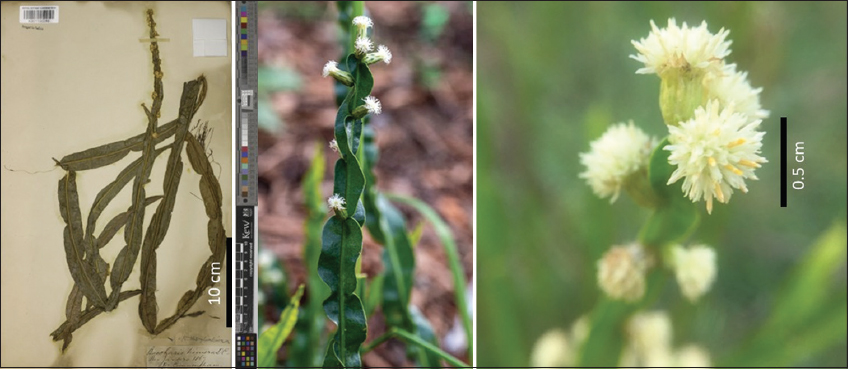 | Figure 1: Baccharis genistelloides subsp. crispa. Left: taxon of the species (Source: https://powo.science.kew.org); Center: plant with inflorescences (Author: Stéphane Bello); Right: inflorescences in detail (Source: https://www.biodiversity4all.org). [Click here to view] |
1.2. Chemical Information
Its main phytochemical components include the monoterpenes and sesquiterpenes of its essential oil, among them, carquejyl acetate (commonly its chemical marker), carquejol, β-pinene, ledol, germacrene D, and bicyclogermacrene, which can vary significantly according to the region, where the species is found, as well as the presence of other terpenoids in extracts, such as hawtriwaic acid, in addition to those with clerodane and neo-clerodane nuclei, also including diterpene lactones [7,8]. The presence of phenolic and polyphenolic compounds, such as the flavonoids quercetin, rutin, quercitrin, kaempferol, luteolin, and apigenin glycosides, in addition to coumaric, caffeic, chlorogenic, ellagic, and gallic acids, as well as their derivatives, is also notable. Furthermore, some phytosterols, such as 3, 16-dihydroxyolean-12-en-28-oic acid, and its saponins, in addition to caffeine, were also found in carqueja [8].
1.3. Pharmacological Importance
The diversity of active components is responsible for the different pharmacological activities of carqueja, such as antiulcer, anti-inflammatory and antiparasitic activity, as well as its uses in folk medicine, among which the most notable are antidyspeptic use, treatment of stomach pain, diabetes, as well as a liver protectant and weight-reducing agent [2,4]. At the same time, substances isolated from carqueja have also demonstrated high pharmacological potency, such as carquejol congeners and some clerodane diterpenes, specifically acting on gastrointestinal mechanisms [9,10]. However, due to the emergence of new studies in recent years and the need for a global understanding of the action of carqueja in the digestive system, this review aims to compile and discuss studies related to its digestive pharmacological activities, providing the reader with an integrated, critical and updated view.
2. METHODOLOGY
The study employed specific search terms such as “Baccharis genistelloides” or “Baccharis trimera” and “activity” or “chemical” to identify relevant articles. Three research databases were utilized, including Science Direct (602 documents), Scopus (226 documents), and Google Scholar (8573 documents). The initial selection excluded most of the documents since they were not related to the topic or were only citations. In the second selection step, duplicate articles or those citing pharmacological studies that were not related to digestive activity were eliminated. Moreover, studies that described only basic chemical assays were also excluded. Following meticulous selection, 19 documents relating directly to the central theme and 11 describing relevant chemical identification were included and discussed in the succeeding review sections.
3. CHEMICALS FROM B. GENISTELLOIDES SUBSP. CRISPA
3.1. Essential Oil
The percentage of major compounds from the whole fresh flowering branches varied between male and female specimens. While the (E)-caryophyllene (16.1%), α-cadinene (11.6%), and α-cadinol (8.5%) are the main constituents in females, the α-humulene (20.3%), germacrene D (12.9%), and (E)-caryophyllene (10.2%) are the major substances in males. Furthermore, the hydrocarbon sesquiterpenes total composition is enhanced in male specimens, whereas oxygenated sesquiterpenes were predominant in females [11]. In other study, the GC/MS analyses of volatile compounds from cladodes and inflorescences from male and female specimens of B. genistelloides var. crispa collected in the states of Paraná and Santa Catarina, Brazil, showed that carquejyl acetate was the main substance (38–73%), while carquejol and ledol were present in lower concentrations [12]. On the other side, the monoterpenoid carquejol was found to be the major constituent of the essential oil from aerial parts collected in Estación Porvenír, Paysandú, Uruguay [13]. Furthermore, the carquejyl acetate (52.7%) and limonene (18.6%) were the main constituents in aerial parts of samples collected in Piraquara, Paraná, Brazil [14], whereas Bueno et al. [15] informed that the carquejyl acetate (65.1%), ledol (7.7%), and carquejol (6.2%) were the main substances in fresh aerial parts essential oil collected in Ponta Grossa, Paraná [Table 1].
Table 1: Main phytoconstituents of Baccharis genistelloides subsp. crispa.
| Metabolite class | Main substances | References |
|---|---|---|
| Essential Oil (mono and sesquiterpenoids) | (E)-caryophyllene (16.1%), α-cadinene (11.6%) and α-cadinol (8.5%) (female); α-humulene (20.3%), germacrene D (12.9%), and (E)-caryophyllene (10.2%) (male) | [11] |
| Carquejyl acetate (38–73%), carquejol and ledol | [12] | |
| Carquejol (main) and carquejyl acetate | [13] | |
| Carquejyl acetate (52.7%) and limonene (18.6%) | [14] | |
| Carquejyl acetate (65.1%), ledol (7.7%), and carquejol (6.2%) | [15] | |
| Fatty acids | Palmitic acid (68.93%) | [16] |
| Phenolic and polyphenolics | Phenolic acids: Ellagic acid, gallic acid, chlorogenic acid, caffeic acid, 5′-O-caffeoylquinic acid, 1′-5′-O-dicaffeoylquinic acid; Flavonoids: Rutin, quercitrin, quercetin, kaempferol, luteolin, catechin, epicatechin, cirsimaritin, eupatorin, nepetin, apigenin, and hispidulin | [10,17-22] |
| Saccharides | Fructose, uronic acids, arabinose, and inulin-type fructan | [23] |
| Saponins | Glycosides of echinocystic acid or its enantiomer | [24] |
| Terpenoids | Clerodane and labdane type diterpenoids, triterpenoids | [10,25] |
3.2. Fatty Acids
Palmitic acid (68.93%) was the major fatty acid constituent of leaf extract, obtained by supercritical fluid extraction [16] [Table 1].
3.3. Phenolic and polyphenolic constituents
The glycosylated flavone rutin, the phenolic monomer ellagic acid, and the phenolic chlorogenic acid were the main constituents of the phenolic and polyphenolic classes in samples collected in the Rio Grande do Sul state, Brazil. In this study, it was also observed that the specimens collected in coal industry region produced lower phenolic content [17]. Besides chlorogenic acid, other caffeoyl and dicaffeoylquinic acids were also identified for this species [10]. Moreover, gallic acid, caffeic acid and the flavonoids quercetin, quercitrin, kaempferol, luteolin, catechin, and epicatechin are also found in significant concentrations, mainly when referred to the first three flavonoids mentioned [18]. In other studies, the flavonoids genkwanin, cirsimaritin, eupatorin, nepetin, apigenin, and hispidulin were also found [19-22] [Table 1].
3.4. Saccharides
The monosaccharide composition of B. genistelloides subsp. crispa showed fructose (93%), uronic acids (5%) and arabinose (2%), with polysaccharides presenting an inulin-type fructan as the main representant [23] [Table 1].
4. EFFECTS OF B. GENISTELLOIDES SUBSP. CRISPA ON DIGESTIVE SYSTEM
4.1. Gastric Function
Regarding the gastric function, several studies have been carried out to investigate the effect of carqueja in the treatment of stomach ulcers, including the recent work of Bueno et al. [15], in which they indicated that the B. genistelloides subsp. crispa essential oil (EOBG) was effective in preventing ulcer and accelerating healing by decreasing myeloperoxidase (MPO) activity, increasing vascular endothelial growth factor (VEGF) expression, and decreasing metalloproteinase matrix metalloproteinase (MMP)-2 activity. The pretreatment with EOBG (100 and 200 mg/kg) significantly reduced the severity of ethanol-induced gastric lesions and decreased MPO activity in gastric tissue, promoting 94% and 98% recovery of the lesion area, respectively, so that the EOBG treated group showed better resolution than the positive-control group (carbenoxolone 100 mg/kg). Furthermore, in an acetic acid-induced ulceration model, after 10 and 14 days of daily EOBG treatment (100 mg/kg), the lesion area was reduced by 61% and 65.5%, respectively, compared to the control group. The healing effect of EOBG was associated with a decrease in cyclooxygenase-1 expression and an increase in VEGF expression, surpassing the effect of the anti-ulcer drug lansoprazole. Analysis of MMP-2 and MMP-9 activities confirmed the accelerated healing effect, with a significant reduction in pro-MMP-2 activity. Furthermore, no signs of toxicity were observed after 14 days of EOBG treatment, which suggests the safety of carqueja use [15].
Previously, antiulcer/antiacid activity studies, as well as gastroprotective effect of carqueja were evaluated through different models. Días et al. [26] demonstrated that the oral administration of raw extract (400 mg/kg) decreased the damaged stomachic area to only 10% [26], whereas Biondo et al. [10] showed that the intraduodenal administration of the aqueous extract (2 g/kg) caused inhibition of the histaminergic pathway and proton pump and that its oral administration at the same concentration culminated in the reduction of acid secretion by 50%, reduction of lesions by 41% and the number of ulcers by 52%. When tested with secretagogues, carqueja treatment reduced histamine-induced [14C]-AP uptake, suggesting that certain constituents of carqueja inhibit the histaminergic pathway regulating acid secretion, contributing to its anti-ulcer properties. The plant also lowered [14C]-AP accumulation triggered by carbachol (agonist cholinomimetic drug), indicating inhibition of the cholinergic regulatory pathway. These findings suggest that the inhibition of [14C]-AP uptake by both cholinergic and histaminergic stimuli, likely due to the flavonoid and diterpene fractions, points to a potential inhibition of H+/K+-ATPase, the final step in acid secretion [10]. The gastroprotective effect was also observed for the hydroethanolic and aqueous extracts of carqueja, which, at the dosage of 600 mg/kg, were able to promote the reduction of hemorrhage, inflammation, and hyperemia [27], whereas the hydroethanolic extract at 30 mg/kg reduced the oxidative stress and injuries in the stomach tissue. However, intraduodenal, intraperitoneal, and oral administration of the hydroethanolic extract did not alter the volume, total acidity, or peptic activity of gastric contents in rats with hypersecretion induced by a 4-h pylorus ligation. These findings contradict previous reports indicating that B. genistelloides subsp. crispa reduces acid secretion, thereby enhancing gastric protection [28].
Lately, another study demonstrated that intraperitoneal and intraduodenal administrations of B. genistelloides subsp. crispa aqueous extract (1 g/kg) in rats led to a reduction of gastric secretion collected 4 h after pylorus ligation (93% and 85%, respectively). The treatment lowered total acid secretion and increased gastric pH to levels comparable to ranitidine, an H2 receptor antagonist used as a positive control. In addition, the extract caused smooth muscle relaxation in isolated jejunum samples. Pretreatment with B. genistelloides subsp. crispa 1–2 g/kg decreased the ulceration index (76% and 84%, respectively) and reduced the number of ulcers (40% and 60%) caused by immobilization at 4°C for 2 h, although it did not protect against indomethacin-induced gastric ulcers [29].
4.2. Hepatoprotective Action
The ethnobotanical reports on the use of carqueja in the treatment of liver diseases allowed the development of several studies on this topic, mainly focused on the determination of liver markers such as alanine aminotransferase (ALT) and aspartate aminotransferase (AST). In this sense, the study of Mendes et al. [30] revealed that the treatment with 30 mg/kg B. genistelloides subsp. crispa ethanolic extract completely reversed the increase in ALT, AST, albumin, urea, and creatinine levels that were altered by risk factors in rats (hypertension, dyslipidemia, and smoking). Interestingly, the dosage of 100 and 300 mg/kg extract and simvastatin + enalapril only partially reversed these changes. On the other hand, the globulin levels were not altered by the administration of carqueja extracts. Moreover, the results were corroborated by histological evaluation, since the doses of 30 and 100 mg/kg exerted minor lesions in liver tissue, whereas the 300 mg/kg concentration caused moderate lesions [30]. This effect was consistent with previous work by Rabelo et al. [8,31] and Barbosa et al. [32], which confirmed that the ethanolic (30 and 100 mg/kg), hydroethanolic (600 mg/kg), and aqueous (600 mg/kg) extracts decreased the ALT and AST levels by oral administration so that it was also demonstrated the hepatoprotective activity in both acute and chronic intoxications models provoked by ethanol administration [8,31,32]. Still, the administration of carqueja tincture for 28 days induced a significant decrease in the AST levels in rats of both sexes in different doses (100, 200, and 400 mg/kg). The ALT activity also decreased in the rats treated with 200 and 400 mg/kg of tincture [33]. Moreover, Pádua et al. [34] also observed the inhibition of these transaminases by 3–5 fold in animals poisoned with paracetamol, when used the hydroethanolic extract at the concentration of 600 mg/kg [34]. In other study, the same type of extract, using the concentration of 30 mg/kg, also decreased AST and ALT levels by 92.88% and increased triglyceride excretion by 35.73%, also reducing the reactive oxygen species [35]. However, the work of Grance et al. [36] demonstrated that the administration of carqueja hydroethanolic extract at 8.4 mg/kg in pregnant rats produced diffuse cell swelling, leading to vacuolar degeneration, mainly in periportal hepatocytes, revealing to be toxic to maternal kidney and liver cells, although such alterations are reversible if the administration is discontinued [36]. Moreover, Torres et al. [37] informed that the hydroethanolic extract of carqueja (1–3.3%) potentiated the activity of glutathione-transferases, which, in turn, are important actors in the hepatic detoxification function [37]. Still, it was observed that the essential oils from carqueja, especially that are rich in carquejol derivatives, enhance the bile production and avoid the membrane lipid peroxidation (LPO) in hepatocytes [38]. Finally, the soluble polysaccharide fraction of the infusion (1 mg/kg), rich in inulin-type fructans, caused a decrease in plasma levels of ALT, AST, alkaline phosphatase, and LPO [23].
4.3. Intestinal Function
Some ethnomedicinal studies report the use of carqueja for intestinal ailments, such as the treatment of diarrhea and abdominal pain [4]. In this sense, the work of Gamberini et al. [29] revealed that the aqueous extract of carqueja (0.5–8 mg/mL) provided a reduction of jejunum smooth muscle contraction, which was dependent on the administrated dose and the extension of previous organ tonus, although it did not alter the maximum contractile response caused by acetylcholine. Furthermore, the pretreatment with 2 g/kg extract, 30 min before the administration of charcoal, reduced its small bowel presence by 20% in comparison to the control [29]. Likely, the hydroethanolic extract from leaves and stalks was also effective as an antispasmodic in isolated rat jejunum, with an optimal concentration of 1 mg/mL, which, in turn, produced an antispasmodic effect of 79.65%, being significantly more active than atropine and hyoscine, the positive controls [39]. Besides this, the methanolic extract (100 mg/mL) produced an in vitro inhibition of both pancreatic lipase and α- and β-glycosidases, which, in turn, catalyze triglycerides and carbohydrates, respectively, decreasing their absorption by the small bowel, a mechanism known to contribute to weight loss [19].
5. CRITICAL DISCUSSION
Studies of the pharmacological effects of B. genistelloides subsp. crispa on the digestive system have focused on its activities of inhibiting gastric secretion, treating ulcers, regulating markers of hepatic toxicity, and relaxing the intestinal smooth muscle [Figure 2]. Although all the effects investigated have been observed, ethnomedicinal reports include other types of use for gastrointestinal disorders that have not yet been clarified, such as abdominal pain, diarrhea, and indigestion, although mechanisms inherent to the phytochemicals present in its extracts may be suggested.
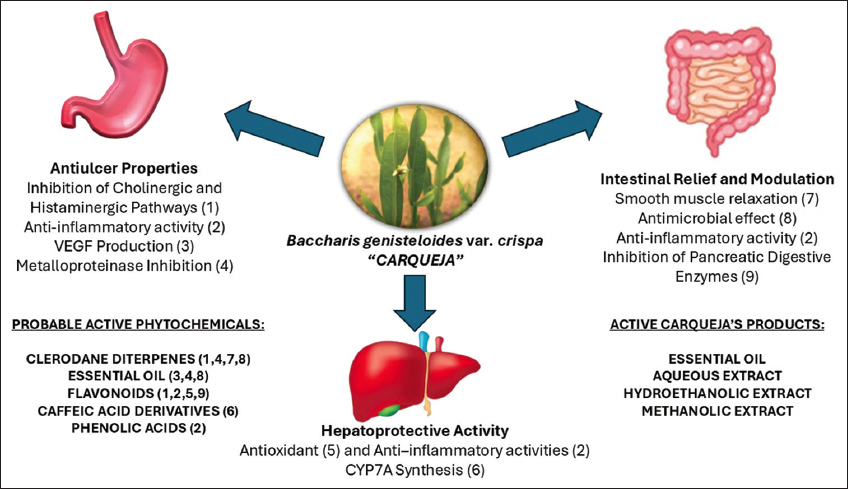 | Figure 2: Effects of Baccharis genistelloides subsp. crispa on the digestive system and probable-related mechanisms of action. [Click here to view] |
The use of carqueja for the treatment of gastric ulcers has been based on its effects of inhibiting the histaminergic and cholinergic pathways of stomach acid production, in addition to its anti-inflammatory properties, already mentioned in other studies with the species [20,24,40,41]. However, the preference or purpose of use varied extensively in ethnomedicinal reports. This fact, besides ethnobotanical reasons, probably is also linked to the variation in the chemical composition of products derived from carqueja [Table 1], as seen in some studies, which may depend on the place where the plant was collected, occurrence of varieties, extraction techniques, and storage. On the other hand, convergences and complementation are observed in several pharmacological studies that described the action of carqueja on digestive system. The study by Bueno et al. [15] reported that the main constituents of the essential oil were carquejyl acetate (65.1%), ledol (7.7%), and carquejol (6.2%), and that the essential oil was able to increase VEGF production and inhibit the activity of metalloproteinases [15], while the study conducted by Biondo et al. [10] suggests that the inhibition of the gastric cholinergic and histaminergic pathways by the aqueous extract is related to the presence of flavonoids and, mainly, a clerodane diterpene [10]. In its turn, Lívero et al. [28] reports that the hydroethanolic extract did not show gastric acid secretion inhibition activity, despite observing gastroprotective effects, which may be explained by the administration of lower doses when compared to the aforementioned works and even by a probable difference in their chemical compositions [28].
On the other hand, the hepatoprotective activity of carqueja is probably related to its high concentration of flavonoids and phenolic derivatives, which, in turn, have recognized antioxidant and anti-inflammatory activity [40,42]. In addition, essential oils and phenolic derivatives are involved in the increase in bile production and excretion, which facilitates the digestion of fats, which may explain its digestive use [43-45]. It was observed that caffeic acid derivatives from the genus Baccharis induced expression of cholesterol 7α-hydroxylase (CYP7A, the enzyme that initiates the classic bile acid biosynthetic pathway) [46]. Furthermore, the intestinal activity of carqueja appears to have several origins, including the relaxation of smooth muscle, which, together with its anti-inflammatory and antimicrobial activities, would be responsible for its use in the treatment of diarrhea, including those caused by enterotoxic bacteria, including Salmonella typhi, Enterococcus faecalis, and Escherichia coli, since its crude hydroethanolic extract showed action against them [47,48]. These biological activities probably contribute to a synergistic effect so that essential oils have potent antimicrobial activity, as well as the diterpenes, which also influence the intestinal muscle relaxation observed in the study by Gamberini et al. [29], whereas the anti-inflammatory activity is an important contributor factor for the intestinal regulation and closely related to the presence of flavonoids and phenolic derivatives in carqueja [29].
Furthermore, the treatment of intestinal and hepatic disorders caused by parasitosis is also related to the presence of clerodane diterpenes and essential oils, which have demonstrated high parasitic potential against Schistosoma so that epiisopiloturine and piplartine are essential oil components with high anti-Schistosoma activity, while clerodane diterpenes have also been related to this activity, specially against Entamoeba histolytica and Giardia lamblia [49-51]. In addition, flavonoids and phenolic acids are known inhibitors of some digestive enzymes, which may explain the action of the methanolic extract on pancreatic lipase and glycosidases [52-54].
It is also important to mention that the diversity and divergences of ethnomedicinal reports can be explained by the different chemical profiles found for carqueja [Table 1], such as in its essential oil, which has carquejyl acetate as one of its main markers. However, in some different studies, this substance and its structural congeners such as carquejol are not found, which can make a notable difference in terms of biological activity, since among these, there are substances that have high pharmacological potency [7,11,55,56].
According to the various pharmacological studies presented in this review, B. genistelloides subsp. crispa represents an effective and multi-target alternative for the treatment of gastric, hepatic, and intestinal disorders. It exhibits a broad diversity of uses within the digestive system, even when compared with other plant species that are globally recognized for their digestive applications, such as Cynara scolymus, Taraxacum officinale, Mentha piperita, Zingiber officinale, Plantago ovata, and Silybum marianum [57]. Even when compared with another species of the same genus with gastrointestinal applications, Baccharis dracunculifolia, carqueja demonstrates greater potency of its essential oil for the treatment of ulcers, as well as a broader range of pharmacological actions within the digestive system, although B. dracunculifolia has also been shown to be effective in the treatment of colitis [58]. However, despite the in vivo pharmacological studies conducted, some shortcomings can be identified, such as the absence of test groups using some isolated compounds from the species. This would provide greater robustness in explaining the mechanisms of action associated with each type of activity in the digestive system, as well as allowing a comparison with the administration of extracts, which would help assess the extent of the potential synergistic effect. Furthermore, to have a global understanding of the biological mechanisms of action of carqueja, pharmacological studies using ethnomedicinal preparations, such as infusions or decoctions, should be carried out. This could help to better understand the real properties of carqueja when used in a popular way, understanding how relevant are the effects observed with extracts, essential oils, and fractions, when administered together.
6. CONCLUSION
Carqueja (B. genistelloides subsp. crispa), a phytotherapeutic and ethnomedicinal resource widely used in the treatment of disorders in the digestive system, has demonstrated pharmacological actions through the improvement of gastric ulcers, as well as hepatoprotective and choleretic effects, relaxing intestinal smooth muscle, in addition to inhibiting digestive enzymes such as pancreatic lipases and glycosidases. Its effects are mainly related to the presence of flavonoids, phenolic derivatives, clerodane diterpenes, and components of its essential oil so that important mechanisms of action have been elucidated, such as the inhibition of gastric acid and metalloproteinase production and regulation of liver enzymes, and which, added to the already established anti-inflammatory and antimicrobial effects of carqueja, explain the diverse and potent use of this species in the treatment of digestive diseases.
7. ACKNOWLEDGMENTS
The authors thank to Universidad Nacional de la Amazonía Peruana for the financial support.
8. AUTHORS’ CONTRIBUTIONS
All authors made substantial contributions to conception and design, acquisition of data, or analysis and interpretation of data; took part in drafting the article or revising it critically for important intellectual content; agreed to submit to the current journal; gave final approval of the version to be published; and agreed to be accountable for all aspects of the work. All the authors are eligible to be author as per the International Committee of Medical Journal Editors (ICMJE) requirements/guidelines.
9. CONFLICTS OF INTEREST
The authors report no financial or any other conflicts of interest in this work.
10. ETHICAL APPROVALS
This study does not involve experiments on animals or human subjects.
11. DATA AVAILABILITY
All the data are available with the authors and shall be provided on request.
12. PUBLISHER’S NOTE
All claims expressed in this article are solely those of the authors and do not necessarily represent those of the publisher, the editors and the reviewers. This journal remains neutral with regard to jurisdictional claims in published institutional affiliation.
13. USE OF ARTIFICIAL INTELLIGENCE (AI)-ASSISTED TECHNOLOGY
The authors declare that they have not used artificial intelligence (AI)-tools for writing and editing of the manuscript, and no images were manipulated using AI.
REFERENCES
1. Ferro D, Pereira AM. Fitoterapia:Conhecimentos Tradicionais e Científicos. 1st ed. São Paulo:Bertolucci;2018. 146-54.
2. Gupta MP. Plantas medicinales ibero-americanas. In:Programa Iberoamericano de Ciencia y Tecnología. 1st ed. Bogotá:Cyted, Convenio Andrés Bello;2008. 144-52.
3. Elias MA, Favetta PM, Trindade WA, Gerônimo E, De Melo Germano R. Baccharis trimera e seu potencial farmacológico aplicado ao sistema digestório. Rev Multidiscip Educ Meio Ambiente. 2020;1(1):49.
4. Llaure-Mora AM, Ganoza-Yupanqui ML, Suárez-Rebaza LA, Bussmann RW. Baccharis genistelloides (Lam.) Pers. “Carqueja”:A review of uses in traditional medicine, phytochemical composition and pharmacological studies. Ethnobotany Res Appl. 2021;21:1-37. [CrossRef]
5. Budel JM, Duarte MR, Santos CA, Farago PV, Matzenbacher NI. O progresso da pesquisa sobre o gênero Baccharis, Asteraceae:I-Estudos botânicos. Braz J Pharmacogn. 2005;15:268-71. [CrossRef]
6. Pereira AM, Bertoni BW, Jorge CR, Ferro D, Carmona F, Morel LD. Manual Prático de Multiplicação e Colheita de Plantas Medicinais. 1st ed. Ribeirão Preto:Bertolucci;2011. 43.
7. Silva FG, Oliveira C, Pinto JE, Nascimento VE, Santos SC, Seraphin JC, et al. Seasonal variability in the essential oils of wild and cultivated Baccharis trimera. J Braz Chem Soc. 2007;18:990-7. [CrossRef]
8. Rabelo AC, Costa DC. A review of biological and pharmacological activities of Baccharis trimera. Chem Biol Interact. 2018;296:65-75. [CrossRef]
9. Caujolle F, Meynier D, Cros J. Pharmacological study of carquejol and its derivatives. Therapie. 1960;15:931-9. [CrossRef]
10. Biondo TM, Tanae MM, Della Coletta E, Lima-Landman MT, Lapa AJ, Souccar C. Antisecretory actions of Baccharis trimera (Less.) DC aqueous extract and isolated compounds:Analysis of underlying mechanisms. J Ethnopharmacol. 2011;136(2):368-73. [CrossRef]
11. Lago JH, Romoff P, Favero OA, Souza FO, Soares MG, Baraldi PT, et al. Chemical composition of male and female Baccharis trimera (Less.) DC. (Asteraceae) essential oils. Biochem Syst Ecol. 2008;36:737-40. [CrossRef]
12. Besten MA, Nunes DS, Wisniewski A Jr., Sens SL, Granato D, Simionatto EL, et al. Chemical composition of volatiles from male and female specimens of Baccharis trimera collected in two distant regions of southern Brazil:A comparative study using chemometrics. Química Nova. 2013;36:1096-100. [CrossRef]
13. Minteguiaga M, Dellacassa E, Iramain MA, Catalán CA, Brandán SA. A structural and spectroscopic study on carquejol, a relevant constituent of the medicinal plant Baccharis trimera (Less.) DC. (Asteraceae). J Mol Struct. 2017;1150:8-20. [CrossRef]
14. Trombin-Souza M, Trombin-Souza M, Amaral W, Pascoalino JA, Oliveira RA, Bizzo HR, et al. Chemical composition of the essential oils of Baccharis species from southern Brazil:A comparative study using multivariate statistical analysis. J Essent Oil Res. 2017;29(5):400-6. [CrossRef]
15. Bueno G, Rico SL, Périco LL, Ohara R, Rodrigues VP, Emílio-Silva MT, et al. The essential oil from Baccharis trimera (Less.) DC improves gastric ulcer healing in rats through modulation of VEGF and MMP-2 activity. J Ethnopharmacol. 2021;271:113832. [CrossRef]
16. Silva DC, Bresciani LF, Dalagnol RL, Danielski L, Yunes RA, Ferreira SR. Supercritical fluid extraction of carqueja (Baccharis trimera) oil:Process parameters and composition profiles. Food Bioprod Process. 2009;87(4):317-26. [CrossRef]
17. Menezes AP, Da Silva J, Fisher C, Da Silva FR, Reyes JM, Picada JN, et al. Chemical and toxicological effects of medicinal Baccharis trimera extract from coal burning area. Chemosphere. 2016;146:396-404. [CrossRef]
18. Struiving S, Hacke AC, Simionatto EL, Scharf DR, Klimaczewski CV, Besten MA, et al. Effects of gender and geographical origin on the chemical composition and antiradical activity of Baccharis myriocephala and Baccharis trimera. Foods. 2020;9(10):1433. [CrossRef]
19. De Souza SP, Pereira LL, Souza AA, Santos CD. Inhibition of pancreatic lipase by extracts of Baccharis trimera (Less.) DC., Asteraceae:Evaluation of antinutrients and effect on glycosidases. Rev Bras Farmacogn. 2011;21:450-5. [CrossRef]
20. Nogueira NP, Reis PA, Laranja GA, Pinto AC, Aiub CA, Felzenszwalb I, et al. In vitro and in vivo toxicological evaluation of extract and fractions from Baccharis trimera with anti-inflammatory activity. J Ethnopharmacol. 2011;138(2):513-22. [CrossRef]
21. Soicke H, Leng-Peschlow E. Characterisation of flavonoids from Baccharis trimera and their antihepatotoxic properties. Planta Med. 1987;53(1):37-9. [CrossRef]
22. Herz W, Pilotti AM, Soderholm AC, Shuhama IK, Vichnewski W. New ent-clerodane-type diterpenoids from Baccharis trimera. J Org Chem. 1977;42(24):3913-7. [CrossRef]
23. Chaves PF, Adami ER, Acco A, Iacomini M, Cordeiro LM. Chemical characterization of polysaccharides from Baccharis trimera (Less.) DC. Infusion and its hepatoprotective effects. Food Res Int. 2020;136:109510. [CrossRef]
24. GenéRM, CartañáC, Adzet T, Marín E, Parella T, Cañigueral S. Anti-inflammatory and analgesic activity of Baccharis trimera:Identification of its active constituents. Planta Med. 1996;62(3):232-5. [CrossRef]
25. Verdi LG, Brighente IM, Pizzolatti MG. The Baccharis genus (Asteraceae):chemical, economic and biological aspects. Quím Nova. 2005;28:85-94. [CrossRef]
26. Días LF, Melo ES, Hernandes LS, Bacchi EM. Antiulcerogenic and antioxidant activities of Baccharis trimera (Less) DC (Asteraceae). Rev Bras Farmacogn. 2009;19(1B):309-14. [CrossRef]
27. Rabelo AC, Camini FC, Bittencourt MM, Lacerda K, De Lima WG, Costa DC. Baccharis trimera (carqueja) promotes gastroprotection on ethanol-induced acute gastric ulcer. Adv Tradit Med. 2020;20:563-70. [CrossRef]
28. Lívero FA, Da Silva LM, Ferreira DM, Galuppo LF, Borato DG, Prando TB, et al. Hydroethanolic extract of Baccharis trimera promotes gastroprotection and healing of acute and chronic gastric ulcers induced by ethanol and acetic acid. Naunyn Schmiedebergs Arch Pharmacol. 2016;389(9):985-98. [CrossRef]
29. Gamberini MT, Skorupa LA, Souccar C, Lapa AJ. Inhibition of gastric secretion by a water extract from Baccharis triptera, Mart. Mem Inst Oswaldo Cruz. 1991;86:137-9. [CrossRef]
30. Mendes TC, Silva GR, Silva AO, Schaedler MI, Guarnier LP, Palozi RA, et al. Hepato- and cardioprotective effects of Baccharis trimera (Less.) DC. Against multiple risk factors for chronic noncommunicable diseases. An Acad Bras Ciênc. 2021;93(3):e20200899. [CrossRef]
31. Rabelo AC, De Araújo GR, Lúcio KP, Araújo CM, Miranda PH, Silva BM, et al. Aqueous extract of Baccharis trimera improves redox status and decreases the severity of alcoholic hepatotoxicity. Rev Bras Farmacogn. 2017;27:729-38. [CrossRef]
32. Barbosa RJ, Da Silva GR, Cola IM, Kuchler JC, Coelho N, Barboza LN, et al. Promising therapeutic use of Baccharis trimera (Less.) DC. As a natural hepatoprotective agent against hepatic lesions that are caused by multiple risk factors. J Ethnopharmacol. 2020;254:112729. [CrossRef]
33. Da Silva AR, Reginato FZ, Guex CG, Figueredo KC, Araldi IC, De Freitas RB, et al. Acute and sub-chronic (28 days) oral toxicity evaluation of tincture Baccharis trimera (Less) Backer in male and female rodent animals. Regul Toxicol Pharmacol. 2016;74:170-7. [CrossRef]
34. Pádua BC, Rossoni-Júnior JV, De Brito Magalhães CL, Chaves MM, Silva ME, Pedrosa ML, et al. Protective effect of Baccharis trimera extract on acute hepatic injury in a model of inflammation induced by acetaminophen. Mediators Inflamm. 2014;2014:196598. [CrossRef]
35. Lívero FA, Martins GG, Telles JE, Beltrame OC, Biscaia SM, Franco CR, et al. Hydroethanolic extract of Baccharis trimera ameliorates alcoholic fatty liver disease in mice. Chem Biol Interact. 2016;260:22-32. https://doi.org/10.1016/j.cbi.2016.10.003 [CrossRef]
36. Grance SR, Teixeira MA, Leite RS, Guimarães EB, De Siqueira JM, Filiu WF, et al. Baccharis trimera:Effect on hematological and biochemical parameters and hepatorenal evaluation in pregnant rats. J Ethnopharmacol. 2008;117:28-33. [CrossRef]
37. Torres MC, Soares NF, Maia JF. Kinetics parameters of Glutathione S-Transferase and its activation by vegetable extracts. Ciênc Tecnol Alimentos. 2004;24:243-8. [CrossRef]
38. Panis C. Plants of Baccharis genus in phytotherapy. Popular use x scientific evidence. Infarm Ciênc Farm. 2008;20(5/6):30-4.
39. Palomino-Caritas L. Efecto antiespasmódico del extracto hidroalcohólico de las hojas y tallos de Baccharis genistelloides (Lam.) Pers.“Kimsa kucho”en íleon aislado de ratas Holtzman. Ayacucho-2022. Bachelor's Thesis. Universidad Nacional de San Cristóbal de Huamanga, Ayacucho, Peru. 2023.
40. De Oliveira CB, Comunello LN, Lunardelli A, Amaral RH, Pires MG, Da Silva GL, et al. Phenolic enriched extract of Baccharis trimera presents anti-inflammatory and antioxidant activities. Molecules. 2012;17(1):1113-23. [CrossRef]
41. Paul EL, Lunardelli A, Caberlon E, De Oliveira CB, Santos RC, Biolchi VM, et al. Anti-inflammatory and immunomodulatory effects of Baccharis trimera aqueous extract on induced pleurisy in rats and lymphoproliferation in vitro. Inflammation. 2009;32:419-25. [CrossRef]
42. Bastos JK, Arruda C. Chemistry and biological activities of phenolic compounds from Baccharis genus. In:Baccharis:From Evolutionary and Ecological Aspects to Social Uses and Medicinal Applications. 1st ed. Berlin:Springer International Publishing;2022. 305-28. [CrossRef]
43. Trabace L, Avato P, Mazzoccoli M, Siro-Brigiani G. Choleretic activity of some typical components of essential oils. Planta Med. 1992;58(S1):650-1. [CrossRef]
44. Jaeschke H, Wendel A. Choleresis and increased biliary efflux of glutathione induced by phenolic antioxidants in rats. Toxicology. 1988;52(3):225-35. [CrossRef]
45. Spiridonov NA. Mechanisms of action of herbal cholagogues. Med Aromat Plants. 2012;1(5):1000107. [CrossRef]
46. Bettucci GR, Rodriguez MV, Ferretti MD, Campagna MN, Monti J, Carnovale CE, et al. Choleretic properties of Baccharis spicata aerial parts extracts in male Wistar rats. Rev Bras Farmacogn. 2020;30:54-60. [CrossRef]
47. Aleixo ÁA, Herrera KM, Ribeiro RI, Lima LA, Ferreira JM. Antibacterial activity of Baccharis trimera (Less.) DC. (Carqueja) against bacteria of medical interest. Rev Ceres. 2013;60:731-4. [CrossRef]
48. Negri Brusamarello M, Brusamarello AP, Alves Da Cunha MA, Busso C. Biological and phytochemical potential of Baccharis trimera (Less.) DC leaf extract on swine clinical isolates. Nat Prod Res. 2024;38(10):1799-805. [CrossRef]
49. De Oliveira RN, Rehder VL, Oliveira AS, Jeraldo VD, Linhares AX, Allegretti SM. Anthelmintic activity in vitro and in vivo of Baccharis trimera (Less) DC against immature and adult worms of Schistosoma mansoni. Exp Parasitol. 2014;139:63-72. [CrossRef]
50. Li R, Morris-Natschke SL, Lee KH. Clerodane diterpenes:Sources, structures, and biological activities. Nat Prod Rep. 2016;33(10):116-226. [CrossRef]
51. Calzada F, Yepez-Mulia L, Tapia-Contreras A, Bautista E, Maldonado E, Ortega A. Evaluation of the antiprotozoal activity of neo-clerodane type diterpenes from Salvia polystachya against Entamoeba histolytica and Giardia lamblia. Phytother Res. 2010;24(5):662-5. [CrossRef]
52. Rocha S, Proença C, Araújo AN, Freitas M, Rufino I, Aniceto N, et al. Flavonoids as potential modulators of pancreatic lipase catalytic activity. Pharmaceutics. 2025;17(2):163. [CrossRef]
53. Zhu J, Chen C, Zhang B, Huang Q. The inhibitory effects of flavonoids on a-amylase and a-glucosidase. Crit Rev Food Sci Nutr. 2020;60(4):695-708. [CrossRef]
54. Junqueira Gatto L, Bellei De Oliveira GR, Rech KS, Moura PF, Gribner C, Zortea Merino FJ, et al. Inhibition of a-glucosidase, pancreatic lipase, and antioxidant property of Myrcia hatschbachii D. Legrand containing gallic and ellagic acids. Bol Latinoam Y Del Caribe De Plantas Med Y Aromat. 2021;20(3):226-43. [CrossRef]
55. Morais LA, Castanha RF. Chemical composition of essential oil from two samples of carqueja (Baccharis sp.) collected in Paty do Alferes - Rio de Janeiro, Brazil. Rev Bras Planta Med. 2011;13:628-32. [CrossRef]
56. Moro IJ, Carvalho FA, Moreira TF, De Oliveira Souza F, Da Silva AA, Politi F, et al. Cytotoxic activity of Baccharis trimera (Less.) DC. Essential oil in tumor cell lines and its role in associated death mechanisms. Orbit Electron J Chem. 2023;15(1):21-6. [CrossRef]
57. Cheema HS, Singh MP. The use of medicinal plants in digestive system related disorders:A systematic review. J Ayurvedic Herb Med. 2021;7(3):182-7. [CrossRef]
58. Gazim ZC, Valle JS, Carvalho Dos Santos I, Rahal IL, Silva GC, Lopes AD, et al. Ethnomedicinal, phytochemical and pharmacological investigations of Baccharis dracunculifolia DC. (ASTERACEAE). Front Pharmacol. 2022;13:1048688. [CrossRef]