
1. INTRODUCTION
The twentieth century witnessed an unprecedented increase in environmental pollution, driven largely by rapid industrialization, urbanization, and agricultural intensification. These developments aimed at meeting the demands of a growing global population and advancing technological progress and contributed significantly to environmental degradation. Industrial activities have led to the release of a variety of pollutants, including heavy metals, hydrocarbons, pharmaceuticals, pesticides, and explosives, which pose serious risks to both human health and ecosystems. These pollutants are often persistent, bioaccumulative, and toxic, leading to long-lasting environmental damage and contributing to the destruction of biodiversity. As the scope of environmental contamination continues to expand, bioremediation has emerged as a promising solution to mitigate the adverse effects of pollution and restore ecosystems.
Bioremediation refers to the use of biological systems such as microorganisms and plants to degrade, transform, or sequester harmful pollutants. Over recent decades, bioremediation techniques have evolved significantly, increasing the efficiency of pollution removal and making these methods more adaptable to a wide range of environmental conditions. The key advantage of bioremediation lies in its ability to harness natural biological processes to detoxify and restore polluted environments, offering an eco-friendly and cost-effective alternative to traditional remediation methods. Recent advances in bioremediation technology have demonstrated its ability to address diverse environmental contaminants, including hydrocarbons, heavy metals, and pesticides, in soil, water, and air matrices. These developments highlight bioremediation potential as a scalable solution for large-scale environmental cleanup, offering a sustainable method for reducing pollution and preventing further ecological damage [1].
The types of pollutants that require remediation are diverse, but among the most concerning are heavy metals, hydrocarbons, pharmaceuticals, insecticides, and explosives. These substances pose significant threats to human health and environmental integrity. Heavy metals, such as arsenic, cadmium, lead, and mercury, are non-degradable and can accumulate in ecosystems, where they disrupt biological processes and adversely affect plants, animals, and humans. Many of these metals are carcinogenic and toxic to the nervous system, leading to long-term health risks upon exposure. Hydrocarbons, such as those found in oil spills, also present major environmental challenges. Their slow degradation, particularly in aquatic and soil environments, leads to the accumulation of toxic compounds that damage ecosystems and wildlife habitats. Pesticides and herbicides, although used extensively in agriculture, can leach into water supplies and affect biodiversity, posing risks to human and animal health. Explosives and other chemical compounds from industrial and military activities can contaminate soil and water, creating complex and hazardous environmental conditions [2].
Traditional physicochemical methods, such as adsorption, electrochemical treatment, precipitation, and electrocoagulation, have been widely used for pollution control. However, these methods often fall short of addressing the full spectrum of environmental contaminants. While they may be effective in certain contexts, these techniques are generally expensive, energy-intensive, and sometimes produce secondary waste, which requires additional treatment. In particular, traditional methods often struggle with low-concentration contaminants or mixed pollutant systems. For example, some pollutants are hydrophobic and may not be easily accessible to chemical agents or remediation technologies. This highlights the need for more innovative, effective, and environmentally friendly strategies to address these complex contamination issues. Bioremediation has thus emerged as an up-and-coming alternative, offering the potential to degrade pollutants in a more natural, cost-efficient manner, with fewer ecological impacts [3,4].
Bioremediation leverages microorganisms and plants to break down pollutants into less harmful compounds, restoring polluted environments to their natural state. The effectiveness of bioremediation depends on the presence of specific microorganisms that are capable of degrading the contaminants and the optimization of environmental conditions, such as temperature, pH, and nutrient availability. For instance, certain microbes are capable of metabolizing hydrocarbons, while others can transform heavy metals into less toxic forms. The ability to use a variety of microbial strains or their enzymes makes bioremediation a versatile tool for addressing a range of pollutants in different environmental settings. Furthermore, bioremediation is a relatively low-cost and low-tech approach, which makes it an attractive option for large-scale environmental cleanup operations. However, there are limitations to the widespread use of bioremediation, particularly in environments with low pollutant bioavailability or where microbial degradation rates are slow [5].
One of the most promising areas of bioremediation research in recent years is the integration of nanotechnology into environmental remediation strategies. Nanotechnology, which involves the manipulation of materials at the atomic and molecular scale, has opened new possibilities for enhancing pollutant degradation. Due to their small size and high surface-area-to-volume ratio, nanoparticles (NPs) exhibit unique properties that make them highly effective in environmental applications. These properties allow NPs to interact with pollutants at the molecular level, enabling more efficient degradation or removal of contaminants. In addition, NPs can be engineered to target specific pollutants, providing a more selective and precise remediation approach [6,7].
Nanotechnology has shown significant promise in addressing environmental contamination, particularly in water quality testing, pollutant detection, and the degradation of hazardous substances [Figure 1]. For example, carbon nanotubes (CNTs), quantum dots, and magnetic NPs have been used in water quality testing, particularly for the detection of toxins and harmful microbes [8]. Furthermore, the use of zero-valent metals in nanoscale forms, such as palladium, nickel, and iron, has proven effective in dehalogenating persistent organic pollutants and stabilizing heavy metals such as arsenic and chromium in contaminated environments. These metals have demonstrated their ability to break down hazardous chemicals into less toxic forms, offering a promising method for remediating polluted water and soil [9].
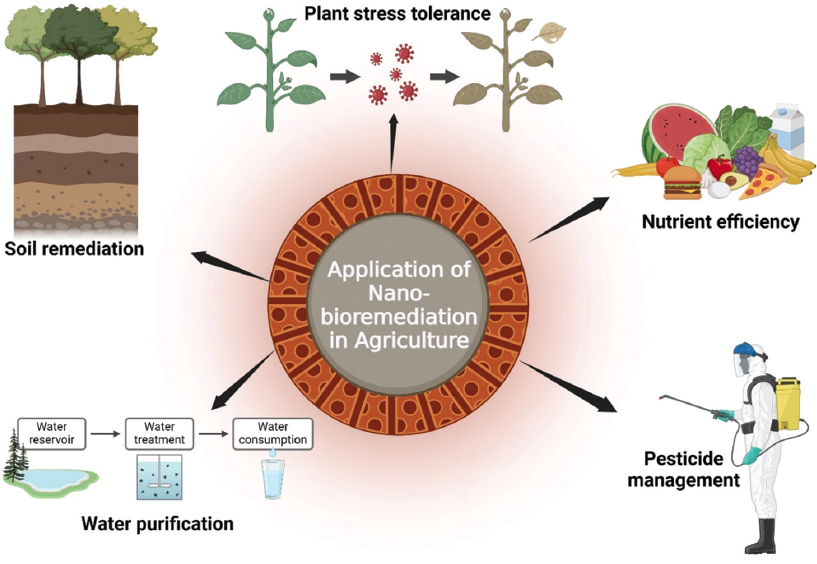 | Figure 1: Role of nano-bioremediation in environmental remediation (Created by the authors: BioRender). [Click here to view] |
The application of nanotechnology in bioremediation offers a synergistic approach that combines the advantages of both fields. NPs can enhance microbial activity by improving the bioavailability of pollutants, protecting microorganisms, and catalyzing degradation reactions. For example, palladium-decorated NPs have been shown to accelerate microbial dechlorination processes in contaminated soils, while magnetic NPs can be used to immobilize microorganisms, facilitating pollutant removal and allowing for microbial recovery and reuse. The addition of NPs to bioremediation processes also aids in the solubilization of hydrophobic compounds, making them more accessible to microbial degradation [10,11].
Despite the substantial promise of nano-bioremediation, several challenges remain. One of the primary concerns is the potential toxicity of NPs to non-target organisms, including microorganisms, plants, and aquatic life. Although NPs may be effective in degrading pollutants, they may also pose risks to ecosystems if they are not carefully managed. The long-term stability and reactivity of NPs in environmental systems are also a concern. NPs tend to aggregate over time, reducing their surface area and reactivity, which can compromise their effectiveness. In addition, the interactions between NPs and natural organic matter in the environment can alter their behavior and impact their performance. Therefore, further research is required to develop environmentally benign and stable NPs for safe and effective environmental use [4].
2. NANO-BIOREMEDIATION
Relying solely on a single method for the remediation of environmental pollutants is often inadequate to address the complexity and scale of contamination. The integration of nanomaterials with bioremediation offers a highly promising approach, combining the strengths of both technologies to enhance the effectiveness and sustainability of pollutant removal. This combined approach, referred to as “nano-bioremediation,” utilizes the unique properties of nanotechnology to augment biological processes, leading to more efficient and faster degradation of contaminants. Specifically, nano-bioremediation involves the use of NPs, derived from plants, fungi, and microorganisms, to facilitate the removal of a diverse range of nanoparticle contaminants including heavy metals, organic pollutants, and inorganic toxins, by enhancing microbial activity [12,13]. Nanomaterials have already demonstrated significant utility in diverse fields, including medicine, industry, and environmental remediation, with their ability to interact at the molecular level offering precise and targeted pollutant removal [14,15]. In the context of phytoremediation, nanotechnology enhances the ability of plants to absorb, transform, and sequester pollutants from the environment. The incorporation of NPs can improve soil restoration, treat contaminated water, and remove both organic and inorganic pollutants. Applying nanomaterials in compound-based bioremediation allows complex environmental pollutants to be broken down into simpler, less harmful compounds. NPs, acting as catalysts, facilitate the breakdown of these complex molecules, which are then more readily degraded through the synergistic interaction of microorganisms and plants. This integration of biotechnology and nanotechnology offers an efficient and scalable method for addressing environmental pollution, particularly in contaminated sites where traditional bioremediation strategies may be less effective [16,17]. The combined use of NPs and biological agents holds great promise for advancing environmental remediation technologies, offering a more sustainable and effective solution to global contamination challenges.
3. BIOREMEDIATION AND NANOTECHNOLOGY: PIONEERING ENVIRONMENTAL SUSTAINABILITY
Bioremediation is a process that employs biological systems such as microbes and plants to degrade, transform, or stabilize environmental contaminants. Its eco-friendly and cost-effective nature makes it a key tool in environmental management. When integrated with nanotechnology, bioremediation transcends conventional limitations, offering innovative and scalable methods to tackle pollutants ranging from heavy metals to radioactive waste. This synergy not only enhances efficiency but also broadens the scope of applications in environmental restoration. Traditional remediation methods often rely on physical and chemical approaches, including precipitation, ion exchange, membrane filtration, chelate flushing, and reduction. These methods effectively improve metal solubility and facilitate the removal of contaminants but face significant challenges such as high costs, fouling, and sensitivity to operational conditions such as pH and temperature [Table 1].
Table 1: List of various treatment methods for bioremediation.
| Method | Type | Applications | Advantages | References |
|---|---|---|---|---|
| Soil Washing | Physical | Heavy metals, pesticides, PAHs (Polycyclic Aromatic Hydrocarbons) | Simple, effective for water-soluble contaminants | [45] |
| Thermal Desorption | Physical | Organic compounds, VOCs (volatile organic compounds) | Efficient for organic contaminants, quick treatment | [24] |
| Electrokinetic Remediation | Physical | Heavy metals, radionuclides | Non-invasive, effective for fine-grained soils | [47] |
| Vapor Extraction | Physical | VOCs, organic solvents | Fast, effective for volatile contaminants | [48] |
| Air Sparging | Physical | Organic compounds, VOCs | Cost-effective, less disruption to soil structure | [49] |
| Soil Stabilization | Physical/Chemical | Heavy metals, radioactive contaminants | Low-cost, simple implementation | [50] |
| Phytoremediation | Biological | Heavy metals, organic contaminants | Environmentally friendly, low-cost, aesthetic | [51] |
| Bioremediation | Biological | Hydrocarbons, organic pollutants, heavy metals | Natural, cost-effective, sustainable | [52] |
| Bioventing | Biological | Hydrocarbons, VOCs | Cost-effective, minimal disturbance, enhances biodegradation | [53] |
| Composting | Biological | Organic pollutants, petroleum hydrocarbons | Simple, enhances natural biodegradation | [54] |
| Bioreactor Systems | Biological | Pharmaceuticals, industrial waste, and organic chemicals | High control over conditions, faster than natural processes | [55] |
| Biological Augmentation | Biological | Hydrocarbons, industrial waste, pesticides | Accelerates degradation, targeted action | [56] |
| In situ Chemical Oxidation (ISCO) | Chemical | Hydrocarbons, chlorinated solvents | Effective for persistent pollutants, fast degradation | [57] |
| In situ Chemical Reduction (ISCR) | Chemical | Heavy metals, chlorinated compounds | Long-lasting effects, effective for metals and chlorinated compounds | [58] |
| Fenton’s Reagent | Chemical | Organic pollutants, dyes, pesticides | Effective for many organic compounds, relatively cheap | [59] |
| Incineration | Chemical | Persistent organic pollutants, hazardous wastes | Destruction of organics, quick | [60] |
| Chemical Extraction | Chemical | Heavy metals, organic pollutants, pesticides | Effective for removing a broad range of contaminants | [61] |
| Oxidation | Chemical | Hydrocarbons, pesticides | Fast and effective for some organic pollutants | [62] |
| Mycoremediation | Biological | PAHs, petroleum hydrocarbons, heavy metals | Effective for organic pollutants, with minimal soil disturbance | [63] |
| Fungal Bioremediation | Biological | PAHs, heavy metals, xenobiotics | Can degrade complex organic contaminants, with low environmental impact | [64] |
| Phytovolatilization | Biological | Mercury, arsenic, selenium | Efficient for volatile contaminants, low-cost | [65] |
| Biopile Systems | Biological | Petroleum hydrocarbons, VOCs, chlorinated compounds | Accelerates biodegradation, controlled conditions | [66] |
| Passive Treatment Walls | Chemical/Physical | Heavy metals, solvents, chlorinated compounds | Simple to install, low maintenance | [67] |
| Nanoremediation | Chemical/Physical | Heavy metals, organic pollutants, radionuclides | Fast, effective for a wide range of contaminants, and versatile | [68] |
| Surfactant Enhanced Bioremediation | Chemical/Biological | Hydrocarbons, oils, pesticides | Increases the bioavailability of pollutants, enhances microbial degradation | [69] |
3.1. Physical Treatment Methods
3.1.1. Precipitation
By adding an appropriate anion, the metal salts are precipitated in this manner. Manganese sulfate, copper sulfate, ammonium sulfate, alum, and ferric salts are the synthetic substances typically utilized in this technique. Low pH affects the efficiency of sludge and salt (ions) disposal, thus increasing the process’s cost [18]. Precipitation approaches on explicitness to eliminate low-concentration metal particles and it is not effective.
3.1.2. Ion exchange
Heavy metals can be recovered from sector effluents using this method. This strategy is comprised of a strong stage particle trade material fit for trading cations or anions. The engineered particle trade tar is the generally utilized particle structure and interactions. It is moderately costly and, in any event, when a somewhat huge volume is dealt with, it can arrive at ppb levels. The issue with this technology is that it is unable to monitor high metal concentrations due to foul network arrangement. It is also highly susceptible to changes in the pH of the solution [19].
3.1.3. Electrowinning and electrocoagulation
In modern metallurgical and mining techniques such as metal handling, corrosive mine seepage, hardware, and electrical businesses, and stack draining for weighty metal recovery and expulsion, electrowinning is conspicuously utilized. However, the electrocoagulation technique is used in the treatment of wastewater contaminants. In this, particles with the opposite electric charge undercut and accelerate the charged particles, assuming that the electrocoagulation framework kills them [19].
3.1.4. Cementation
This technique is similar to precipitation, but it also involves an electrochemical system, in which metals enter the arrangement at a higher oxidation limit. Cementation is most commonly used to separate copper and also used to recover other metals such as gallium (Ga), lead (Pb), gold (Au), silver (Ag), antimony (Sb), cadmium (Cd), and tin (Sn). Several variables, including pH, surface energy, adsorbent surface area, and so on, affect how well metal particles are evacuated. The physisorption and chemisorption mechanisms in adsorption bind the adsorbent surface to the metal species. Activated alumina, carbon, KMnO4, coated sand with iron oxide, granular ferric hydroxide, and copper-zinc granules are often used as adsorbents [19].
3.1.5. Membrane filtration method
This method incorporates isolating metals from water through a semipermeable layer with a slope of pressure that goes about as the main impetus [20]. The essential disadvantage of this technique is fouling brought about by the coprecipitation of Fe2 + and Mn2 + particles in the water. In addition, this method is more expensive due to factors such as water pre-treatment and tracking pressure differences [19].
3.1.6. Electrodialysis
Except for the primary thrust, this is nearly identical to the reverse osmosis (RO) process, which separates charged metal particles from debased water by passing a semipermeable screen across an electrical field. It is more viable in removing heavy metals from groundwater and is dependent on various variables, such as water content, surface tension, pH, porosity, and groundwater flow rate. To accomplish successful remediation goals, this treatment approach can be combined with other strategies such as bioaugmentation, penetrable receptive boundaries (PRBs), film filtration, surfactant flushing, responsive zonal treatment, and receptive zone treatment [20,21].
3.2. Chemical Treatment Methods
Heavy metal contaminants are dispersed throughout groundwater, making conventional treatment methods extremely challenging. A portion of the accessible procedures of substance treatment and their impediments are examined beneath [Figure 2].
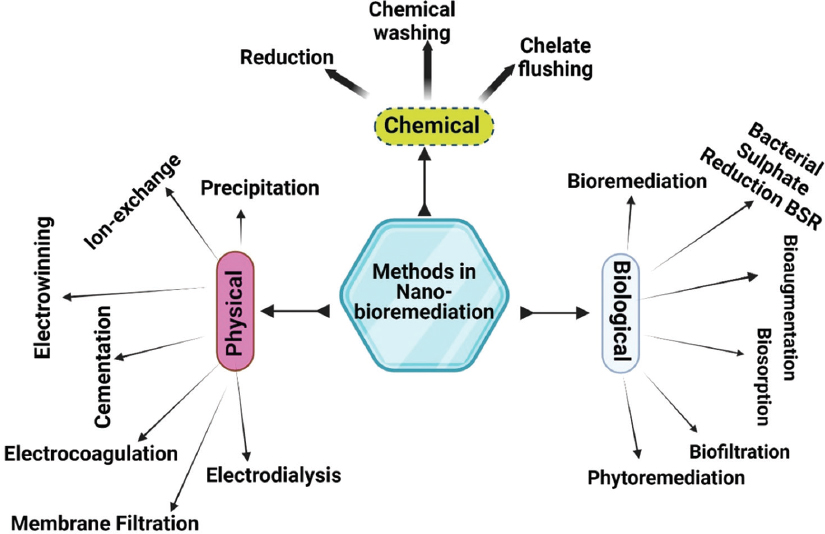 | Figure 2: Methods and mechanisms involved in nano-bioremediation (Created by the authors: BioRender) [Click here to view] |
3.2.1. Reduction
In heavily contaminated areas where the soil has a higher soluble pH, reductants such as dithionite and vaporous hydrogen sulfide are injected. Pollutants are corrupted or immobilized in these contaminated regions. One instance of this is the colloidal zerovalent particle (ZVI), which may be introduced deep into the groundwater system for effective remediation purposes and swiftly degrade, producing toxic compounds in the process [22].
3.2.2. Chemical washing
This is the immediate technique for eliminating metal pollutants through acids which act as powerful extractants. This process degrades the soil, which has negative effects on the surrounding area. It is perilous to treat contaminated soil in situ, and managing problems and handling hazardous waste is quite confusing.
3.2.3. Chelate flushing
This is the technique for extricating a gigantic number of weighty metals, as it is feasible to restore and reuse the dynamic specialists utilized all the while. PRBs utilize solvent-charged resins, which are 100% regenerative and highly efficient. EDTA and DTPA are synthetic chelating agents widely used in industrial and agricultural applications. Although these compounds are generally regarded as non-carcinogenic, their excessive environmental accumulation may contribute to ecological toxicity and enhanced metal mobility, which could indirectly affect biological systems [23].
3.3. Methods of Biological Treatment
Bioremediation is the field of biotechnology that expands its limitless uses for treating water and the climate. Here, the widely used and easily accessible biotechnology-based water treatment techniques are examined. Biological remediation is presently viewed as harmless to the ecosystem and financially savvy treatment innovation to take out metal contaminations, essentially in water and soil. Even though bioremediation is like that, the actual pollutants once in a while become harmful to the cycle’s microorganisms [25]. These issues drove researchers to find an elective arrangement by extending the strategies for bioremediation to accomplish high obstruction under outrageous conditions and persistent restoration qualities to support a high pace of bioremediation [Figure 2].
3.3.1. Bioremediation
Bioremediation implies a useful use of a living framework, such as the corruption, rotting, change, immobilization, or adjustment of poisonous contaminations into a harmless state or beneath fixation levels satisfactory to the administrative specialists. Escherichia, Citrobacter, Klebsiella, Rhodococcus, Staphylococcus, Alcaligenes, Bacillus, and Pseudomonas are often as possible utilized as microorganisms in bioremediation. Bioremediation comprises different remediation systems, for example, a characteristic weakening interaction by utilizing native microorganisms (bioaugmentation), an invigorated cycle by adding supplements (biostimulation), the utilization of hereditarily changed creatures, phytoremediation including the utilization of certain plants, and biomineralization including the exhaustive complete breakdown or biodegradation of natural materials into inorganic parts [16,26,27].
3.3.2. Biofiltration
The biofilter is a porous material with a surface covered in microorganisms and water. It is dependent upon the intricate system of arrangements between natural and impurity sections in water. During this phase, the permeable medium is modified into biomass using adsorbents. Microorganism connection, development, and separation are the three major tasks of a biofilter [28,29].
3.3.3. Biosorption
Natural techniques, because of materials of the organic beginning, for example, biomass separated from dead or idle microorganisms, are normally followed. An uninvolved strategy requires no inward energy and has many advantages, for example, exceptionally productive bio-sorbent recovery, metal recuperation, negligible slop development, and financially savvy recovery [30]. The biomass that goes about as a framework of the particle trade ties and shows its inborn qualities to dispense with weighty metals from extremely weakened water arrangements. For some crops, fungi, and bacteria, biosorbent products like cell wall composition are to blame for this [31]. Because of all these benefits, biosorption is seen to be a better solution for treating effluents that contain metals. A single metal ion is used in most sorption-based remediation procedures, but very few investigations have been done on blended metal alternatives. A few sorts of biomass with biosorptive potential have been perceived for microscopic organisms, green growth, and yeasts. These minimal-expense biosorbents make the strategy very financially savvy and cutthroat for ecological applications [32]. A few characteristics of this process include metal recuperation throughout a broad pH and temperature range, quick adsorption and desorption, and low resource and activity costs. It has been discovered that many hazardous heavy metals produced from modern trash have an exceptional metallic preference for the biosorbents being developed for them. Therefore, biosorbents made from a combination of lifeless biomass that includes several types of microbes are also used. Moreover, biosorbents are utilized by joining non-living biomass comprising isolated sorts of microorganisms. Immobilized biomass is prescribed for huge-scope execution contrasted with native biomass; however, various immobilization strategies require a full examination to assess their viability, convenience, and cost-viability. A few procedures were utilized to take out weighty methods such as complex development, chelating specialists, electrostatic cooperations, and particle trade utilizing materials obtained from horticultural tasks and other normal sources. To further develop sorption viability and dependability, primer treatment with synthetic specialists is likewise essential. Because of its low cost, fundamental biosorbent openness, increased ingestion rates, and lack of harmfulness, the biosorption technology is fruitful.
3.3.4. Biophysicochemical approach
In this approach, the natural interaction is combined with an adsorption or coagulation technique. It is considered an excellent elective remediation strategy due to its limited benefits compared to other conventional physicochemical treatment methods. Furthermore, organic strategies are exceptionally encouraging in ooze removal conventions and are likewise a fundamental component of arsenic treatment innovation [33]. Acidithiobacillus ferrooxidans has been extensively used to extract arsenic compounds from aqueous solutions, both natural and inorganic, due to its unique biosorbent properties that allow it to be isolated from mines [34]. Five different fungal strains were identified by Srivastava and Majumder [35] as potential removal agents for arsenic from contaminated sites. The biological oxidation of iron is an additional method, which makes use of the microbes Leptothrix ochracea and Gallionella ferruginea. The process enabling iron oxide to accumulate in the filter medium at the side of the organism creates an environment that is conducive to the sorption of metal and its subsequent removal from the solution. Unlike sorption procedures, which necessitate point-by-point monitoring, the continuous in situ production of iron oxides eliminates the need for chemical reagents in the trivalent arsenic oxidation process. Its ability to simultaneously remove iron, manganese, and arsenic from groundwater using a combination of biological oxidation, filtration, and sorption methods is yet another significant advantage [36].
3.3.5. Novel biosorbents
To improve the aggregation and selectivity of the microorganisms used in the bioremediation process, new biosorbents have been developed. This strategy given its hereditary design can further develop the microorganism’s medicinal action. The future examination incorporates the production of high adsorption capacity and explicitly designed microorganisms for harmful metal particles. Many tests have been carried out to determine how comparable these biosorbents are to one another for treating contemporary effluents. Generally speaking, replacing ingrained customary methods is a significant achievement. The method has enormous potential and is costly. Accordingly, a thorough analysis is anticipated in both pilot and large-scale biosorption procedures [37].
3.3.6. Bioaugmentation
This approach uses genetic engineering to facilitate the digestion of microorganisms during in situ bioremediation. Overexpression of the ArsR genes and genetic alteration of an E. coli strain by Kostal et al. [38] led to arsenic accumulation. It is viewed as an effective technique for expanding and eliminating arsenic aggregation and restricting specific ligands. Following the cultivation of many metagenomes from the construction waste, Chauhan et al. [39] investigated another As(V) opposition quality (arsN) that encodes a protein that is identical to acetyltransferase. The over-articulation of this protein brings about a more noteworthy disparity with arsenic in E. coli. Metagenomics research, coordinated development, and genome rearrangement are a few examples of innovative creative organic techniques that can be used to develop novel arsenic-safe materials suitable for arsenic cleanup [40]. The rearrangement of DNA aptly showed this in an operon that blocks arsenic accumulation.
3.3.7. Bacterial sulfate reduction (BSR)
To cope with heavy metals and sulfate pollutants, BSR was employed in an up-flow anaerobic packed-bed reactor. The work by Simonton et al. [41] demonstrated that the successful evacuation of Cr and As metals from the arrangement utilizing Desulfovibrio desulfuricans sulfate-decreasing microscopic organisms was generally upheld. More than 77.5% of the first degree of arsenic were removed. Moreover, Fukushi et al. [42] used a different backhanded procedure to eliminate mercury: they employed a range of natural substrates, with SO42- serving as the anaerobic terminal electron acceptor. The metabolic activity of the sulfate-reducing bacteria sequestered the metal into insoluble sulfides. Since As(III) is more poisonous and portable than As(V), the microbially-interceded transition between As(III) and As(V) further increases arsenic mobility.
3.3.8. Phytoremediation
Phytoremediation is a green method that involves using plants, namely hyperaccumulators, along with their corresponding microorganisms to clean up contaminated sites and protect the environment. A few plant-animal combinations that are suitable for soil restoration can absorb toxicants from the soil, surface water, groundwater, and leftovers [43]. Phytofiltration functions by making use of a plant’s ability to absorb heavy elements and display strong resistance. In the presence of contaminated water, hydrilla crops are commonly used for phyto-filtration; an improvement in this approach might be sought by cultivating these harvests under actual field conditions. The uptake and transport of poisons within crops by plant roots are known as phytoextraction. Although this method is used on soil contaminated with metals, it is often associated with several negative effects, including the removal of biomass, the evacuation of plant biomass, metal recovery, and the phytotoxic influence of metals. The term “phytodegradation,” also known as “phytotransformation,” refers to the process by which foreign chemicals are broken down by internal plant metabolic systems or by catalysts supplied by the plant itself. The primary issues with this approach are material deterioration and the arrangement of hazardous intermediates. One significant method of plant-mediated heavy metal sequestration is called phytovolatilization in which harvests assimilate pollutants that are subsequently released from the yields into the air with the arrival of impurities or modified types of foreign substances [44].
4. UTILIZING NANOTECHNOLOGY’S APPLICATIONS
NPs, also known as ultrafine solids, are made of extremely small particles (<100 nm), and their application is what defines nanotechnology. Atomic or sub-atomic totals are somewhere in the range of 1 and 100 nm long, and they can change their physicochemical attributes when contrasted with mass materials. NPs can be delivered from a scope of various components and can be viable with the variation’s substance synthesis, forms, and size. In essence, they are more agile and sensitive. NPs typically have two groups: Inorganic and natural NPs. Although inorganic NPs include attractive NPs, typical metal NPs (such as gold and silver), and semiconductive NPs (such as titanium and zinc oxide), natural NPs include carbon NPs (fullerenes). The synthesis of novel stable, affordable, and ecologically friendly NPs is important for use in agriculture, medicine, and electronics [70]. Even though NPs can be combined using a variety of conventional techniques, the biosynthetic pathway is advantageous because it can quickly combine regulated aspects, controlled harmfulness, low cost, and natural neighborliness. According to Okhovat et al. [71], biological contaminants such as bacteria and chemicals are frequently extracted using NPs, including organic pollutants.
NPs have novel properties given their particular physical and synthetic qualities. For the past 10 years, NPs and nanomaterials have been the focal point of consideration. NPs have numerous unique mass-related features and are often very small, able to hold their iotas, and produce quantum effects. NPs, for example, gold in different fields, are usually used due to these particular elements. NPs have been used to produce nuclear materials such as uranium and to bioremediate radioactive waste from nuclear power plants. JG-A12 cells and S-layer proteins of Bacillus sphaericus are unique in their ability to clean wastewater [72]. Natural frameworks can arrange and integrate very receptive atoms. Various investigations on plants have demonstrated that specific NPs can prevent germination and revolutionary turn of events.
Customarily, just physical and compound strategies have produced NPs. The exorbitant expense of chemical and physical procedures has led to the necessity for NP biosynthesis. Microbes and subsequently grown crop specimens were employed for the analysis in search of simpler union cycles of NPs. Its synthesis is a granular perspective, wherein decrease/oxidation is the primary response. Microbial compounds or plant phytochemicals with cancer-prevention properties or decreased qualities are mostly responsible for the decline in the comparison of metal compound NPs. Nanomaterial yield is presently projected at a large number of tons all over the planet and is supposed to rise emphatically soon. The expression “nanomaterial” is typically used to portray textures with something like one aspect explicitly planned somewhere in the range of 1 and 100 nm. Yeasts, actinomycetes, green growth, tiny creatures, and parasites can all be used in the manufacture of NPs [73].
The progressive amalgamation of NPs with plants is fundamentally deducible from the one-step biosynthesis process, the toxins’ shortfall, and external coating materials [74]. The benefit of utilizing plants to combine NPs is that these particles are readily obtainable, safe to handle, and contain a wide range of metabolites that can aid in their degradation. Numerous types of plants are generally solicited for inclusion in the NP blend. Water-dissolvable phytochemicals considerably reduce the amount of time needed for growth and bacteria to hatch, while decreasing metal particles often takes a smaller amount of time. Consequently, crops are a better source of NPs than bacteria and fungi. Agricultural production of metallic and oxide NPs is possible if issues related to the metabolic state of the plant are adequately addressed by increasing plant tissue and additional processing. Based on the data collected, it is clear that the influence of NPs varies among plants and is dependent on their size, fixation, and mode of use [75]. Research has demonstrated that additional investigation is needed to fully understand the physiological, fundamental, and atomic components of yields related to the NPs. Facilitating research on NPs’ activities, interactions with biomolecules, and effects is standard. The study states that there is ongoing research on the relationship between NPs and plant life.
The bacteria and some other bioorganisms generate some NPs [Table 2]. Microscopic organisms are viewed as a planned “biofactory” for blending NPs such as Ag, Au, Pt, Pd, Ti, TiO2, Cd, magnetite, and so on. Another approach can be employed in objective biosynthesis on catalysts, nutrients, polysaccharides, biodegradable polymers, and organic frameworks to engage the bacteria as a supply of proteins that can be equipped for accelerating explicit reactions that lead to an inorganic NP composite. Advantageously, the compound’s exceptionally high emission is accompanied by high measurements of 100–200 nm NPs in a rather unadulterated state, devoid of other cell proteins. By separating the NPs, the subsequent cleaning process is completed. The unique metal-holding capacities of bacterial cells and S-layers, as well as the tailored application of nanotechnology for bioremediation, need to be differentiated experimentally. Enhancing important limits that govern the stage of development of biological organisms, cell migration, and enzymatic processes (progressing reaction conditions and sequences of events) exemplifies the characteristics of NPs. More extensive work is expected to comprehend the exact reaction cycles of chemicals and proteins that contain NPs. The enormous combination of NPs with microbes is alluring because there is no requirement for risky, toxic, or exorbitant synthetic items in the amalgamation and solidness systems.
Table 2: Nanoparticles produced by various organisms and their applications in bioremediation.
| Nanoparticle | Organism | Properties | Applications in bioremediation | References |
|---|---|---|---|---|
| Silver nanoparticles (AgNPs) | Bacillus subtilis, Fusarium oxysporum | Antimicrobial, ROS generation | Removal of pathogens and organic pollutants in soil | [78] |
| Gold nanoparticles (AuNPs) | Pseudomonas aeruginosa, Shewanella spp. | Biocompatible, high stability | Heavy metal removal and degradation of hydrocarbons | [79] |
| Zinc oxide nanoparticles (ZnO-NPs) | Aspergillus niger, Penicillium spp. | Photocatalytic activity, UV active | Degradation of dyes and organic contaminants in wastewater | [46] |
| Iron Oxide Nanoparticles (Fe?O?-NPs) | Geobacter sulfurreducens, Desulfovibrio | Magnetic properties, ROS generation | Heavy metal immobilization, phenol degradation | [80] |
| Silica nanoparticles | Bacillus spp., Pseudomonas putida | Porous structure, biocompatible | Adsorption and immobilization of heavy metals | [82] |
| Titanium dioxide nanoparticles (TiO?-NPs) | Anabaena spp., Cyanobacteria | Photocatalytic, UV active | Degradation of hydrocarbons and persistent organic pollutants | [83] |
Organisms can likewise be utilized to acquire NPs with clear-cut sizes notwithstanding monodispersed. Organisms could be utilized as a source to create more NPs than microbes. This results from the infectious release of more proteins, which directly causes an increase in the production of NPs [76]. Furthermore, unconnected proteins were effectively used in the assembly of NPs instead of parasite culture. It is also essential to understand the concept of NPs. Compared to plant selection, microbiological processes, the creation of NPs occurs more slowly. According to Oksanen et al. [77], proteins in metal NPs are made in a parasitic manner that reduces salt in places where the NPs are strongest through the action of the reactant. One of the main drawbacks of mixtures of natural NPs based on microorganisms is that they require adaptation to combat using various tactics. Certain features are necessary for fungi to be used in industrial settings. These features include higher levels of development, the ability to produce specific enzymes or metabolites more readily, ease of processing, and affordable production requirements. Parasites enjoy an upper hand over other natural frameworks, including a quick development rate, a wide assortment of proteins, insignificant supplement necessity, and simple to make due. This promotes a sustainable approach to the synthesis of NPs. Hereditary designing strategies can be utilized soon to further develop molecule highlights. Combining particular catalysts and quick improvement with the utilization of simple supplements, yeast species enjoy a few upper hands over microbes and blend with metal NPs [75].
5. UTILIZING NANOTECHNOLOGY IN ENVIRONMENTAL CLEANUP THROUGH BIOREMEDIATION
The science of NP bioremediation provides particular reasons for the use of bioremediation using discrete NMs. For example, an increase in surface area per unit mass occurs as a material approaches the nanoscale. If additional fabric comes into contact with nearby components, this could have an impact on the reactivity. Because of their quantum influence, NMs require less enactment energy to allow for synthetic replies. Surface plasma reverberation is another NP-shown feature that can be used to identify hazardous compounds. We can use different NMs in different structures and aspects to purify the climate concerning size and form. Because NPs are highly sensitive to redox pollutants and can disseminate a pollution area that microparticles cannot. It is observed that the oxide coating of FeO on NPs affects the reactivity of NPs with structures. A photoelectron reaction can contaminate pentachlorophenol (PCP) in a research center setting [85]. Single metal NPs can lessen dechlorination by acting as biocatalysts. In a bioreductive Pd (II) examination, palladium NPs can be deposited on the cell wall and within the cytoplasm of Shewanella oneidensis, further, it stacked with H+ water revolutionaries by coordinating various substrates, such as acetic acid and water derivation, and designing them as electron contributors. When the Pd(0) revolutionary H+ particle in these stacked S. oneidensis Pd(0)-stored cells comes into touch with chlorinated compounds, it can react chemically with PCP, causing the chlorinated compound atom to be evacuated [86]. Moreover, microbial organisms that can biorecover or degrade specific compounds might be rendered immobile by NPs. Pseudomonas delafieldii was exposed to magnetic NPs (Fe3O4) functionalized with ammonium oleate, as opposed to traditional fixed surface or micron-sized cell immobilization. Applying an outside attractive field to these microbial cells concentrates these attractive NP covered cells on a specific portion of the reactor wall, isolates them from the mass arrangement, and allows them to be reused for similar foundation treatment. After being exposed to a higher amount of biomass, these microbial cells desulfurized dibenzothiophene-like non-NP-coated cells [87]. They include soil and carbon remediation, wastewater treatment, heavy metal discharge remediation, and endless gas for hydrocarbons. In the upcoming centuries, the environment may see some of the biggest changes due to NM’s continuous efforts to reduce pollution output.
6. APPLICATION OF NPS IN WATER TREATMENT
Although water covers approximately 70% of Earth’s surface, less than 0.1% of the planet’s total water is readily accessible freshwater, posing a major global challenge. Water’s performance can be improved through the development of nanotechnology. A few strategies for extraction, filtration, bioremediation, and sterilization utilizing nanotechnology utilize responsive media. Remediation is a technique for eliminating, lessening, or killing water toxins that can influence biodiversity or biological systems. There are three distinct categories of remedial methods: (1) Warm, (2) physicochemical, and (3) organic. The most well-known methods of extraction, adsorption, and oxidation are cheap, exorbitant, and tedious, though more eco-accommodating organic crumbling is reasonable, even though tedious. Nanomaterials with upgraded nearness, capacity, and selectivity to weighty metals and different pollutants are trend-setting innovations that can be utilized. Zero-valent iron (ZVI), CNTs, and other NPs utilized in water remediation are just a few examples, and mesoporous support monolayers, biopolymers, and NPs containing a single enzyme that self-assemble. Rapid and crucial progress in wastewater treatment, including oxidation through photocatalysis, has been made to tackle the issue of water contamination [88-91].
According to Tratnyek and Johnson [92], a treatment and siphoning framework is a water remediation framework that has been developed over time. The strategy calls for siphoning, making do, and subsequently replenishing the floor with water from the earth to the top. Until 1998, the treatment and siphon system was still in use as a water solution. Another strategy to assist water is to employ a porous responsive border (PRB). Without requiring the water to be brought to the surface, PRB purifies and heals groundwater. Biphenyl polychlorinated (PCB) chemicals, chromate, fragrant nitro compounds, and insecticides can all be used to clear up poisons, such as hydrocarbons chlorinated using this treatment. Some disadvantages of the PRB technology are its high cost and ambiguous replacement time. The processes of treatment and siphoning should be replaced. Metal hydroxides and metal carbonates can occasionally reduce iron reactivity as a result of pollution. A few elective surgeries have overshadowed these deficiencies. Large amounts of dangerous water pollutants were handled or reduced in the early 1990s using various zero-valent metals, such as iron (ZVI), which were recommended as PRB filter material [93]. Nano-iron’s tiny size allows it to be applied to many different tasks, including cleanup, contaminant reduction, and groundwater remediation either through direct injection or through permeable reactive barriers (PRBs) [94,95]. ZVI is often arranged into two categories: (1) Nanoscale ZVI (nZVI) and (2) receptive nanoscale iron particle (RNIP) items. They are made using the main nanotechnology techniques. NZVI particles measure 100–200 nm iron (Fe) with zero valence, whereas RNIP particles have a weight distribution of 50/50 between Fe and Fe3O4. The future application of ZVI is strongly reactive with a large variety of contaminants, including Cr2O2, NO3, Cu2+, and chlorinated hydrocarbons, as reported by Zhu et al. [96]. In addition to PRB, direct injection of nanoiron into soil, silt, or solid waste can be employed. The NPs are to be slurry tested. Once infused, the particles remain suspended, creating a healing environment. Although there is not much information on real applications, another strategy is to bind the NPs to a robust, effective matrix, such as ZVI’s activated carbonation. Different metals can supplant nanoiron. To corrupt trichloroethene and trichloroethane, two metal combinations, for example, endlessly iron nickel-copper were utilized [97].
A protein that contains iron called ferritin, which is an iron-storing substance, has some influence over both plants and animals. It is generated when an included system is composed of 24 nearly similar polypeptides, according to Theil [98]. When the nook develops, the iron molecules may join the hole through the protein’s shell, where the mineralization activity converts iron particles into ferrihydrite NPs. Under conditions of daylight or light, ferritin has been observed to replenish hazardous metals and chlorocarbons [99]. Advantages of ferritin over conventional iron impetus include the following: Ferritin does not change under photoreduction, and it also becomes more stable. According to Watlington [100], the exploration community has demonstrated a reasonable use of ferritin, with the difference in chromium being Cr(VI) versus Cr(III). Cr(VI), a toxin that causes cancer and is commonly discovered in modern landfills, is different from Cr(III), which is usually referred to as a less harmful and water-insoluble Cr molecule.
Some polymers, such as iron (III), zinc oxide (ZnO), zinc sulfide (ZnS), and titanium dioxide (TiO2), can be used as photocatalysts [Table 3]. There are countless uses for photocatalysts, such as the dark kind that tints paint and paper, light-immersion, protective antimicrobials, and altered cleansers for sunscreen. To remediate soil and air, photocatalysts can oxidize common toxins into harmless substances. Because of its low lethality, high photo-stability, high photoconductivity, and better efficiency, TiO2 is employed in state-of-the-art methods for photochemical oxidation in water remediation. Using a semiconductor’s properties, light may oxidize ordinary objects. The material will oxidize when the load transfers from the valence band to the conductive band at a high enough light level. Nanotechnology advances have allowed photocatalysts to be tailored to their reactivity and selectivity [100]. A photocatalyst is equipped for ousting pollutants of 1,1-dichloroethane, cis-1,2-dichloroethane, 1,1,1-trichloroethane, xylene, and toluene from groundwater. In a pilot scale, TiO2 was likewise observed to be prepared to eliminate from groundwater benzene, toluene, ethylbenzene, and xylene (BTEX). According to Liang et al [101], using nanotubes to induce exterior impacts of TiO2 is a strong point for progressively getting rid of the material. This is in line with the standard design of TiO2 powder. Even though ZnO photocatalysts are being produced, TiO2 has been deliberately used regularly in industry. ZnO is specifically used for two objectives in the identification and treatment of contaminants. In the early phases of the research, ZnO was a photocatalyst that worked well for identifying and removing 4-chlorocatechol [102].
Table 3: Some common photocatalysts used in bioremediation.
| Photocatalyst | Band Gap (eV) | Wavelength Range (nm) | Mechanism | Applications | References |
|---|---|---|---|---|---|
| Titanium dioxide (TiO?) | 3.2 | UV (<390 nm) | Photocatalytic generation of reactive oxygen species (ROS) under UV light | Degradation of organic pollutants (e.g., dyes, pesticides, hydrocarbons) | [83] |
| Zinc oxide (ZnO) | 3.3 | UV (<375 nm) | ROS generation under UV and some visible light | Treatment of pharmaceuticals, hydrocarbons | [106] |
| Graphitic carbon nitride (g-C?N?) | 2.7 | Visible (400–460 nm) | Visible-light-induced photoreduction and oxidation | Removal of heavy metals, antibiotics | [84] |
| Iron Oxide (Fe?O?) | 2.2 | Visible (400–560 nm) | Photocatalytic oxidation of organic pollutants under visible light | Degradation of phenols, dyes, and PAHs | [107] |
| Bismuth Oxyhalides (BiOX) | 2.1–2.8 | Visible (400–600 nm) | Photocatalytic degradation with enhanced charge separation | Treatment of antibiotics and persistent organics | [81] |
| Silver-based materials (Ag/Ag?O) | 1.3–2.0 | Visible (600–950 nm) | Surface plasmon resonance enhances ROS generation | Antimicrobial activity, organic pollutant removal | [78] |
| Zirconium oxide (ZrO?) | 5.0 | UV (<250 nm) | ROS generation and electron-hole pair separation | Removal of VOCs and heavy metals | [108] |
| Copper oxide (CuO) | 1.2–1.9 | Visible (650–1050 nm) | Visible-light photocatalysis for organic degradation | Degradation of herbicides and hydrocarbons | [109] |
| Mixed metal oxides (e.g., TiO?-ZnO) | 2.5–3.0 | Visible-UV (400–500 nm) | Synergistic effects for enhanced photocatalytic activity | Treatment of mixed organic and inorganic pollutants | [110] |
| Doped TiO? (e.g., N-TiO?) | 2.0–2.8 | Visible (400–600 nm) | Narrow band gap improves visible light activity | Removal of heavy metals, hydrocarbons, and dyes | [111] |
Nanotechnology is responsible for cleaning microorganisms in water, which is expected because of populace impacts, interest in clean water, and expanding contamination. Nanotechnology with antimicrobial properties is one option. According to Li et al. [103], several nanomaterials showed strong antimicrobial properties through a variety of techniques, including (1) substituting the bacterial cell envelope (e.g., peptides, chitosan, carboxyfullerene, CNTs, NPs ZnO, and silver); (2) producing oxygen-harming receptive organisms (e.g., Ag and NPs of liquid fullerene); (3) imperativeness transduction interruption (e.g., ag and NPs of the liquid fullerene); and (4) compound activity weakness and DNA blend (e.g., chitosan). TiO2 is the most effective opponent of all because it is simple, harmless when consumed, and stable in water [Figure 3].
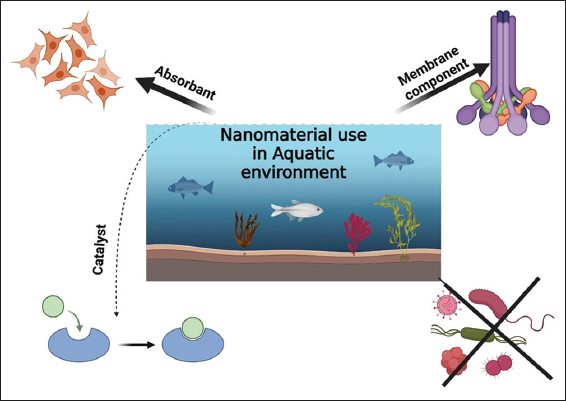 | Figure 3: Applications of nanomaterials in aquatic environments (Created by the authors: BioRender). [Click here to view] |
Utilizing the weight-critical power, nanofiltration is a separating structure. More notable push or disposal of multivalent particles, pesticides, and heavy metals is provided by contracted nanofiltration layers and conventional treatment systems. These days, the most recent development in air treatment is this invention, which can be used in your household, business, or firm bureau. A couple of reports on nanofiltration film shows were circulated [104,105]. Depending on the needs, several manufacturers provide nanofiltration films that can target different particles based on their subatomic weight.
7. ROLE OF NANOMATERIALS IN THE TREATMENT OF SOIL
One of the most important environmental concerns of our time has been and continues to be the remediation of contaminated soils and water. This involves the removal of pollutants from soil and water through a variety of techniques, such as the use of fungi or myco-remediation, cultivated plants by phytoremediation, or soil microorganisms through bioremediation, or biosorbent materials such as biochar, fly ash and organic fertilizers, humic substances (nano-FeS coated humic acid complex), and nanomaterials through green remediation or combined remediation, nano-phytoremediation. Many strategies, including phytoextraction, bioaugmentation and bio-stimulation, immobilization, biodegradation, and, in the case of earthworms, vermi-accumulation, vermi-transformation, and vermi-degradation, could be used to accomplish the remediation. There are many NPs that can be used to remediate groundwater and soil through nano-Fe3O4, nano zero-valent iron (nZVI), nano-hydroxyapatite, nano zeolite, nZVI, ZnO-NPs, nano-TiO2, stabilized NPs, and nano-silica [Tables 4 and 5].
Table 4: Different nanomaterials used in soil treatment.
| Nanomaterial | Role in soil treatment | Mechanism/Action | References |
|---|---|---|---|
| Carbon Nanotubes (CNTs) | Adsorption of heavy metals and organic pollutants | High surface area and porosity enable strong adsorption of contaminants; functionalized CNTs can bind specific molecules | [109] |
| Nanoscale Zero-Valent Iron (nZVI) | Remediation of heavy metal and organic pollutants (e.g., chlorinated solvents, pesticides) | Reduction of heavy metals to less toxic forms; degradation of organic contaminants through reactive oxygen species generation | [116] |
| Titanium Dioxide (TiO?) Nanoparticles | Photodegradation of organic contaminants | Generates reactive oxygen species under UV light, breaking down organic pollutants into non-toxic byproducts | [83] |
| Silica Nanoparticles | Soil stabilization and contaminant immobilization | Enhances soil structure by acting as a binder; immobilizes contaminants through adsorption | [117] |
| Magnetite (Fe?O?) Nanoparticles | Removal of heavy metals and recovery of valuable resources | Magnetic separation after adsorption: functionalized surfaces for selective contaminant binding | [110] |
| Graphene Oxide (GO) | Adsorption and immobilization of heavy metals and organic pollutants | High adsorption capacity due to functional groups; prevents leaching of contaminants into groundwater | [47] |
| Aluminum Oxide (Al?O?) Nanoparticles | Neutralization of acidic soils and removal of toxic anions | Reacts with acidic components to neutralize pH; adsorbs toxic anions such as phosphate and arsenate | [118] |
| Biochar Nanoparticles | Improvement of soil organic matter and adsorption of pollutants | Porous structure enhances retention of nutrients and pollutants; promotes microbial activity | [111] |
| Silver Nanoparticles (AgNPs) | Antimicrobial activity to reduce harmful soil pathogens | Releases silver ions that disrupt microbial membranes, targeting harmful pathogens | [78] |
| Clay-based Nanocomposites | Adsorption of organic and inorganic pollutants; improvement of soil structure | Combines the adsorption capabilities of clay minerals with the enhanced properties of nanomaterials | [119] |
| Zinc Oxide (ZnO) Nanoparticles | Nutrient release and soil microbial enhancement | Slow-release of zinc ions provides nutrients to plants and promotes the growth of beneficial soil microbes | [120] |
| Cerium Oxide (CeO?) Nanoparticles | Reduction of oxidative stress in plants growing in contaminated soils | Acts as a scavenger of reactive oxygen species, reducing plant stress and improving growth | [121] |
| Manganese Oxide (MnO?) Nanoparticles | Oxidation of organic contaminants and heavy metals | Catalyzes oxidation reactions to degrade pollutants and immobilize metals | [122] |
Table 5: Nanomaterial-based techniques for the soil treatment.
| Techniques | Nanomaterials Used | Mechanism | Applications | References |
|---|---|---|---|---|
| In situ Nanoremediation | nZVI, CNTs, TiO?, Graphene Oxide | Reduction, adsorption, and catalytic degradation of contaminants | Treatment of chlorinated solvents, heavy metals, and hydrocarbons. | [109,124-126] |
| Ex situ Nanoremediation | Magnetite NPs, Biochar, TiO? | Excavation followed by physical, chemical, or biological treatment using nanomaterials | Cleanup of sites with high contamination levels | [79,125,126] |
| Soil Washing with Nanomaterials | Functionalized Graphene Oxide, nZVI, CNTs | Enhanced desorption and solubilization of pollutants | Removal of heavy metals, hydrophobic pollutants like PAHs. | [123,124,126] |
| Electrokinetic Remediation | nZVI, GO, Magnetite NPs | Use of electric fields to mobilize and extract pollutants with nanomaterial-enhanced conductivity | Remediation of low-permeability soils. | [125,128,129] |
| Nanocatalysis | TiO?, MnO?, ZnO | Photocatalysis or chemical catalysis to degrade organic pollutants | Breakdown of pesticides, pharmaceuticals, and hydrocarbons. | [83,124,126,127] |
| Bio-nanoremediation | Functionalized Magnetite, Biochar NPs | Synergistic effect of nanomaterials and microbes in degradation and immobilization | Removal of hydrocarbons, immobilization of metals. | [129] |
| Phytoremediation Assisted by Nanomaterials | CeO?, ZnO, CNTs | Enhanced plant uptake and tolerance to contaminants, reduced oxidative stress | Uptake of heavy metals, hydrocarbons by plants. | [120,127] |
| Immobilization Techniques | Biochar, Silica NPs, Aluminum Oxide | Adsorption or complexation of contaminants, reducing bioavailability | Heavy metal stabilization, prevention of contaminant leaching. | [117,129,130] |
| Spray Coating of Nanoparticles | Graphene Oxide, CNTs | Coating forms a physical barrier and binds contaminants | Surface stabilization, dust suppression. | [119,127] |
| Nanofiltration for Soil Leachates | Functionalized CNT membranes, TiO? | Retention and capture of dissolved contaminants through selective filtration | Treatment of toxic leachates, preventing groundwater contamination | [110,128] |
| Soil Stabilization with Nanomaterials | Silica NPs, Biochar, Graphene Oxide | Reinforcement of soil particles, immobilization of contaminants | Road construction, prevention of soil erosion, and landfill caps | [50] |
| Reactive Barriers with Nanomaterials | nZVI, MnO?, Magnetite NPs | Interception of contaminant flow using reactive material barriers | Groundwater-soil interface remediation | [116] |
| Thermal Desorption with Nanomaterials | CNTs, Functionalized Biochar | Enhances heat transfer to volatilize and remove organic pollutants | Cleanup of soils contaminated with hydrocarbons and pesticides. | [131] |
| Advanced Oxidation Processes (AOPs) | TiO?, ZnO, Fe?O?, Graphene Oxide | Generation of hydroxyl radicals to oxidize and degrade organic contaminants | Removal of persistent organic pollutants (POPs), dyes, and pharmaceuticals High efficiency for complete degradation of contaminants | [83] |
| Nano-encapsulation | Polymer-coated nanoparticles, Lipid-based NPs | Encapsulation of contaminants to prevent their bioavailability | Containment of heavy metals and hydrophobic pollutants | [79] |
| Soil Vapor Extraction (SVE) with Nanomaterials | Functionalized CNTs, nZVI | Enhances the extraction of volatile organic compounds (VOCs) by increasing their solubility | Removal of volatile and semi-volatile organic compounds | [123] |
| Chemical Oxidation with Nanomaterials | MnO?, nZVI, Fe?O? | Oxidation of organic contaminants to non-toxic byproducts | Treatment of hydrocarbons, phenols, and pesticides | [122] |
| Nanoparticle-Assisted Bioremediation | Fe?O?, Graphene Oxide, Biochar NPs | Synergistic effects of nanomaterials and microbes to enhance biodegradation | Treatment of hydrocarbons, pesticides, and pharmaceuticals | [89, 117] |
| Electrochemical Remediation | CNTs, Graphene, Conductive Polymers | Application of electric fields combined with nanomaterials to degrade contaminants | Removal of metals and organic pollutants | [125] |
| Reactive Nano-composite Barriers | Mixed metal oxides, nZVI with polymers | Combination of adsorption and catalytic degradation reactions | Groundwater-soil interface remediation | [110] |
| Foam Stabilization with Nanoparticles | Silica NPs, Functionalized Biochar | Use of nanoparticle-stabilized foams to trap and immobilize contaminants | Containment of organic pollutants, hydrocarbons | [119] |
| Microbial Nano-factories | Bio-synthesized metal/oxide NPs | Use of microbes to produce nanomaterials in situ for contaminant remediation | Treatment of heavy metals and organic pollutants | [80] |
| Soil Thermal in situ Nanoremediation | CNTs, Functionalized Biochar | Enhancing thermal desorption with nanomaterials for localized heating and contaminant volatilization | Cleanup of hydrocarbons, PCBs, and dioxins | [131] |
| Gas-phase Nanoremediation | TiO?, Fe?O? NPs | Nanomaterials catalyze the degradation of gaseous pollutants within soil pores | VOC removal from contaminated soil and vadose zones | [93] |
| Nano-biosensors for Monitoring | Quantum Dots, Gold NPs, Functionalized CNTs | Detection of contaminants and monitoring nanoremediation progress in real time | Monitoring levels of heavy metals, hydrocarbons, and microbial activity | [132] |
| Hydrogel Nanocomposites | Polymer hydrogels with CNTs, Biochar NPs | Swelling and sorption capabilities to capture and immobilize contaminants | Adsorption of heavy metals, dyes, and pesticides | [117] |
| Nanoparticle-based Controlled Release Systems | ZnO, TiO?, Biochar | Slow and controlled release of nutrients or amendments into the soil | Enhances nutrient availability, reduces leaching of fertilizers | [120] |
Conventional remediation approaches may be used whether they are responsive or absorbent, in situ or ex situ. The extraordinary properties of nanomaterials are investigated such as their strong sorption and high reactivity (when mixed with pharmaceutical contaminants in water and wastewater systems) and collaboration. They can expand their invasion and handle water/wastewater in this way, which is often seen as unreasonable by conventional developments. Recently, oil spills have been smoothed with nanoscale calcium peroxide, and limitless soil cleanup has been achieved with nanoscale zero-valent iron [112]. Iron NPs with biopolymer adjustments suitably degrade lindane. Standard repairs include designed oxidation, the use of iron-responsive limitations, ex situ soil and siphon, and on-location warm treatment. NPs are used throughout the material to absorb a wide range of toxins, heavy metals, and pollutants. For water treatment and routine cleanup, iron oxide NMs are great because of their advantageous strong adsorption, simple parcels, and further developed security [113]. Groundwater can be treated and channeled through a siphon using photocatalysis. nZVI has been used in situ propels to remediate contaminated soils and groundwater by the following methods: (1) nZVI is inserted to produce a responsive limit; (2) adaptable nZVI is incorporated to form a nZVI crest; and (3) NP is incorporated into topsoil to adsorb or modify toxins. Iron oxide NPs (NMs) are excellent for mechanical wastewater treatment due to their strong adsorption, simple packaging, and enhanced security [114].
It has been demonstrated that poison significantly impairs structural flexibility and functional integrity and pace at which pollutants dissolve in polymeric materials, like polycyclic aromatic hydrocarbons, which can be bio-sanitized by designed polymer NPs. In addition, the sequestration of foreign materials by soil and package sorption in non-aqueous phase liquids (NAPLs) reduces bioavailability. To construct the polymer nanonetwork layers, the “upside” dissolvability of phenanthrene (PHEN), a designating hydrophobe regular infection, and PHEN’s presentation from debased spring material were demonstrated. In PHEN’s urethane acrylate (PMUA), the antecedent chain Poly(ethylene)glycol has been substituted. The union of valuable water stones was spurred by the rapidity of PHEN mineralization, and this has continued in PMUA NPs. After PHEN soaked in spring material, a NAPL model (hexadecane) was broken in PHEN’s presence. These results demonstrate that PMUA particles raise the mineralization level of sorbed and NAPL-got PHEN in addition to improving its presentation. In addition, subatomic usage may be a potent strategy for increasing the in situ biodegradation rate through trademark restrictions, given that PMUA foreign chemicals are accessible to microorganisms. For soil washing or siphon and treatment schemes, bioreactors can be used to repurpose removed particulate matter. When PHEN is attached to PMUA NPs and reduced by microscopic organisms, the characteristics of the particles are consistently settled and reusable in the presence of a diverse and potent bacterial population [115].
One example of a frequent contaminant that is hydrophobic and difficult to remove from the soil is polynuclear aromatic hydrocarbons or PAHs. Phenophilic polyurethane NPs (APU) have been coordinated in soil remedy with PAHs. In the same manner that surfactant micelles can advance PAH desorption and transportation, APU particles are unable to sorb individual cross-associated precursor chains on the surface of the soil, in contrast to the surface-specific sections of micelles. Thus, even with their fluid fixation, APU particles are stable. Preliminary results show how APU channels can be set up with hydrophobic outside regions that yield elevated phenanthrene (PHEN) and hydrophilic interior regions that increase atomic convey ability in soil. As an illustration, changing the size of the hydrophobic segment employed in the chain mix can lessen the partiality to APU particles for impurities. The transportability of colloidal dirt APU suspensions is limited by the heap thickness or the length of the swinging water-dissolvable chains on the outer layer of the particle. Because different mechanized NPs have the potential to control subatomic properties, they can change the kind of contamination and the conditions of the soil [115] [Table 6].
Table 6: Traditional versus nano-bioremediation pros and cons.
| Properties | Traditional bioremediation | Nano-bioremediation |
|---|---|---|
| Pros | • Cost-effective | • High efficiency and faster degradation rates |
| • Eco-friendly, uses natural microbes/plants | • Target both organic and inorganic pollutants, including heavy metals | |
| • Treat a wide range of organic pollutants and non-biological contaminants (e.g., radioactive, heavy metals) | • Nanoparticles enhance microbial activity and pollutant availability | |
| • Minimal secondary pollution | • Works even in harsh/limiting conditions (pH, salinity, toxicity) | |
| • Provides faster results | • Potential for in situ applications with higher precision | |
| • Effective for urgent/high-risk contamination | • Eco-friendly, relies on microbes/plants | |
| • Greater control and predictability | • Cost-effective | |
| • Minimal ecosystem disruption | ||
| • Suitable for diverse pollutants (hydrocarbons, metals, organics) | ||
| • Promotes long-term ecological restoration | ||
| Cons | • Slow process, takes weeks to years | • High production cost of nanomaterials |
| • Limited effectiveness for recalcitrant or highly toxic pollutants | • Potential ecotoxicity and bioaccumulation of nanoparticles | |
| • Dependent on environmental factors (pH, temperature, oxygen) | • Limited large-scale field applications so far | |
| • Low bioavailability of some pollutants | • Requires advanced monitoring and risk assessment | |
| • Possible incomplete degradation leading to by-products | • Regulatory and public acceptance challenges | |
| • Expensive (machinery, disposal costs) | • Slow process (months–years) | |
| • Causes ecosystem disturbance and secondary pollution | • Effectiveness depends on environmental conditions (pH, temperature, nutrients) | |
| • Often just relocates contamination (e.g., landfills) | • Not effective for all pollutants (especially highly toxic/recalcitrant ones) | |
| • Neglects long-term ecological benefits |
8. NP TOXICITY, ECOLOGICAL RISKS, AND MITIGATION STRATEGIES
While nanobioremediation offers transformative potential for environmental cleanup, concerns regarding NP toxicity and ecological risks remain critical obstacles for its practical deployment. Engineered NPs such as silver, zinc oxide, and TiO2 are known to exert cytotoxic effects on beneficial microbial consortia by generating reactive oxygen species, damaging cell membranes, and interfering with enzymatic functions, ultimately reducing microbial viability and bioremediation efficiency [133]. Beyond microbial systems, NPs can persist in soil and aquatic environments, where they may bioaccumulate and cause adverse effects on plants, invertebrates, and higher trophic organisms. Such uncontrolled release can disrupt microbial community structures and alter ecological balances, raising long-term biosafety concerns [134].
To address these challenges, innovative solutions are emerging. Coating NPs with biodegradable polymers has been shown to minimize microbial toxicity while retaining their catalytic and adsorptive functions, offering a safer route for environmental applications. Similarly, surface functionalization and green synthesis approaches such as using plant extracts or microbial metabolites enhance NP stability, biocompatibility, and eco-safety [135]. Recent studies also emphasize the importance of biosafety frameworks and standardized risk assessments to ensure safe field-level translation of nanobioremediation. These strategies demonstrate that thoughtful material engineering, combined with regulatory oversight, can significantly reduce risks and make nanobioremediation a sustainable and scalable technology for environmental restoration [136].
9. CHALLENGES OF NPS
The industrialization of nanotechnologies for field application is still in the testing stages, and their use for eliminating ecological pollutants is yet limited to the lab. While NPs have shown encouraging results in the removal of pollutants, their application in contaminated sites is constrained by their effect on microorganisms, loss of reactivity with time, transportation, and other factors [137]. For instance, some metal NPs lose their reactivity after a specific time of treatment because of limiting the section of liquids by obstructing the impact of soil. To conquer the issue, the utilization of stabilizers, for example, lactate, builds the versatility of iron NPs in soil. The lack of information regarding how NPs affect the development of microbial communities is another major issue with NPs. While several controlled tests on the effects of NPs on microbial populations have been conducted, the results are yet unconnected [138]. Some tests have a significant impact on microorganisms such as Escherichia coli and Staphylococcus aureus [139]. However, a few studies demonstrated that NPs as electron donors have a stimulatory effect on microorganisms such as bacteria and methanogens [140]. Notably, microorganisms are a significant piece of the regular pattern of supplements in the biological system and they assume a significant part in the evacuation of natural and inorganic impurities from the climate. Subsequently, the decrease of the microbial populace will prompt a diminishing in the obstruction of soil to impurities. Several mechanisms are responsible for NP toxicity. For example, NPs may disrupt cell membranes through the generation of reactive oxygen species and inhibit microbial growth by interfering with nutrient uptake across the cell membrane. Just a few investigations have displayed no evidence of any effect of NPs on the growth of parasitic provinces [141]. Certain microbes release tailored compounds and polysaccharides to shield themselves from the detrimental effects of NPs. One potential solution to this problem is to reduce the toxic effects of NPs by coating NP for specific natural polymers.
10. CONCLUSION
The integration of nanotechnology with bioremediation represents a forward-looking strategy to address persistent environmental challenges. While bioremediation offers eco-friendly, cost-effective, and sustainable solutions for pollutant degradation, its limitations such as slow kinetics and restricted pollutant range can be significantly overcome by the unique physicochemical properties of NPs. Engineered nanomaterials enhance microbial activity, improve pollutant bioavailability, and provide catalytic support for complex degradation pathways, thereby creating a synergistic remediation framework. However, careful attention must be given to NP toxicity, ecological impacts, and long-term sustainability to ensure that solutions do not generate secondary risks. Future research should emphasize the design of biocompatible and biodegradable nanomaterials, coupled with optimized microbial systems, to maximize remediation efficiency while minimizing environmental hazards. Overall, this synergistic approach offers a promising pathway toward cleaner ecosystems, advancing global efforts in sustainable development and environmental protection.
11. AUTHORS’ CONTRIBUTIONS
All authors made substantial contributions to conception and design, acquisition of data, or analysis and interpretation of data; took part in drafting the article or revising it critically for important intellectual content; agreed to submit to the current journal; gave final approval of the version to be published; and agree to be accountable for all aspects of the work. All the authors are eligible to be author as per the International Committee of Medical Journal Editors (ICMJE) requirements/guidelines.
12. FUNDING
There is no funding to report.
13. CONFLICTS OF INTEREST
The authors report no financial or any other conflicts of interest in this work.
14. ETHICAL APPROVALS
This study does not involve experiments on animals or human subjects.
15. DATA AVAILABILITY
All the data is available with the authors and shall be provided upon request.
16. PUBLISHER’S NOTE
All claims expressed in this article are solely those of the authors and do not necessarily represent those of the publisher, the editors and the reviewers. This journal remains neutral with regard to jurisdictional claims in published institutional affiliation.
17. USE OF ARTIFICIAL INTELLIGENCE (AI)-ASSISTED TECHNOLOGY
The authors declare that they have not used artificial intelligence (AI)-tools for writing and editing of the manuscript, and no images were manipulated using AI.
REFERENCES
1. Patowary R, Devi A, Mukherjee AK. Advanced bioremediation by an amalgamation of nanotechnology and modern artificial intelligence for efficient restoration of crude petroleum oil-contaminated sites: A prospective study. Environ Sci Pollut Res. 2023;30(30):74459-84. [CrossRef]
2. Ayub A, Wani AK, Chopra C, Sharma DK, Amin O, Wani AW, et al. Advancing dye degradation: integrating microbial metabolism, photocatalysis, and nanotechnology for eco-friendly solutions. Bacteria. 2025;4(1):15. [CrossRef]
3. Karnwal A, Martolia S, Dohroo A, Al-Tawaha AR, Malik T. Exploring bioremediation strategies for heavy metals and POPs pollution: The role of microbes, plants, and nanotechnology. Front Environ Sci. 2024;12:1397850. [CrossRef]
4. Adams GO, Fufeyin PT, Okoro SE, Ehinomen I. Bioremediation, biostimulation and bioaugmentation: A review. Int J Environ Bioremed Biodegrad. 2015;30:28-39. [CrossRef]
5. El Amrani A, Dumas AS, Wick LY, Yergeau E, Berthomé R. “Omics“ insights into PAH degradation toward improved green remediation biotechnologies. Environ Sci Technol. 2015;49:11281-91. [CrossRef]
6. Anuradha J. Use of Some Aquatic and Terrestrial Weeds in the Green Synthesis of gold Nanoparticles. [PhD Thesis. Pondicherry (Central) University]; 2013.
7. Das S, Sen B, Debnath N. Recent trends in nanomaterials applications in environmental monitoring and remediation. Environ Sci Pollut Res. 2015;22:18333-44. [CrossRef]
8. Xue X, Cheng R, Shi L, Ma Z, Zheng X. Nanomaterials for Monitoring and Remediation of Water Pollution. Nanosci Food Agri. 2016;2:207-33. [CrossRef]
9. Thome A, Reddy KR, Reginatto C, Cecchin I. Review of nanotechnology for soil and groundwater remediation: Brazilian perspectives. Water Air Soil Pollut. 2015;226:121. [CrossRef]
10. Singh R, Misra V. Stabilization of zero-valent iron nanoparticles: Role of polymers and surfactants. In: Handbook of nanoparticles. Cham: Springer International Publication; 2016. 985-1007. [CrossRef]
11. Patil SS, Shedbalkar UU, Truskewycz A, Chopade BA, Ball AS. Nanoparticles for environmental clean-up: A review of potential risks and emerging solutions. Environ Technol Innov. 2016;5:10-21. [CrossRef]
12. Saxena G, Purchase D, Mulla SI, Saratale GD, Bharagava RN. Phytoremediation of heavy metal-contaminated sites: Eco-environmental concerns, field studies, sustainability issues, and future prospects. Rev Environ Contam Toxicol. 2019;249:71-131. [CrossRef]
13. Rizwan M, Singh M, Mitra CK, Morve RK. Ecofriendly application of nanomaterials: Nanobioremediation. J Nanopart. 2014;2014:431787. [CrossRef]
14. Singh BK, Walker A. Microbial degradation of organophosphorus compounds. FEMS Microbiol Rev. 2006;30:428-71. [CrossRef]
15. Geary SM, Morris A, Salem AK. Assessing the effect of engineered nanomaterials on the environment and human health. J Allergy Clin Immunol. 2016;138:405-8. [CrossRef]
16. Halecký M, Kozliak E. Modern bioremediation approaches: Use of biosurfactants, emulsifiers, enzymes, biopesticides, GMOs. In: Filip J, Cajthaml T, Najmanová P, ?erník M, Zbo?il R, editors. Advanced Nano-Bio Technologies for Water and Soil Treatment. Cham, Switzerland AG: Springer Nature; 2020. 495-526. [CrossRef]
17. Pillai HPS, Kottekottil J. Nano-phytotechnological remediation of endosulfan using zero valent iron nanoparticles. J Environ Protect. 2016;7:734-44. [CrossRef]
18. Mondal P, Majumder C, Mohanty B. Laboratory based approaches for arsenic remediation from contaminated water: Recent developments. J Hazard Mater. 2006;137:464-79. [CrossRef]
19. Ahluwalia SS, Goyal D. Microbial and plant-derived biomass for removal of heavy metals from wastewater. Bioresour Technol. 2007;98:2243-57. [CrossRef]
20. Qu XL, Brame J, Li Q, Alvarez JJP. Nanotechnology for a safe and sustainable water supply: Enabling integrated water treatment and reuse. Acc Chem Res. 2013;46:834-43. [CrossRef]
21. Gray N. Water Science and Technology: An Introduction. United States: CRC Press, Taylor and Francis; 2017.
22. Cantrell KJ, Kaplan DI, Wietsma TW. Zero-valent iron for the in situ remediation of selected metals in groundwater. J Hazard Mater. 1995;42:201-12. [CrossRef]
23. Evangelou MWH, Ebel M, Schaeffer A. Chelate Assisted Phytoextraction of Heavy Metals from Soil. Effect, Mechanism, Toxicity, and Fate of Chelating Agents. Chemosphere. 2007;68:989-1003. [CrossRef]
24. Ramírez N, Cuadras A, Rovira E, Borrull F, Maria R, Marcé. Comparative study of solvent extraction and thermal desorption methods for determining a wide range of volatile organic compounds in ambient air. Talanta. 2010;(2):719-727. [CrossRef]
25. Patel HK, Kalaria RK, Khimani MR. Nanotechnology: A promising tool for bioremediation. In: Removal of Toxic Pollutants Through Microbiological and Tertiary Treatment. Netherlands: Elsevier; 2020. 515-47. [CrossRef]
26. Joutey NT, Bahafid W, Sayel H, El Ghachtouli N. Biodegradation: Involved microorganisms and genetically engineered microorganisms. Biodegrad Life Sci. 2013;1:289-320. [CrossRef]
27. ?van?arová M, Shahgaldian P, Corvini PF. Enzyme-based nanomaterials in bioremediation. In: Filip J, Cajthaml T, Najmanová P, ?erník M, Zbo?il R, editors. Advanced Nano-Bio Technologies for Water and Soil Treatment. Applied Environmental Science and Engineering for a Sustainable Future. Cham, Switzerland AG: Springer Nature, 2020. p. 345-66.
28. Srivastava NK, Majumder CB. Novel biofiltration methods for the treatment of heavy metals from industrial wastewater. J Hazard Mater. 2008;151:1-8. [CrossRef]
29. Devinny JS, Deshusses MA, Webster TS. Biofiltration for air pollution control. Boca Raton: CRC-Lewis Publishers; 2017. 28-34. [CrossRef]
30. Hashim MA, Mukhopadhyay S, Sahu JN, Sengupta B. Remediation technologies for heavy metal contaminated groundwater. J Environ Manag. 2011;92:2355-88. [CrossRef]
31. Volesky B, Holan Z. Biosorption of heavy metals. Biotechnol Prog. 1995;11:235-50. [CrossRef]
32. Wang J, Chen C. Biosorbents for heavy metals removal and their future. Biotechnol Adv. 2009;27:195-226. https://doi.org/10.1016/j.biotechadv.2008.11.002 [CrossRef]
33. Jain CK, Singh RD. Technological options for the removal of arsenic with special reference to South East Asia. J Environ Manag. 2012;107:1-18. [CrossRef]
34. Yan L, Yin H, Zhang S, Leng F, Nan W, Li H. Biosorption of inorganic and organic arsenic from aqueous solution by Acidithiobacillus ferrooxidans BY-3. J Hazard Mater. 2010;178:209-17. [CrossRef]
35. Srivastava PK, Vaish A, Dwivedi S, Chakrabarty D, Singh N, Tripathi RD. Biological removal of arsenic pollution by soil fungi. Sci Total Environ. 2011;409(12):2430-42. [CrossRef]
36. Pokhrel D, Viraraghavan T. Biological filtration for removal of arsenic from drinking water. J Environ Manag. 2009;90:1956-61. [CrossRef]
37. Vijayaraghavan K, Yun YS. Bacterial biosorbents and biosorption. Biotechnol Adv. 2008;26:266-91. [CrossRef]
38. Kostal J, Yang R, Wu CH, Mulchandani A, Chen W. Enhanced arsenic accumulation in engineered bacterial cells expressing ArsR. Appl Environ Microbiol. 2004;70:4582-7. [CrossRef]
39. Chauhan NS, Ranjan R, Purohit HJ, Kalia VC, Sharma R. Identification of genes conferring arsenic resistance to Escherichia coli from an effluent treatment plant sludge metagenomic library. FEMS Microbiol Ecol. 2009;67:130-9. [CrossRef]
40. Dai M, Copley SD. Genome shuffling improves degradation of the anthropogenic pesticide pentachlorophenol by Sphingobium chlorophenolicum ATCC 39723. Appl Environ Microbiol. 2004;70:2391-7. [CrossRef]
41. Simonton S, Dimsha M, Thomson B, Barton LL, Cathey G. Long-Term Stability of Metals Immobilized by Microbial Reduction. In: Proceedings of the 2000 Conference on Hazardous Waste Research: Environmental Challenges and Solutions to Resource Development, Production and Use, Southeast Denver, CO; 2000. p. 394-403.
42. Fukushi K, Sasaki M, Sato T, Yanase N, Amano H, Ikeda H. A natural attenuation of arsenic in drainage from an abandoned arsenic mine dump. Appl Geochem. 2003;18:1267-8. [CrossRef]
43. Kumar V, Kaushal A, Singh K, Shah MP. Phytoaugmentation technology for phytoremediation of environmental pollutants: opportunities, challenges and future prospects. In: Kumar V, Saxena G, Shah MP, editors. Bioremediation for Environmental Sustainability. Netherlands: Elsevier; 2021. 329-81. [CrossRef]
44. Ali H, Khan E, Sajad MA. Phytoremediation of heavy metals--concepts and applications. Chemosphere. 2013;91:869-81. [CrossRef]
45. Gitipour S, Sorial GA, Ghasemi S, Bazyari M. Treatment technologies for PAH-contaminated sites: a critical review. Environ Monit Assess. 2018;190:546. [CrossRef]
46. Modi S, Yadav VK, Amari A, Osman H, Igwegbe CA, Fulekar MH. Nanobioremediation: A bacterial consortium-zinc oxide nanoparticle-based approach for the removal of methylene blue dye from wastewater. Environ Sci Pollut Res. 2023;30(28):72641-51. [CrossRef]
47. Ye S, Zeng G, Wu H, Zhang C, Liang J, Dai J, et al. Co-occurrence and interactions of pollutants, and their impacts on soil remediation—a review. Critical reviews in environmental science and technology. 2017;47:1528-53. [CrossRef]
48. Bechtold W, Eberle F, Seitz W. Vapor extraction technology for contaminated soils. J Environ Eng. 2009;135:697-703.
49. Reddy KR, Kosgi S, Zhou J. A review of in-situ air sparging for the remediation of VOC-contaminated saturated soils and groundwater. Hazardous Waste and Hazardous Materials. 1995 Mar;12(2):97-118. [CrossRef]
50. Ismail IN, Samanta S, Asif Raja M, Daniyal M, Bilal M, Sheob M. Applications of Nanomaterial and Nanotechnology in Geotechnical Engineering. In Applications of Nanomaterials in Civil and Environmental Engineering: Towards Sustainable Development and Environment Remediation. Singapore: Springer Nature Singapore. 2025. pp. 237-254. [CrossRef]
51. McGrath SP, Zhao FJ, Lombi E. Phytoremediation of metals, metalloids, and radionuclides. Adv Agron. 2002;75:1-56. [CrossRef]
52. Singh P, Singh VK, Singh R, Borthakur A, Madhav S, Ahamad A, et al. Bioremediation: A sustainable approach for management of environmental contaminants. In: Abatement of Environmental Pollutants. Netherlands: Elsevier; 2020. 1-23. [CrossRef]
53. Kumar N, Bhawna T. Bioremediation: Principles and application in environmental management, toxicity, mechanisms of contaminants degradation, detoxification and challenges. In: Bioremediation for Environmental Sustainability. Netherlands: Elsevier; 2020. 1-26. [CrossRef]
54. Lin C, Cheruiyot NK, Bui XT, Ngo HH. Composting and its application in bioremediation of organic contaminants. Bioengineered. 2022;13(1):1073-89. [CrossRef]
55. Chandran P, Suresh S, Balasubramain B, Gangwar J, Raj AS, Aarathy UL, et al. Biological treatment solutions using bioreactors for environmental contaminants from industrial waste water. J Umm Al-Qura Univ Appl Sci. 2025;11(2):185-207. [CrossRef]
56. Omenna EC, Omage K, Ezaka E, Azeke MA. Bio-augmentation and bio-stimulation with kenaf core enhanced bacterial enzyme activities during bio-degradation of petroleum hydrocarbon in polluted soil. Sci Rep. 2024;14(1):8. [CrossRef]
57. Seol Y, Zhang H, Schwartz FW. A review of in situ chemical oxidation and heterogeneity. Environ Eng Geosci. 2003;9(1):37-49. [CrossRef]
58. Rodrigues R, Betelu S, Colombano S, Tzedakis T, Masselot G, Ignatiadis I. In situ chemical reduction of chlorinated organic compounds. In: Environmental Soil Remediation and Rehabilitation: Existing and Innovative Solutions. Cham: Springer International Publishing; 2020. 283-398. [CrossRef]
59. Usman M, Hanna K, Haderlein S. Fenton oxidation to remediate PAHs in contaminated soils: A critical review of major limitations and counter-strategies. Sci Total Environ. 2016;569:179-90. [CrossRef]
60. Holder AL, Vejerano EP, Zhou X, Marr LC. Nanomaterial disposal by incineration. Environ. Sci.: Processes Impacts. 2013; 15: 1652–1664. [CrossRef]
61. Liu J, Zhao L, Liu Q, Li J, Qiao Z, Sun P, et al. A critical review on soil washing during soil remediation for heavy metals and organic pollutants. Int J Environ Sci Technol. 2022;19:601-624. [CrossRef]
62. Rajmohan KS, Chandrasekaran R, Varjani S. A review on occurrence of pesticides in environment and current technologies for their remediation and management. Indian J Microbiol. 2020;60(2):125-38. [CrossRef]
63. Akpasi SO, Anekwe IM, Tetteh EK, Amune UO, Shoyiga HO, Mahlangu TP, et al. Mycoremediation as a potentially promising technology: Current status and prospects-a review. Appl Sci. 2023;13(8):4978. [CrossRef]
64. Liu SH, Zeng GM, Niu QY, Liu Y, Zhou L, Jiang LH, et al. Bioremediation mechanisms of combined pollution of PAHs and heavy metals by bacteria and fungi: A mini review. Bioresour Technol. 2017;224:25-33. [CrossRef]
65. Mohanty M, Dhal NK, Patra P, Das B, Reddy PS. Phytoremediation: A novel approach for utilization of iron-ore wastes. Rev Environ Contam Toxicol. 2010;206:29-47. [CrossRef]
66. Sanscartier D, Zeeb B, Koch I, Reimer K. Bioremediation of diesel-contaminated soil by heated and humidified biopile system in cold climates. Cold Regions Science and Technology. 2009;55(1):167-173. [CrossRef]
67. Sheoran V, Sheoran AS, Poonam P. Remediation techniques for contaminated soils. Environ Eng Manage J (EEMJ). 2008;7(4):379-87. [CrossRef]
68. Guo K, Han FX, Kingery W, Sun H, Zhang J. Development of novel nanomaterials for remediation of heavy metals and radionuclides in contaminated water. Nanotechnol Environ Eng. 2016;1(1):7. [CrossRef]
69. Souza EC, Vessoni-Penna TC, De Souza Oliveira RP. Biosurfactant-enhanced hydrocarbon bioremediation: An overview. Int Biodeter Biodegr. 2014;89:88-94. [CrossRef]
70. Singh P, Kim YJ, Zhang D, Yang DC. Biological synthesis of nanoparticles from plants and microorganisms. Trends Biotechnol. 2016;34(7):588-99. [CrossRef]
71. Onotu OP, Samuel HS, Undie DA, Akinpelu OO, Ibekwe FA, Etim EE. Nanoparticles for targeted removal of emerging contaminants in wastewater: Mechanisms and sustainable practices. Discov Nano. 2025;20(1):191. doi: [CrossRef]
72. Merroun ML, Raff J, Rossberg A, Hennig C, Reich T, Selenska-Pobell S. Complexation of uranium by cells and S-layer sheets of Bacillus sphaericus JG-A12. Appl Environ Microbiol. 2005;71(9):5532-43. [CrossRef]
73. Park TJ, Lee KG, Lee SY. Advances in microbial biosynthesis of metal nanoparticles. Appl Microbiol Biotechnol. 2016;100(2):521-34. [CrossRef]
74. Gurunathan S, Kalishwaralal K, Vaidyanathan R, Venkataraman D, Pandian SR, Muniyandi J, et al. Biosynthesis, purification and characterization of silver nanoparticles using Escherichia coli. Colloids Surf B Biointerfaces. 2009;74(1):328-35. [CrossRef]
75. Veeresh DA, Bhutia DD, Pokhrel I, Chakraborty S, Kumar A, Mishra A, et al. Nanoremediation and role in environmental clean up. In: Microbiome-Assisted Bioremediation. India: Academic Press; 2024. 381-400. [CrossRef]
76. Mohanpuria P, Rana NK, Yadav SK. Biosynthesis of nanoparticles: Technological concepts and future applications. J Nanopart Res. 2008;10(3):507-17. [CrossRef]
77. Yadav A, Kon K, Kratosova G, Duran N, Ingle AP, Rai M. Fungi as an efficient mycosystem for the synthesis of metal nanoparticles: Progress and key aspects of research. Biotechnol. Lett. 2015;37:2099-120. [CrossRef]
78. Calder AJ, Dimkpa CO, McLean JE, Britt DW, Johnson W, Anderson AJ. Soil components mitigate the antimicrobial effects of silver nanoparticles towards a beneficial soil bacterium, Pseudomonas chlororaphis O6. Sci Total Environ. 2012;429:215-22. [CrossRef]
79. López-Miranda JL, Esparza R, Rosas G, Pérez R, Estévez-González M. Catalytic and antibacterial properties of gold nanoparticles synthesized by a green approach for bioremediation applications. 3 Biotech. 2019;9(4):135. [CrossRef]
80. Ashraf N, Ahmad F, Da-Wei L, Zhou RB, Feng-Li H, Yin DC. Iron/iron oxide nanoparticles: Advances in microbial fabrication, mechanism study, biomedical, and environmental applications. Crit Rev Microbiol. 2019;45(3):278-300. [CrossRef]
81. Castillo-Cabrera GX, Espinoza-Montero PJ, Alulema-Pullupaxi P, Mora JR, Villacís-García MH. Bismuth oxyhalide-based materials (BiOX: X= Cl, Br, I) and their application in photoelectrocatalytic degradation of organic pollutants in water: A review. Front Chem. 2022;10:900622. [CrossRef]
82. Samani M, Ahlawat YK, Golchin A, Alikhani HA, Fathi-Gerdelidani A, Ahlawat U, et al. Nano silica-mediated stabilization of heavy metals in contaminated soils. Sci Rep. 2024;14(1):20496. [CrossRef]
83. New WX, Ogbezode JE, Gani P. Nanoparticles in soil remediation: Challenges and opportunities. Ind Domest Waste Manage. 2023;3(2):127-40. [CrossRef]
84. Bhanderi D, Lakhani P, Modi CK. Graphitic carbon nitride (gC 3 N 4) as an emerging photocatalyst for sustainable environmental applications: A comprehensive review. RSC Sustainability. 2024;2(2):265-87. [CrossRef]
85. Quan X, Yang S, Ruan X, Zhao H. Preparation of Titania nanotubes and their environmental applications as electrode. Environ Sci Technol. 2005;39(10):3770-5. [CrossRef]
86. Windt WD, Aelterman P, Verstraete W. Bioreductive deposition of palladium (0) nanoparticles on Shewanella oneidensis with catalytic activity towards reductive dechlorination of polychlorinated biphenyls. Environ Microbiol. 2005;7(3):314-25. [CrossRef]
87. Shan G, Xing J, Zhang H, Liu H. Biodesulfurization of dibenzothiophene by microbial cells coated with magnetite nanoparticles. Appl Environ Microbiol. 2005;71(8):4497-502. [CrossRef]
88. Sharma YC, Srivastava V, Singh VK, Kaul SN, Weng CH. Nano-adsorbents for the removal of metallic pollutants from water and wastewater. Environ Technol. 2009;30(6):583-609. [CrossRef]
89. Zelmanov G, Semiat R. Iron (III) oxide-based nanoparticles as catalysts in advanced organic aqueous oxidation. Water Res. 2008;42(1-2):492-8. [CrossRef]
90. Pang Y, Zeng G, Tang L, Zhang Y, Liu Y, Lei X, et al. PEI-grafted magnetic porous powder for highly effective adsorption of heavy metal ions. Desalination. 2011;281:278-84. [CrossRef]
91. Liu Y, Zeng Z, Zeng G, Tang L, Pang Y, Li Z, et al. Immobilization of laccase on magnetic bimodal mesoporous carbon and application in the removal of phenolic compounds. Bioresour Technol. 2012;115:21-6. [CrossRef]
92. Tratnyek PG, Johnson RL. Nanotechnologies for environmental cleanup. Nano Today. 2006;1(2):44-8. [CrossRef]
93. Lawrinenko M, Kurwadkar S, Wilkin RT. Long-term performance evaluation of zero-valent iron amended permeable reactive barriers for groundwater remediation – A mechanistic approach. Geoscience Frontiers. 2023; 14(2);101494:1674-9871. [CrossRef]
94. Singh J, Comfort SD, Shea PJ. Remediating RDX-contaminated water and soil using zero-valent iron. J Environ Qual. 1998;27(5):1240-5. [CrossRef]
95. Oh BT, Just CL, Alvarez PJ. Hexahydro-1,3,5-trinitro-1,3,5-triazine mineralization by zero-valent iron and mixed anaerobic cultures. Environ Sci Technol. 2001;35(21):4341-6. [CrossRef]
96. Zhu X, Li Y, Han B, Feng Q, Zhou L. Degradation characteristics of carbon tetrachloride by granular sponge zero valent iron. Int J Environ Res Public Health. 2021;18(23):12578. [CrossRef]
97. Carroll D, Sleep B, Krol M, Boparai H, Kocur C. Nanoscale zero valent iron and bimetallic particles for contaminated site remediation. Adv Water Resour. 2013;51:104-22. [CrossRef]
98. Theil EC. Ferritin: Structure, gene regulation, and cellular function in animals, plants, and microorganisms. Annu Rev Biochem. 1987;56(1):289-315. [CrossRef]
99. Lilly R, Prabhakaran S, Giridharan K, Sambandam P, Stalin B, Subhashini SJ, et al. Efficiency of Ferritin bio-nanomaterial in reducing the pollutants level of water in the underground corridors of metro rail using GIS. Sci Rep 2022;12:20301. [CrossRef]
100. Watlington, K. Emerging nanotechnologies for site remediation and wastewater treatment. Washington DC: Environmental Protection Agency.2025: pp. 1-55.
101. Liang HC, Li XZ, Nowotny J. Photocatalytical properties of TiO2 nanotubes. Solid State Phenomena. 2010;162:295-328. [CrossRef]
102. Kamat PV, Huehn R, Nicolaescu R. A “sense and shoot“ approach for photocatalytic degradation of organic contaminants in water. J Phys Chem B. 2002;106(4):788-94. [CrossRef]
103. Li Q, Mahendra S, Lyon DY, Brunet L, Liga MV, Li D, et al. Antimicrobial nanomaterials for water disinfection and microbial control: Potential applications and implications. Water Res. 2008;42(18):4591-602. [CrossRef]
104. Van Der Bruggen B, Mänttäri M, Nyström M. Drawbacks of applying nanofiltration and how to avoid them: A review. Sep Purif Technol. 2008;63(2):251-63. [CrossRef]
105. Hilal N, Al-Zoubi H, Darwish N, Mohamma A, Arabi MA. A comprehensive review of nanofiltration membranes: Treatment, pretreatment, modelling, and atomic force microscopy. Desalination. 2004;170(3):281-308. [CrossRef]
106. Jadoun S, Yáñez J, Mansilla HD, Riaz U, Chauhan NP. Conducting polymers/zinc oxide-based photocatalysts for environmental remediation: A review. Environ Chem Lett. 2022;20(3):2063-83. [CrossRef]
107. Shanaah HH, Alzaimoor EF, Rashdan S, Abdalhafith AA, Kamel AH. Photocatalytic degradation and adsorptive removal of emerging organic pesticides using metal oxide and their composites: Recent trends and future perspectives. Sustainability. 2023;15(9):7336. [CrossRef]
108. Hassan NS, Jalil AA, Khusnun NF, Bahari MB, Hussain I, Firmansyah ML, et al. Extra-modification of zirconium dioxide for potential photocatalytic applications towards environmental remediation: A critical review. J Environ Manage. 2023;327:116869. [CrossRef]
109. Zhang T, Lowry GV, Capiro NL, Chen J, Chen W, Chen Y, et al. In situ remediation of subsurface contamination: Opportunities and challenges for nanotechnology and advanced materials. Environ Sci Nano. 2019;6(5):1283-302. [CrossRef]
110. Latif R, Younas Z, Ahmad I, Ahmad M, Khurshid H, Mashwani ZU. Nanotechnology and soil heavy metal remediation: Bridging science and practical solutions. Environ Geochem Health. 2025;47(8):334. [CrossRef]
111. Yang Y, Javed H, Zhang D, Li D, Kamath R, McVey K, et al. Merits and limitations of TiO2-based photocatalytic pretreatment of soils impacted by crude oil for expediting bioremediation. Front Chem Sci Eng. 2017;11(3):387-94. [CrossRef]
112. Karn B, Kuiken T, Otto M. Nanotechnology and in situ remediation: A review of the benefits and potential risks. Environ Health Perspect. 2009;117(12):1813. [CrossRef]
113. Aragaw TA, Bogale FM, Aragaw BA. Iron-based nanoparticles in wastewater treatment: A review on synthesis methods, applications, and removal mechanisms. J Saudi Chem Soc 2021;25:101280. [CrossRef]
114. Gutierrez AM, Dziubla TD, Hilt JZ. Recent advances on iron oxide magnetic nanoparticles as sorbents of organic pollutants in water and wastewater treatment. Rev Environ Health 2017;32(1-2):111-117. [CrossRef]
115. Tungittiplakorn W, Lion LW, Cohen C, Kim J. Engineered polymeric nanoparticles for soil remediation. Environ Sci Tech 2004; 38(5):1605-10. [CrossRef]
116. Qian Y, Qin C, Chen M, Lin S. Nanotechnology in soil remediation - applications vs. Implications. Ecotoxicol Environ Saf. 2020;201:110815. [CrossRef]
117. Alsamadany H, Alharby HF, Al-Zahrani HS, Alzahrani YM, Almaghamsi AA, Abbas G, et al. Silicon-nanoparticles doped biochar is more effective than biochar for mitigation of arsenic and salinity stress in Quinoa: Insight to human health risk assessment. Front Plant Sci. 2022;13:989504. [CrossRef]
118. Vahid S, Sistani M, Negahdar H, Bamoharram FF, Shakeri MR. Remediation of physical, mechanical, and microstructural properties of chemical fertilizer–contaminated soil utilizing Al2O3 and Fe2O3 in alpha phase in the form of nanohybrid: Experimental study. Internat J Geomechanics 2023;23:11. [CrossRef]
119. Mohanapragash AG, Kaleeswari RK, Madhupriyaa D, Santhose S, Suresh M, Murugaiyan B, et al. Nanotechnology in sustainable soil remediation: exploring a review on carbon-based, clay-based, dendrimer, polymer, and nanocomposite based nanomaterials for environmental cleanup. Internat. J Environ Analy Chem 2025;105(20):1-26. [CrossRef]
120. Abegunde SM, Adubiaro HO, Ishaya FA. Zinc oxide nanoparticles in smart agricultural fertilization: Current developments and future perspectives. Hybrid Advances 2026;13:100637. [CrossRef]
121. Tahir M, Nadeem M, Sohail MI, Ali M, Khan A, Ayub MA. Role of cerium oxide nanoparticles in stress management in plants. In: Abdel Latef, A.A.H. (eds) Nanoparticles in Abiotic and Biotic Stress Alleviation: Mechanisms and Sustainable Plant Solutions. Nanotechnology in Plant Sciences 2026;6:215-235. [CrossRef]
122. Younas M, Bacha AUR, Khan K, Nabi I, Ullah Z, Humayun M, et al. Application of manganese oxide-based materials for arsenic removal: A review. Sci Total Environ 2024;918:170269. [CrossRef]
123. Gu F, Zhang J, Shen Z, Li Y, Li W, Zhang L, et al. A review for recent advances on soil washing remediation technologies. Bull Environ Contam Toxicol. 2022;109:651-8. [CrossRef]
124. Guerra FD, Attia MF, Whitehead DC, Alexis F. Nanotechnology for environmental remediation: Materials and applications. Molecules. 2018;23(7):1760. [CrossRef]
125. Almeelbi T, Bezbaruah A. Aqueous phosphate removal using nanoscale zero-valent iron. In: Nanotechnology for Sustainable Development. Cham: Springer; 2012. 197-210. [CrossRef]
126. Peng B, Zhou R, Chen Y, Tu S, Yin Y, Ye L. Immobilization of nano-zero-valent irons by carboxylated cellulose nanocrystals for wastewater remediation. Front Chem Sci Eng. 2020;14(6):1006-17. [CrossRef]
127. Ahmad A, Ghufran R, Al-Hosni TK. Bioavailability of zinc oxide nano particle with fly ash soil for the remediation of metals by Parthenium hysterophorus. J Environ Health Sci Eng. 2019;17:1195-203. [CrossRef]
128. Sundararaghavan A, Mukherjee A, Suraishkumar GK. Investigating the potential use of an oleaginous bacterium, Rhodococcus opacus PD630, for nano-TiO? remediation. Environ Sci Pollut Res Int. 2020;27:27394-406. [CrossRef]
129. Cai Z, Zhao X, Duan J, Zhao D, Dang Z, Lin Z. Remediation of soil and groundwater contaminated with organic chemicals using stabilized nanoparticles: Lessons from the past two decades. Front Environ Sci Eng. 2020;14(5):84. [CrossRef]
130. Moameri M, Khalaki MA. Capability of Secale montanum trusted for phytoremediation of lead and cadmium in soils amended with nano-silica and municipal solid waste compost. Environ Sci Pollut Res. 2019;26:24315-22. [CrossRef]
131. Zhao C, Dong Y, Feng Y, Li Y, Dong Y. Thermal desorption for remediation of contaminated soil: A review. Chemosphere. 2019;221:841-55. [CrossRef]
132. Hassan RY. Advances in electrochemical nano-biosensors for biomedical and environmental applications: From current work to future perspectives. Sensors. 2022;22(19):7539. [CrossRef]
133. Alizadeh M, Qarachal JF, Sheidaee E. Understanding the ecological impacts of nanoparticles: Risks, monitoring, and mitigation strategies. Nanotechnol Environ Eng. 2025;10:6. [CrossRef]
134. Buchman JT, Hudson-Smith NV, Landy KM, Haynes CL. Understanding nanoparticle toxicity mechanisms to inform redesign strategies to reduce environmental impact. Acc Chem Res. 2019;52:1632-42. [CrossRef]
135. Saxena R, Kotnala S, Bhatt SC, Uniyal M, Rawat BS, Negi P, et al. A review on green synthesis of nanoparticles toward sustainable environment. Sustain Chem Cli Act 2025;6:100071. [CrossRef]
136. Hidangmayum A, Debnath A, Guru A, Singh BN, Upadhyay SK, Dwivedi P. Mechanistic and recent updates in nano-bioremediation for developing green technology to alleviate agricultural contaminants. Int J Environ Sci Technol (Tehran). 2022:1-26. [CrossRef]
137. Hodson ME. The need for sustainable soil remediation. Elements. 2010;6(6):363-8. [CrossRef]
138. Altammar KA. A review on nanoparticles: Characteristics, synthesis, applications, and challenges. Front Microbiol. 2023;17:1155622. [CrossRef]
139. Hosnedlova B, Kabanov D, Kepinska M, B Narayanan VH, Parikesit AA, Fernandez C, et al. Effect of biosynthesized silver nanoparticles on bacterial biofilm changes in S. aureus and E. coli. Nanomaterials. 2021;12(13):2183. [CrossRef]
140. Yang Z, Shi X, Wang C, Wang L, Guo R. Magnetite nanoparticles facilitate methane production from ethanol via acting as electron acceptors. Sci Reports. 2015;5(1):16118. [CrossRef]
141. Kandeel M, Rehman TU, Akhtar T, Zaheer T, Ahmad S, Ashraf U, et al. Anti-parasitic applications of nanoparticles: A review. Pakistan Vet J. 2022;42(2). Advance online publication. [CrossRef]