
1. INTRODUCTION
Pearl millet is a major staple food crop in arid and semi-arid regions due to its wider adaptability to extreme climatic situations such as drought, high temperature stress etc. [1–3]. In India, pearl millet occupied an area of 7 million hectares and produced 11 million tonnes with an average productivity of 1,453 kg ha−1 [4]. Similarly, in Odisha, 0.00134 million tonnes of pearl millet were produced annually from an area of 0.00216 million hectares with an average yield of 622 kg ha−1 [5] which is substantially lower than the national average, indicating significant scope for productivity enhancement.
Under changing climatic scenarios and increasing pressure on food and nutritional security, diversification of cropping systems has become imperative [6,7]. In this context, the inclusion of pearl millet, especially during the dry seasons, offers a promising alternative in humid and sub-humid regions where water scarcity and climatic stress often limit the performance of other crops. Despite its potential, the productivity of pearl millet in these regions remains low due to inadequate crop nutrition and inefficient nutrient management practices, particularly poor synchronization of nitrogen (N) supply with crop demand, posing a major constraint to its wider adoption.
Optimizing N management, particularly through precise application strategy, performs a vital role in increasing the crop yields [8]. N is a critical macronutrient that influences vegetative growth, grain yield and crop health [9]. Conventional N management practices in pearl millet are often characterized by low nitrogen use efficiency (NUE), leading to substantial losses through leaching, volatilization, and denitrification, which not only limit crop performance but also contribute to environmental pollution [10]. The effectiveness of N fertilization depends not only on the total dose but also on N application strategies. Improper N scheduling often results in poor crop uptake, greater nutrient losses and reduced yield, especially under humid and sub-humid conditions. Therefore, adopting appropriate N application strategies tailored to specific agro-climatic conditions is essential for realizing the full yield potential of pearl millet.
Recent advancements in nanotechnology have introduced novel nutrient delivery systems in agriculture. Nano urea, developed by Indian Farmers Fertilizer Cooperative Limited (IFFCO), is characterized by its high surface area, controlled release behaviour and targeted nutrient delivery, and has the potential to enhance NUE, reduce fertilizer consumption, lower production costs, and minimize environmental footprints [11]. Nano urea is particularly important to be examined because it offers the possibility of replacing a significant portion of conventional granular urea through its higher leaf absorption efficiency and rapid translocation within the plant. Unlike conventional soil-applied urea, nano urea is primarily applied as a foliar spray, and its performance is highly dependent on the timing and frequency of application. Although encouraging results of nano urea have been reported in crops such as rice and wheat, scientific evidence on its effectiveness in pearl millet, particularly under humid and sub-humid agro-ecological conditions, remains limited and inconclusive.
Although nano urea shows promise, there is limited evidence on how reduced soil-applied N can be effectively combined with timely nano urea foliar sprays in pearl millet, especially under the humid and sub-humid conditions of South Odisha where N losses are high and input costs associated with additional sprays and nano-urea may influence adoption. This gap highlights the need for systematic evaluation of integrated nano urea based N management strategies tailored to the region’s agro-climatic conditions. In this backdrop, the present study was undertaken to assess the effect of different N application strategies involving nano urea on growth, productivity, and N uptake of pearl millet under the agro-climatic conditions of Odisha.
2. MATERIALS AND METHODS
2.1. Study Area
A field study was conducted during the rabi season of 2023–24 at the P.G. Research Farm, Centurion University of Technology and Management (CUTM), Odisha. The meteorological data was collected from an automatic weather station situated at CUTM, Parlakhemundi campus. During the experimental period, the maximum and minimum temperatures varied from 28.20°C to 32.69°C and 14.37°C to 21.39°C, respectively, with the peak temperature observed during the 45th Standard Meteorological Week (SMW). A total rainfall recorded during entire crop period was 38.20 mm, primarily distributed across the 45th, 47th and 49th SMWs. These were light and intermittent showers, insufficient to cause measurable N leaching. Sunshine hours ranged from 5.29 to 8.80 hours per day, while pan evaporation and wind velocity varied between 1.47–3.09 mm and 3.29–5.86 km hr−1, respectively. Relative humidity was consistently higher in the morning compared to the afternoon throughout the crop growing season.
2.2. Physico-Chemical Details of Experimental Site Soil
The soil of the study field was characterized as sandy loam, with 72% sand, 10% silt, and 18% clay. It had a slightly acidic pH of 6.1 and an electrical conductivity of 0.62 dS/m. The organic carbon (0.39%) and the available N was also low (233.7 kg ha−1) in the experimental soil. The soil had moderate levels of available phosphorus (14.1 kg ha−1) as extracted by Bray’s method and potassium (227.2 kg ha−1). In our study, the conversion of %N to kg ha−¹ was performed by multiplying the %N with soil mass factor (2.24 × 10⁶ kg ha−¹), derived from the measured bulk density (1.49 g cm−³) and the sampling depth (0–15 cm).
2.3. Treatment Details
The study was carried out using the pearl millet hybrid 'Kaveri Boss 65', following the recommended fertilizer dose of 80:40:30 kg N:P2O5:K2O ha−1. The experiment was laid out in a Randomized Block Design comprising eight treatments replicated three times. N was applied according to the treatments (Table 1). In treatments receiving 75% and 50% of recommended N, the soil-applied N was split as 50% basal, 25% at 20 days after sowing (DAS), and 25% at 45 DAS. The entire dose of phosphorus was applied basally through single super phosphate by side-dressing in a band 5 cm away from the sowing rows, while potassium was applied as muriate of potash by broadcasting uniformly over the plots at the time of sowing. The nano urea used in the study was a commercially available liquid formulation developed by the IFFCO and was applied as a foliar spray at a concentration of 4 ml l−¹ of water using a knapsack sprayer. The nano urea used in the study was a commercially available liquid formulation developed by IFFCO and was applied as a foliar spray at a concentration of 4 ml L-1 water using a knapsack sprayer. Spray solution was applied at 500 L ha-1 to ensure uniform canopy coverage. As per the manufacturer’s specifications, the product contains 4.0% total N (w/v) and is formulated using N nanoparticles with an average particle size range of 20-50 nm. Thus, each foliar spray supplied approximately 0.08 kg N ha-1, and treatments receiving two and three sprays supplied a cumulative nano urea-N of 0.16 and 0.24 kg N ha-1, respectively. The treatments receiving two sprays were applied at 40 and 50 DAS, while treatments receiving three sprays were applied at 40, 50 and 60 DAS during early morning hours under calm weather conditions to ensure uniform leaf coverage and minimize spray drift. The foliar nano urea spray timings (40, 50, and 60 DAS) were selected to coincide with critical physiological stages of pearl millet viz., panicle initiation, flowering and early grain filling to maximize synchronization between N supply and crop demand.
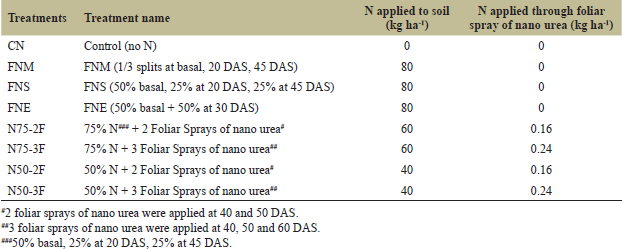 | Table 1. Treatment details. [Click here to view] |
2.4. Data Collection
At harvest, the plant height was measured in centimetres using a measuring tape on five randomly selected pearl millet plants from each treatment, and the mean value was recorded. Measurements were taken from the base of the stem to the base of the earhead. Tiller number at harvest was determined by randomly placing a 0.25 m² quadrat within the net plot area of each treatment, and the number of tillers within the quadrat was counted and later mathematically converted to a per square metre basis. Dry matter accumulation at harvest was estimated by uprooting pearl millet plants from 1 m row length of the second or third row from the bund to avoid border effects. The collected plant samples were first sun-dried to remove surface moisture and then oven-dried in a hot air oven at 65°C until a constant weight was achieved. The dry weight was recorded and dry matter accumulation was finally expressed on a per square metre basis by multiplying the per metre row dry weight with the respective row spacing.
Earheads from the net plot area of each treatment were harvested separately, sun-dried and threshed. Grain yield was recorded from each plot and converted to kilograms per hectare (kg ha−¹), adjusting the grain moisture content to 14%. After removing the earheads, plants were cut at ground level and the stover was field-dried, weighed and expressed as stover yield in kg ha−¹. N uptake by grain was calculated by multiplying the N content of grain (%) with the oven-dry grain yield, and expressed in kg ha−¹. Similarly, N uptake by stover was calculated by multiplying the N content of stover (%) with the oven-dry stover yield and expressed in kg ha−¹. Total N uptake was computed as the sum of N uptake by grain and stover and expressed in kg ha−¹.
Agronomic nitrogen use efficiency (ANUE) was calculated to express yield increase per unit of applied N and was expressed in kg kg−¹.
Apparent recovery nitrogen use efficiency (RNUE) of applied N was calculated to estimate the percentage recovery of N in above-ground biomass and expressed in percentage.
Partial factor productivity of nitrogen (PFPN) was calculated as an index of total crop productivity per unit of applied N.
2.5. Data Analysis
The collected data on growth, yield attributes, yield, and N removal were analysed with the Analysis of Variance to determine treatment effects. The statistical analysis was performed using [12,13] the “agricolae” package in R version 4.4.2 (R Core Team, 2024). To interpret the differences among treatments, Standard Error of Means (SEm±) and Critical Difference (CD) at 5% significance level (p = 0.05) were computed as per the standard procedure [14]. Results were presented with superscript letters to denote treatment comparisons, where treatments sharing the same letter were not significantly different at the 5% level of significance.
3. RESULTS AND DISCUSSION
3.1. Growth Characters
The experiment results indicated that the treatment N75-3F was on par with N75-2F, full nitrogen standard (FNS) and full nitrogen modified (FNM) in terms of plant height, number of tillers (m-2) and dry matter production (Table 2). The comparable growth response observed under N75-3F and N75-2F may be associated with a more synchronized N supply through combined soil and foliar application. Such synchronization has been reported to support sustained N availability [15]. Adequate N availability during the active vegetative phase may be associated with relatively greater stem height and tiller number among treatments, reflecting the role of N in supporting vegetative growth. In addition, foliar-applied nano urea may have contributed to improved plant growth and dry matter accumulation, as beneficial growth and yield responses to nano-urea application have also been reported in rice [16]. Interestingly, foliar application of nano urea either twice at 40 and 50 DAS in treatment N75-2F or thrice at 40, 50, and 60 DAS in treatment N75-3F did not register any significant difference between these treatments in terms of plant height, number of tillers (m-2) and dry matter production. In the present study, pearl millet attained 50% flowering at 47 DAS (23rd December, 2023) indicating that the third foliar nano urea spray applied at 60 DAS was imposed during the post-flowering stage when crop N uptake had already begun to decline, thereby explaining the limited additional benefit of the third spray [17,18].
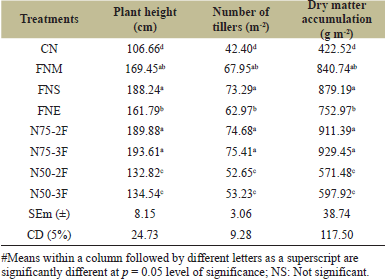 | Table 2. Effect of N application strategies on growth parameters of pearl millet. [Click here to view] |
3.2. Grain and Stover Yield
Grain and stover yields of pearl millet varied among N application strategies (Figs. 1 and 2). However, the differences in grain and stover yields were statistically non-significant among N75-3F, N75-2F, FNS, and FNM, indicating comparable yield performance across these treatments. Moreover, the former treatment showed significant superiority over full nitrogen early (FNE) in grain yield by expressing 21.28% higher values. This might be attributed due to a better synchrony between N supply and crop demand in N75-3F N75-2F, FNS, and FNM treatments, while poor synchrony in FNE led to N losses declining NUE. Moreover, delaying N application until 30 DAS in FNE treatment might have missed the early critical stages of crop growth, tillering, and canopy development [19].
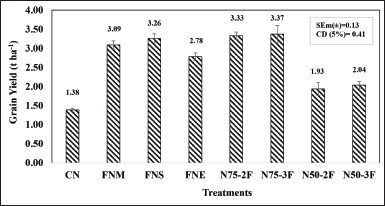 | Figure 1. Effect of N application strategies on grain yield of pearl millet. [Click here to view] |
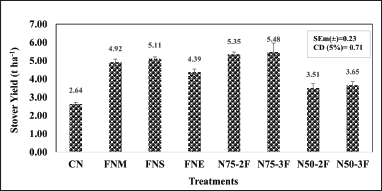 | Figure 2. Effect of N application strategies on stover yield of pearl millet. [Click here to view] |
Seasonal weather conditions, characterized by light and intermittent rainfall (38.2 mm) and moderate to high temperatures (28.2°C–32.7°C), may have influenced crop responses to N application strategies by affecting N availability, movement, and loss processes in the soil. Limited rainfall (38.2 mm) might have reduced N leaching but also restricted its proper dissolution and movement into the root zone, while higher temperatures (28.2°C–32.7°C) could have accelerated N losses through volatilization, especially from surface-applied fertilizers. These conditions might have led to inefficient N use in treatments with large basal applications, whereas strategies that supplied N gradually (N75-2F and N75-3F) better synchronized nutrient availability with crop demand, resulting in improved crop response.
The results confirm that the findings of Samanta et al. [20] in finger millet and Meena et al. [21] in pearl millet who similarly reported that foliar application of nano-urea combined with reduced soil N doses performed comparably to 100% conventional N application, confirming that temporally distributed N supply better synchronizes nutrient availability with crop demand. For stover yield, N75-3F showed its significant superiority over FNE by 24.77%. Such results corroborate the findings of Arya et al. [22] and Shree et al. [23]. The lowest grain and stover yield were noted by control highlighting the importance on N application strategy in pearl millet.
3.3. N Content and Uptake
The data on N content and uptake in grain and stover of pearl millet were significantly affected by the N application strategies (Table 3). N concentration in grain ranged from 0.926% to 1.201%, while stover N concentration varied from 0.323% to 0.451%. The highest N concentration in both grain and stover was recorded under N75–3F but it was statistically at par with N75–2F and FNS. N uptake primarily governs crop yield, as the amount of N absorbed and assimilated by the crop during critical growth stages directly determines the accumulation of dry matter and consequently the final grain yield. However, N75–3F recorded the highest N uptake in grain, stover, and total uptake by the crop but mean values in this treatment showed statistically at par with N uptake in grain, stover, and total N uptake by the crop in the treatments N75–2F and FNS. However, N75–3F significantly outperformed FNM and FNE, which were statistically at par with each other, with increase of 24.24% and 41.38% in grain N uptake, 19.04% and 38.88% in stover N uptake, and 20.37% and 35.41% in total N uptake, respectively. Applying 75% RDN with three foliar sprays of nano urea at 40, 50, and 60 DAS ensured a more continuous and readily available N supply throughout the critical growth stages of pearl millet. This likely enhanced N absorption efficiency and promoted better growth, leading to increased grain and stover yields. In contrast, FNM and FNE lacked such targeted supplementation either due to less synchronized splits or delayed application resulting in lower N uptake. Similar findings were observed by Patel et al. [24] and Manjunath et al. [25].
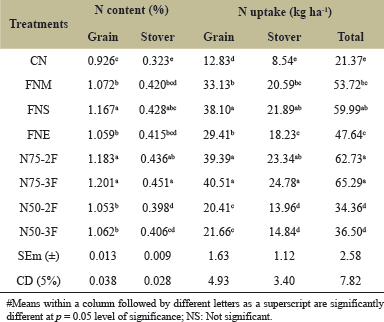 | Table 3. Effect of N application strategies on N content and N uptake (kg ha-1) of pearl millet. [Click here to view] |
3.4. Nitrogen Use Efficiency
Among NUE indices viz., agronomic nitrogen use efficiency (ANUE), recovery nitrogen use efficiency (RNUE), and partial factor productivity of nitrogen (PFPN), significantly higher values were observed under N75-3F (ANUE: 33.01 kg kg-1, RNUE: 72.91%, PFPN: 55.99 kg kg-1) which was on par with N75-2F. These numerical trends indicate that combining reduced soil-applied N (75% RDN) with foliar nano-urea sprays tended to improve synchrony between N supply and crop demand, potentially reducing N losses and improving N uptake per unit of fertilizer applied. Moreover, the former treatments significantly outperformed FNS treatment in terms of AEN, REN and PFPN. The N50-2F treatments exhibited the lowest ANUE and RNUE and remained on par with N50-3F and FNE, respectively. However, FNE noted the lowest PFPN which was on par with FNM and FNS. This affirms that although foliar nano-urea sprays provided readily available N, the absolute quantity of N supplied through foliar application is relatively small and short-acting and therefore could not fully compensate for the reduced basal soil N supply. Based on the NUE data, N75-2F was statistically comparable to N75-3F, making it the most economical recommendation as it achieves near-optimal agronomic performance with only two foliar nano-urea sprays, thereby reducing labour costs and input use by 25% compared to full conventional N application Table 4.
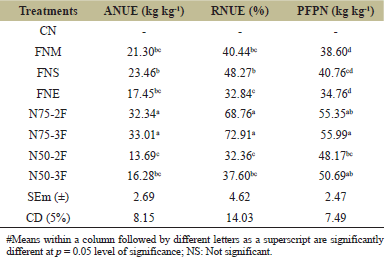 | Table 4. Effect of N application strategies on NUE of pearl millet. [Click here to view] |
4. CONCLUSION
Although N75-3F produced the highest numerical values for yield and NUE, these were statistically comparable with N75-2F. Considering the principle of marginal returns and the additional cost of a third nano-urea spray, application of N75-2F is concluded as the most agronomically efficient N management strategy for pearl millet under South Odisha conditions. However, multi-location and multi-season validation is essential before broader generalization and future research should address long-term soil health, microbial dynamics, and integration with precision nutrient management tools for sustainable pearl millet intensification.
5. ACKNOWLEDGMENT
We acknowledge the support and resources provided by the Centurion University of Technology and Management for providing necessary facilities and support to conduct the research.
6. AUTHORS CONTRIBUTION
All authors made substantial contributions to conception and design, acquisition of data, or analysis and interpretation of data; took part in drafting the article or revising it critically for important intellectual content; agreed to submit to the current journal; gave final approval of the version to be published; and agree to be accountable for all aspects of the work. All the authors are eligible to be author as per the International Committee of Medical Journal Editors (ICMJE) requirements/guidelines.
7. FUNDING
There is no funding to report.
8. CONFLICTS OF INTEREST
The authors report no financial or any other conflicts of interest in this work.
9. ETHICAL APPROVAL
The field study was conducted in compliance with institutional and national guidelines for agronomic research. Experimental protocols were reviewed and approved by the Department of Agronomy, M.S. Swaminathan School of Agriculture, Centurion University of Technology and Management (CUTM), Odisha. The ethical approval was provided by Dr. S.P. Nanda, Dean (Admin.) on 03rd November, 2023 through a letter number Agronomy/PG/Synopsis/2023/30.
10. DATA AVAILABILITY
All the data is available with the authors and shall be provided upon request.
11. PUBLISHER’S NOTE
All claims expressed in this article are solely those of the authors and do not necessarily represent those of the publisher, the editors and the reviewers. This journal remains neutral with regard to jurisdictional claims in published institutional affiliation.
12. USE OF ARTIFICIAL INTELLIGENCE (AI)-ASSISTED TECHNOLOGY
The authors declare that they have not used artificial intelligence (AI)-tools for writing and editing of the manuscript, and no images were manipulated using AI.
REFERENCES
1. Sairam M, Shanthi Priya G, Maitra S, Shankar T. Effect of the summer pearl millet-groundnut intercropping system on the growth, productivity, and competitive ability of crops under south Odisha conditions. Plant Sci Today 2023;10:238–46; CrossRef
2. Priya GS, Maitra S, Masina S, Ray S. Spatial arrangement in pearl millet-groundnut intercropping system influences productivity, competition and economics. Int J Exp Res Rev 2025;47:108–19; CrossRef
3. Das S, Maitra S, Sagar L, Balaji M, Pavan A, Sairam M, et al. Effect of split nitrogen application on yield attributes and grain yield of pearl millet (Pennisetum glaucum L.). Crop Res 2025;60(1&2):12–17.; CrossRef
4. GoI. Agricultural statistics at a glance 2023. Department of Agriculture and Farmers Welfare Economics and Statistics Division, New Delhi, India, pp 36, 2024. https://desagri.gov.in/wp-content/uploads/2024/09/Agricultural-Statistics-at-a-Glance-2023.pdf)
5. GoO. Odisha agricultural statistics 2018-19. Department of Agriculture and Farmers’ Empowerment, Bhubaneswar, India, pp 36, 2021. https://agri.odisha.gov.in/sites/default/files/2022-10/ODISHA%20AGRICULTURE%20STATISTICS%202018-19.pdf)
6. Maitra S, Sahoo U, Sairam M, Gitari HI, Rezaei-Chiyaneh E, Battaglia ML, et al. Cultivating sustainability: a comprehensive review on intercropping in a changing climate. Res Crops 2023;24(4):702–15; CrossRef
7. Ray S, Maitra S, Sairam M, Sameer S, Sagar L, Divya BS, et al. The nexus between intercropping systems, ecosystem services and sustainable agriculture: a review. Res Crops 2025;26(1):1–11; CrossRef
8. Lalichetti S, Maitra S, Singh S, Masina SR. Advanced strategies for optimization of primary nutrients requirement in rice - a review. Plant Sci Today 2024;11:353–65; CrossRef
9. Sairam M, Maitra S, Sagar L, Krishna TG, Sahoo U. Precision nutrient management on the growth and productivity of Rabi maize (Zea mays L.) under light textured brown forest soils of Odisha. Res Crops 2023;24:487–95; CrossRef
10. Sairam M, Maitra S, Sagar L, Biswas T, Bárek V, Brestic M, et al. Application of precision nutrient tools for the optimization of fertilizer requirements and assessment of the growth and productivity of maize (Zea mays L.) in the northeastern Ghat of India. J Agric Food Res 2025; 21: 101958; CrossRef
11. Indian Farmers Fertiliser Cooperative Limited (IFFCO). Nano urea liquid fertilizer [Internet]. Indian Farmers Fertiliser Cooperative Limited (IFFCO), New Delhi, India, 2021. Available via: https://www.iffco.in/en/nano-urea-liquid-fertilizer (Accessed 31 March 2026)
12. de Mendiburu F. agricolae: Statistical Procedures for Agricultural Research. R package version 1.3-7. Comprehensive R Archive Network (CRAN), 2023. Available via: https://CRAN.R-project.org/package=agricolae
13. R Core Team. R: A language and environment for statistical computing. R Foundation for Statistical Computing, Vienna, Austria, 2024. Available via: https://www.R-project.org/?
14. Singh RK, Chaudhary BD. Biometrical methods in quantitative genetic analysis. 2nd edition, Kalyani Publishers, New Delhi, India, pp 56–78, 1979.
15. Singh B, Buresh RJ, Peng S. Synchronizing nitrogen fertilizer application to crop nitrogen needs. In: Ladha JK (ed.). Improving nitrogen use efficiency in crop production, Burleigh Dodds Science Publishing Limited, Cambridge, UK, pp 167–200, 2024; CrossRef
16. Chandra KB, Paul V, Pandey R, Upadhyay PK, Meena RC. Evaluation of nano-urea application on growth and yield performance of basmati rice under flooded conditions. Int J Plant Soil Sci 2025;37(10):506–26; CrossRef
17. Vegda SN, Bhuva H, Chauhan PN, Dodiya KJ, Vekariya SN. Effect of foliar application of nano urea on growth, yield and profitability of summer pearl millet (Pennisetum glaucum L.). Int J Res Agron 2024;SP-7(8):16–20; CrossRef
18. Sagar L, Maitra S, Singh S, Sairam M. Influence of precision nutrient management on dry matter accumulation and partitioning of rice in southern Odisha. Agric Sci Dig 2023;43:767–75; CrossRef
19. Shewalkar SR, Patil CB, Pawar SB, Wankhede AD, Bahekar PM. Response of pearl millet (Pennisetum glaucum L.) to split application of nitrogen under irrigated conditions. Int J Res Agron 2024;7(11):264–9; CrossRef
20. Samanta S, Maitra S, Shankar T, Gaikwad D, Sagar L, Panda M, et al. Comparative performance of foliar application of urea and nano urea on finger millet (Eleusine coracana L. Gaertn). Crop Res 2022;57:166–70; CrossRef
21. Meena KR, Sharma OP, Dhaker DL, Sain RS, Yadav A, Bhamboo K. Effect of nitrogen levels and foliar application of nano urea on productivity of pearl millet (Pennisetum glaucum L.). Int J Res Agron 2024;SP-7(10):255–8; CrossRef
22. Arya GR, Manivannan V, Marimuthu S, Sritharan N. Effect of foliar application of nano-urea on yield attributes and yield of pearl millet (Pennisetum glaucum L.). Int J Plant Soil Sci 2022;34(21):502–7; CrossRef
23. Shree K, Augustine R, Manuel IR, Balaganesh B, Kumar D. Effect of soil and foliar applications on growth and productivity of pearl millet (Pennisetum glaucum L.). Asian J Soil Sci Plant Nutr 2024;10(2):236–41; CrossRef
24. Patel D, Viradiya M, Kotadiya R, Chaudhary K, Dohat M, Birla D, et al. Liquid nano urea fertilizer: its impact on nutrient quality and uptake in summer pearl millet. Int J Adv Biochem Res 2024;8(8):661–6; CrossRef
25. Manjunath, Hiremath KA, Nekkanti L, Koppalkar BG, Kulkarni S, Umesh B. Effect of nano urea on nutrient uptake and economics of pearl millet. Int J Res Agron 2025;8(3):38–43; CrossRef