
1. INTRODUCTION
Protein is essential for tissue repair, immune regulation, and muscle maintenance [1]. Global demand for dietary protein continues to increase, with animal-source foods remaining the predominant source of protein in many regions despite growing interest in plant-based alternatives [2,3]. However, increasing reliance on animal-derived protein has raised concerns regarding animal welfare, potential adverse health effects, and environmental sustainability [1]. Livestock production is recognized as a major contributor to anthropogenic greenhouse gas emissions, with methane from enteric fermentation representing one of the largest emission sources within the agricultural sector [4].
Experts and researchers in food and nutrition have shown strong interest in sustainable protein sources, particularly plant-based proteins such as peas and soy. Plant-based proteins offer several advantages, including lower environmental impact, improved sustainability, and favorable nutritional profiles, making them promising alternatives to animal-derived proteins [5]. Soybeans are a particularly notable source of plant-based protein, with their popularity attributed to affordability, availability, nutritional value, and favorable sensory attributes [6]. Soybeans have long been used to produce fermented products such as tofu and tempeh [7]. The nutritional value of soybeans is reported to increase after the germination process, especially the presence of functional compounds such as amino acids and polyphenols [8]. Previous studies have demonstrated that soybean sprout consumption improves bone metabolism and increases serum calcium levels in ovariectomized rats, indicating its potential to support bone health [9,10]. In addition, germination enhances the accumulation of bioactive compounds in soybean sprouts, particularly proteins, isoflavones, and phenolic compounds, thereby improving their nutritional and functional properties [11,12]. Isoflavones are among the major bioactive compounds in soybean sprouts and exhibit strong antioxidant activity, which may help reduce oxidative stress associated with metabolic disorders [13]. Furthermore, due to their phytoestrogenic activity, soy isoflavones have been widely investigated for their potential role in maintaining bone health and reducing bone loss in postmenopausal women [14].
Osteoporosis is a silent disease caused by an imbalance between bone formation and resorption, often associated with the aging process. The number of osteoporosis sufferers worldwide currently reaches 200 million. Women are at a higher risk of osteoporosis fractures than men [15]. The decline in estrogen levels during menopause is a major contributor to decreased bone mineral density and an increased risk of osteoporosis in women [16]. Furthermore, oxidative stress negatively affects bone remodeling, resulting in reduced bone mineral density. Since oxidative stress and inflammation contribute to osteoporosis, dietary antioxidants have attracted considerable attention as nutritional strategies to protect bone cells, maintain bone remodeling, and reduce oxidative stress-related bone loss [17,18]. Recently, sappan wood powder was reported to contain a very strong antioxidant compound, sourced from the compound brazilin [19]. Brazilin, the principal bioactive compound in sappan wood, exhibits various biological activities, particularly antioxidant and anti-inflammatory properties, making sappan wood a promising functional food ingredient [20]. Appropriate drying techniques and carrier agents are commonly employed to preserve the stability of bioactive compounds during processing and storage.
Calcium plays an essential role in bone mineralization and may complement the bone-health benefits associated with soybean isoflavones and antioxidant-rich sappan wood. This is because calcium plays a crucial role in bone mineralization. Recent studies have reported that a corn–soybean sprout formulation enriched with eggshell-derived calcium improved oxidative stress markers and mitigated the effects of estrogen deficiency in ovariectomized rats [21]. Vitamin D facilitates intestinal calcium absorption and supports calcium utilization, making it an important component of bone-health formulations [22]. Instant beverage powders represent a practical delivery system for bioactive compounds because they are convenient, have extended shelf life, and are easily reconstituted prior to consumption. Foam-mat drying has been widely applied in the production of instant beverage powders because it shortens drying time while maintaining desirable physicochemical properties and product quality [23,24]. Furthermore, this technique produces powders with good solubility, acceptable stability, and convenient reconstitution characteristics, making it suitable for functional beverage development [25,26]. Therefore, this study aimed to characterize the physicochemical properties and antioxidant activity of an instant soybean sprout milk drink enriched with sappan wood powder produced by the foam-mat drying method as a potential functional beverage to support bone health.
2. MATERIALS AND METHODS
2.1. Materials
The materials used were Devon 2 variety soybeans obtained from Balitkabi in Malang, sappan wood from farmers in Semarang, calcium lactate, vitamin D3, maltodextrin, gum Arabic, sugar, and skim milk powder for making instant drinks. Chemicals and enzymes for the analysis of instant drinks used were distilled water, isooctane, ethyl alcohol, methanol, ethanol, Folin-Ciocalteu, sodium carbonate, gallic acid, DPPH, hydrochloric acid, titrating acid, pepsin enzyme, pancreatin enzyme, potassium hydroxide, sodium bicarbonate, and alpha-tocopherol.
2.2. Making instant drink
Germination was carried out for 36 hours under dark (light-free) conditions. The production of soybean sprout milk began by preparing the sprouts, which were then mixed with water at a ratio of 1:5 (w/v) and blended for 5 minutes. The resulting mixture was filtered using a muslin cloth to obtain the soybean sprout milk. The extracted milk was subsequently used as the base material for the preparation of instant soybean sprout milk [21,22]. The preparation of the instant beverage was adapted from previous studies with modifications [23,26] using the formulation presented in Table 1. A total of 200 mL of soybean sprout milk was mixed with sappan wood powder at various concentrations, heated at 70 °C for 10 minutes, cooled for 5 minutes, and subsequently filtered. Other ingredients such as calcium, vitamin D, sugar, and skim milk powder were added and mixed until fully dissolved. Thereafter, 10% (w/v) maltodextrin was added as a foam stabilizer and homogenized using a homogenizer for 2 minutes at 4,000 rpm, followed by the addition of 1% (w/v) sodium stearoyl lactylate as a foaming agent and further homogenization for 10 minutes at 10,000 rpm. The resulting foam was molded to a thickness of 2 mm on a glass tray and dried in a cabinet dryer at 60 °C for 6 hours. The dried foam sheets were then crushed to obtain an instant beverage powder with a uniform particle size.
 | Table 1. Formula of instant soybean sprout–sappan wood drink. [Click here to view] |
2.3. Measurement of water content, aw, and pH of instant drinks
The water content of instant drinks was determined using a Shimadzu moisture analyzer (MOC63u, Japan). A Rotronic. Hygropalm-HP23-Aw-A aw meter (Switzerland) was used to determine the aw value, while the pH value of instant drinks was determined using a digital pH meter (Hanna HI 1221, Singapore).
2.4. Measurement of the solubility of instant drinks
The solubility of instant drinks was obtained based on the amount of sample dissolved in Aquadest media. The steps started with 1 g of sample, dispersed in 100 ml of distilled water in a 250 ml beaker, magnetically stirred at 25°C for 30 minutes, and centrifuged at 3,000 rpm for 5 minutes at the same temperature. The supernatant was dried in an oven at 105°C for 12 hours until it reached a constant weight. Solubility was calculated as the ratio of the mass of the dissolved sample to the mass of the initial sample [22].
2.5. Hygroscopicity measurement of instant drinks
The hygroscopicity of instant drinks was determined by preparing 1 g of sample and then placing it in a closed container with 75.5% RH (saturated NaCl was prepared) at a temperature of 25°C. The sample was left in the dark for 7 days in a closed container. Hygroscopicity is the amount of water vapor absorbed by the sample during storage and is expressed in % [22].
2.6. Measurement of foaming profile of instant drinks
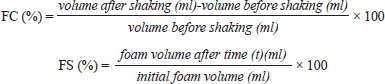
Foaming capacity (FC) and foaming stability (FS) of instant beverages were evaluated using a previously reported method [27]. A 1 g sample of instant beverage was prepared, dissolved in distilled water, and the pH was adjusted to 7.0. The sample was then homogenized using a homogenizer for 5 minutes at 4,000 rpm, and the resulting foam was transferred into a 250 ml measuring cylinder. The foam volume formed after shaking was recorded at 0 and 30 minutes. The percentage increase in volume indicates the FC and FS values calculated based on the stability of the foam volume after shaking.
2.7. Measurements of the antioxidant activity of instant drinks
The antioxidant activity of instant drinks was determined using a DPPH free radical scavenging assay with slight modifications [22]. Instant drink powder was initially extracted using ethanol for 24 hours. A total of 1 ml of extract was mixed with 1 ml of DPPH solution and 2 ml of ethanol, vortexed, and incubated for 30 minutes at 37°C in the dark. Absorbance was measured at a wavelength of 517 nm, and antioxidant activity was expressed as % radical scavenging activity (%RSA) relative to the control.
2.8. Measurement of total phenols in instant drinks
The Folin-Ciocalteu method was used in the determination of total phenolics of instant drinks [22]. A total of 0.5 g of instant drinks was extracted with 10 ml of 85% methanol, followed by shaking for 15 minutes to ensure complete extraction of the extract compounds. The mixture was filtered, and 0.4 ml of the resulting filtrate was transferred into a test tube. Next, 0.4 ml of Folin-Ciocalteu reagent was added, and the mixture was shaken until homogeneous and allowed to stand for 6 minutes. After that, 4.2 ml of 5% (w/v) sodium carbonate solution was added, followed by shaking. The mixture was incubated for 90 minutes at room temperature in the dark. The absorbance of the solution was measured at a wavelength of 760 nm using a UV-Vis spectrophotometer. A standard calibration curve was prepared using gallic acid, and the results were expressed as milligrams of gallic acid equivalents per gram of sample (mg GAE/100g).
2.9. Measurement of the brazilin content of instant drinks
Analysis of brazilin levels in instant drinks was carried out by high-performance liquid chromatography (HPLC) using a system from Waters (Massachusetts, USA) equipped with a quaternary pump, online degassing, an autosampler, and a photodiode array detector. The detector was set at a wavelength of 286 nm. Separation of analytes used a Reliant C18 analytical column with dimensions (150 × 4.6 mm, 5 µm). A mixture of water (A) and acetonitrile (B) was used as the mobile phase with the following gradient program: 0.00–2.00 minute (15% B); 2.00–5.00 minute (15%–25% B); 5.00–9.00 minute (25% B); 9.00–9.10 minute (25%–100% B); 9.10–13.00 minute (100% B); 13.00–13.10 minute (100%–15% B); 13.10–17.00 minute (15% B), with a flow rate of 1.0 ml/minute and a temperature of 40°C. A total of 10 g of instant drink was dissolved in 50 ml of methanol and then extracted using sonication at 30°C for 30 minutes. This extraction process was repeated three times. The solvent was then evaporated using an evaporator. The dry extract obtained was then dissolved in 1,000 μl of methanol with a concentration of 10 mg. The solution was then diluted 10 times and filtered using a 0.22-μm PTFE filter, and 5 μl of sample was injected into the HPLC system [19].
2.10. Measuring vitamin D levels in instant drinks
The vitamin D content of instant drinks was determined based on the method of Aminah et al. [22]. A total of 100 mg of sample was extracted using 5 ml of isooctane-ethanol mixture with a ratio of 1:3 (w/w); the sample was then vortexed for 5 minutes and filtered through Whatman No. 1 filter paper. The extraction was repeated on the residue, and the filtrates were combined. Absorbance was measured at a wavelength of 264 nm using a UV-Vis spectrophotometer. A standard curve was prepared using vitamin D3 (5–20 ppm). The vitamin D concentration obtained from the calibration curve was converted to International Units using the conversion factor of 1 IU = 0.025 µg vitamin D3, and the results were expressed as International Units per gram of sample (IU/g).
2.11. Measurement of calcium and phosphorus levels in instant drinks
Calcium and phosphorus levels in instant drinks were analyzed using atomic absorption spectroscopy (AAS). A 1 g sample was preheated on a hot plate and then fired in a muffle furnace at 550°C until complete ash was obtained. The ash was dissolved in distilled water and diluted to 100 ml in a volumetric flask. To minimize interference, 1 ml of lithium oxide solution was added. Calcium and phosphorus concentrations were measured using AAS and expressed in ppm [22].
2.12. Measurement of calcium absorption of instant drinks
The method described by Aminah et al. [22] was used in the measurement of calcium absorption. An instant drink with a protein content of approximately 2 g was prepared by adding distilled water to a final volume of 75 ml. The pH was adjusted to 2 using 4 N HCl. Aliquots of 20 g were placed in vials for dialysis calcium determination and into beakers for titration acid analysis, while 5 g was set aside for total calcium measurement. Each vial and beaker received 1 ml of pepsin suspension, was tightly closed, and was incubated at 37°C for 2 hours in a shaking water bath. Next, 5 ml of pancreatin-bile solution was added to the beakers, followed by titration to pH 7.5 using 0.5 N KOH. The dialysis bag was filled with 20 ml of NaHCO3 solution, which was prepared according to the results of the previous titration. The vials containing the pepsin-treated samples were incubated at 37°C with constant stirring; the dialysis bag was inserted and incubated for 30 minutes. Then, 5 ml of pancreatin-bile was added to each vial, and incubation was continued for 2 hours. Dialyzed calcium was measured by centrifuging 25 ml of the vial solution at 13,000 rpm for 30 minutes. A total of 2 ml of supernatant and dialysate were mixed separately with 1 ml of protein precipitant and allowed to stand overnight, followed by centrifugation at 3,400 rpm for 10 minutes. Calcium content was analyzed using AAS with wet ashing. Calcium bioavailability was calculated as the percentage of dialyzed calcium relative to the total calcium in the initial sample.
2.13. Statistical analysis
All experiments were performed in quintuplicate, and the results are presented as the mean plus or minus the standard deviation. Statistical analyses were carried out using SPSS software (version 20.0; IBM Corp., Armonk, NY, USA). One-way analysis of variance was applied to determine significant differences among the samples. When significant differences were detected (p < 0.05), mean comparisons were performed using Duncan’s Multiple Range Test (DMRT).
3. RESULTS AND DISCUSSION
3.1. Moisture content and aw
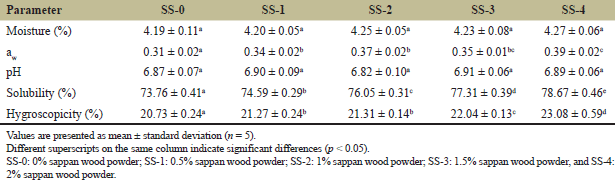
Moisture content plays an important role in determining the quality of powdered products, particularly with respect to shelf life, hygroscopicity, and texture. The moisture content of the instant beverages ranged from 4.19% to 4.27% (Table 2) and was not significantly affected by the addition of sappan wood powder, although a slight increasing trend was observed. The relatively low moisture content obtained in this study is favorable for storage stability, although the optimal moisture level depends on the product composition and storage conditions [28]. In contrast, the water activity significantly increased from 0.31 to 0.39 with the addition of sappan wood powder. Nevertheless, these aw values remain sufficiently low to restrict the growth of most microorganisms and are considered appropriate for dry powdered products [29]. The slight increase in aw may be associated with interactions between polyphenolic compounds from sappan wood and soybean proteins, which could influence the water-binding properties of the powder.
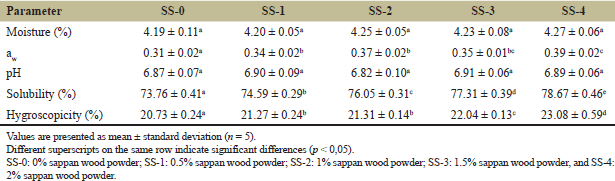 | Table 2. Physicochemical properties of instant soybean sprout-sappan wood drink. [Click here to view] |
3.2. pH
Product pH is an important parameter in instant drinks because it can affect the stability of bioactive components and sensory characteristics. Table 2 shows that the addition of sappan wood powder did not affect the pH of the resulting instant drink. The pH values ranged from 6.82 to 6.91. The pH value can be influenced by the presence of phenolic compounds, which release H+ ions, there by decreasing the product’s pH [30]. Previous studies reported that sappan wood contains high and diverse phenolic compounds, particularly brazilin [19,20]. However, the protein and mineral components in soybean sprout extract have good buffering capacity [22], so the addition of sappan wood at a concentration of 0.5%–2% did not cause drastic changes in the pH of the instant drink.
3.3. Solubility
The solubility of instant beverages made from soybean sprouts prepared using the foam mat dryer method ranged from 73.76% to 78.67% (Table 2). This value is higher than that of instant beverages made from pumpkin powder prepared using the same method, which was 62.14%–69.06% [24]. However, the solubility of the instant beverage in this study was lower than our previous product prepared by spray drying, reaching 94.02% [22]. However, the specific spray-drying technique dries components that can be completely dissolved. The equipment used is also relatively expensive, causing cost-related problems, while the foam mat dryer method can overcome this problem [26]. Interestingly, the solubility of the instant beverage increased in line with the increase in the concentration of sappan wood powder in the formula. The presence of bioactive components from sappan wood powder will increase the availability of hydroxyl groups. The higher the number of free hydroxyl groups available, the more significantly the product’s solubility increases [30]. Solubility is generally inversely proportional to the product’s water content. However, the instant drinks in this study showed more varied results. Nevertheless, the use of appropriate coating materials is key to increasing the solubility of encapsulated products. Preferred coating materials are generally hydrophilic, containing more hydroxyl groups.
3.4. Hygroscopicity
Table 2 shows that the addition of sappan wood powder encapsulated with soybean sprout hygroscopicity values ranged from 20.73% to 23.08%, with significant differences observed among treatments, except between SS-1 and SS-2, which showed comparable values extract affected the hygroscopicity of the resulting instant beverages. All instant beverage samples showed significantly different hygroscopicity among treatments, ranging from 20.73% to 23.08% (Table 2). Hygroscopicity increased with the addition of sappan wood powder to the formula, linearly with the resulting product’s solubility. Hygroscopicity is an important quality attribute of powdered foods because it influences powder flowability, caking tendency, and storage stability [31]. Lower hygroscopicity values indicate a reduced tendency of the powder to absorb moisture from the surrounding environment. Furthermore, the tendency of the product to be hygroscopic increases, which is then followed by characteristics that are more easily dissolved.
3.5. Foaming properties
The average FC and FS values of instant drinks are presented in Figure 1, ranging from 20.93% to 46.32 % and 77.99% to 91.13 %, respectively. The relatively high FC value may be associated with the protein-containing formulation, as proteins contribute to foam formation and stabilization in foam-mat drying systems [23]. The FC of instant drinks prepared by the foam mat dryer method is generally high, considering the use of foaming agents in their preparation. The increase in FC of instant drinks along with the addition of sappan wood powder can be attributed to the influence of phenolic compounds and soluble fiber, which contribute to an increase in total soluble solids, resulting in a denser foam. In contrast to FC, the addition of sappan wood powder to the formula significantly reduced the FS of the resulting instant drink. However, the FS value in this study was still better than the FS value of instant pumpkin drinks, which only reached 65.11%–78.25% [24]. This means that the phenolic compounds in sappan wood powder disrupt the foaming structure, significantly reducing its stability.
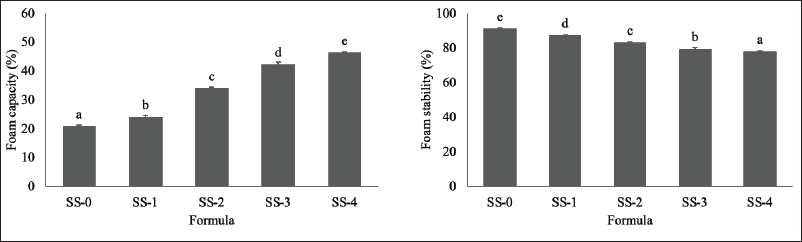 | Figure 1. Foaming capacity and stability of instant soybean sprout–sappan wood drink. SS-0: 0% sappan wood powder; SS-1: 0.5% sappan wood powder; SS-2: 1% sappan wood powder; SS-3: 1.5% sappan wood powder, and SS-4: 2% sappan wood powder. Values with the same superscript are not significantly different (p < 0.05). [Click here to view] |
3.6. Chemical properties
The phenolic and brazilin compounds in sappan wood powder are parameters that contribute to the antioxidant activity of instant drinks. Phenolic compounds have been confirmed as hydrogen donors and free radical scavengers, so the higher the phenolic content, the greater the antioxidant capacity of the drink. The test results presented in Table 3 show that the addition of sappan wood powder significantly increased antioxidant activity (21.81%–53.93% RSA), total phenolics (32.95–202.53 mg GAE/100 g), and brazilin levels (0.00–35.07 ppm). The greater the percentage of sappan wood powder added, the greater the presence of bioactive compounds produced in instant drinks. The observed increase in antioxidant activity was consistent with the increase in total phenolics and brazilin. Sappan wood is a source of brazilin and brazilein, both phenolic pigments that act as potent antioxidants through lipid oxidation inhibition and free radical scavenging mechanisms [19,20]. These results align with previous reports that polyphenols contribute to increased antioxidant activity [32]. Brazilin, a polyphenol, can neutralize hydroxyl radicals, resulting in strong antioxidant properties. Therefore, the development of instant products enriched with sappan wood as a source of brazilin has attracted considerable research interest.
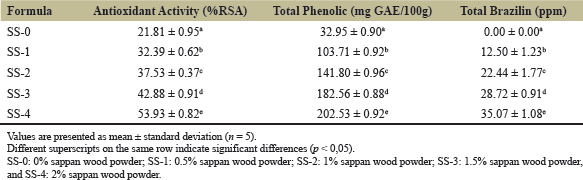 | Table 3. Bioactive compounds in instant soybean sprout–sappan wood drink. [Click here to view] |
3.7. Vitamin D
The results of the vitamin D analysis of instant drinks are presented in Table 4. Instant drinks made from control soybean extract and those supplemented with sappan wood powder were observed to contain vitamin D (12.25-16.58 IU/g). In general, there was no effect of adding sappan wood powder on vitamin D content. Instant drinks with 1.5% sappan wood powder added had the lowest vitamin D content. This finding indicates that vitamin D fortification in instant soybean-based drinks remains stable even when formulated with sappan wood powder. Vitamin D fortification of dairy products has been shown to improve vitamin D status and support calcium utilization, thereby contributing to bone health [33]. Food fortification is considered an effective strategy for improving vitamin D intake and addressing inadequate vitamin D status through commonly consumed foods and beverages [34].
 | Table 4. Vitamin D, calcium, and phosphorus content of instant soybean sprout-sappan wood drink. [Click here to view] |
3.8. Mineral content
Calcium and phosphorus levels in instant drinks ranged from 141.91 to 143.40 mg/100 g and 93.74 to 94.84 mg/100 g, respectively (Table 4). It appears that the addition of sappan wood powder, which is high in antioxidants, did not affect the presence of these minerals in instant soybean sprout extract-based drinks. Calcium levels in this study were higher than those found in instant cereal sprout drinks, which only ranged from 36.5 to 27.1 mg/100 g [35]. Calcium intake is crucial for the body, particularly for the growth and maintenance of bones and teeth. Furthermore, calcium plays a role in supporting cardiovascular health and maintaining fluid balance, which is essential for life functions [36]. Phosphorus also plays a crucial role in normal bone formation. Recent research indicates that the ideal calcium: phosphorus ratio is 1:1 (molar) or 1.3:1 (by weight). Phosphorus deficiency can result in impaired mineral deposition and the accumulation of unmineralized osteoid, which is characteristic of bone diseases such as rickets and stunted growth in children and osteomalacia in adults [37].
3.9. Calcium absorption
Calcium absorption is influenced by the availability of vitamin D. Previous studies have shown that calcium fortification of soybean sprout extract significantly increases calcium absorption [22]. In this study, calcium absorption in an instant drink with a control formula was the lowest (12.24%), while the addition of up to 2% sappan wood powder significantly increased calcium absorption to 29.51% (Fig. 2). Adequate calcium absorption is essential for maintaining calcium homeostasis and supporting bone mineralization, thereby contributing to bone health [38].
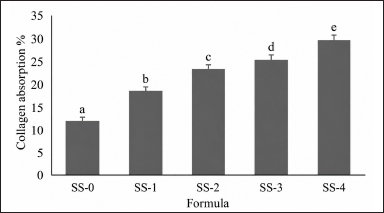 | Figure 2. Calcium absorption of instant soybean sprout–sappan wood drink. SS-0: 0% sappan wood powder; SS-1: 0.5% sappan wood powder; SS-2: 1% sappan wood powder; SS-3: 1.5% sappan wood powder, and SS-4: 2% sappan wood powder. Values with the same superscript are not significantly different (p < 0.05). [Click here to view] |
4. CONCLUSION
The foam mat drying method was successfully applied to produce an instant soybean sprout drink powder enriched with sappan wood powder as a potential bone health drink. The addition of sappan wood powder increased the water content, aw, pH, solubility, hygroscopicity, and foam density of the instant drink. Furthermore, increasing the concentration of sappan wood powder significantly enhanced antioxidant activity, total phenolic content, and brazilin content, while reducing foam stability. The addition of sappan wood powder did not significantly affect the vitamin D, calcium, or phosphorus contents of the instant drink. In addition, the calcium absorption capacity of the instant drink increased with increasing levels of sappan wood powder. Further studies on sensory properties, storage stability, microbiological quality, safety, and consumer acceptability are needed to support the development and commercial application of this product.
5. ACKNOWLEDGMENTS
The research team would like to thank the Ministry of Higher Education, Science, and Technology, Republic of Indonesia, for financial support through the Fundamental Research Grant program. [Grant Number 127/C3/DT.04.00/PL/2025; 023/LL6/PL/AL.4/2025; 021/061026/PN/PRF/SP2H/2025] named Dr. Siti Aminah.
6. AUTHOR CONTRIBUTIONS
All authors made substantial contributions to conception and design, acquisition of data, or analysis and interpretation of data; took part in drafting the article or revising it critically for important intellectual content; agreed to submit to the current journal; gave final approval of the version to be published; and agree to be accountable for all aspects of the work. All the authors are eligible to be authors as per the International Committee of Medical Journal Editors (ICMJE) requirements/guidelines.
7. CONFLICTS OF INTEREST
The authors report no financial or any other conflicts of interest in this work.
8. ETHICAL APPROVALS
This study does not involve experiments on animals or human subjects.
9. DATA AVAILABILITY
All the data are available with the authors and shall be provided upon request.
10. PUBLISHER’S NOTE
All claims expressed in this article are solely those of the authors and do not necessarily represent those of the publisher, the editors and the reviewers. This journal remains neutral with regard to jurisdictional claims in published institutional affiliation.
11. USE OF ARTIFICIAL INTELLIGENCE (AI)-ASSISTED TECHNOLOGY
The authors declare that they have not used artificial intelligence (AI) tools for writing and editing of the manuscript, and no images were manipulated using AI.
REFERENCES
1. Nikbakht Nasrabadi M, Sedaghat Doost A, Mezzenga R. Modification approaches of plant-based proteins to improve their techno-functionality and use in food products. Food Hydrocolloids 2021;118:106789; CrossRef
2. Willet W, Rocksrom J, Loken B, Springmann M, Lang T, Vermeulen S, et al. Food in the Anthropocene: the EAT-Lancet Commission on healthy diets from sustainable food systems. The Lancet 2019;393:447–92; CrossRef
3. Leroy F, Cofnas N. Should dietary guidelines recommend low red meat intake. Crit Rev Food Sci Nutr 2020;60(16):2763–72; CrossRef
4. Gerber PJ, Steinfeld H, Henderson B, Mottet A, Opio C, Dijkman J, Falcucci A, Tempio G. Tackling climate change through livestock – A global assessment of emissions and mitigation opportunities. Food and Agriculture Organization of the United Nations, 2013. Available via https://www.fao.org/4/i3437e/i3437e.pdf (Accessed 24 July 2026)
5. Chor?ziak A, Rosiejka D, Micha?owska J, Bogda?ski P. Nutritional quality, safety and environmental benefits of alternative protein sources – an overview. Nutrients 2025;17(7):1148; CrossRef
6. Ahnan-Winarno AD, Cordeiro L, Winarno FG, Gibbons J, Xiao H. Tempeh: a semicentennial review on its health benefits, fermentation, safety, processing, sustainability, and affordability. Comprehensive Rev Food Sci Food Saf 2021;20(2):1717–67; CrossRef
7. Harsono A, Harnowo D, Ginting E, Elisabeth DAA. Soybean in Indonesia: current status, challenges and opportunities to achieve self-sufficiency. IntechOpen, 2021; CrossRef
8. Bueno DB, Da Silva Júnior SI, Seriani Chiarotto AB, Cardoso TM, Neto JA, Lopes Dos Reis GC, et al. The germination of soybeans increases the water-soluble components and could generate innovations in soy-based foods. LWT 2020;117:108599; CrossRef
9. Aminah S, Suparmo, Naruki S, Wuryastuty H. Soybean sprouts inhibit bone turnover in ovariectomized rats. Pak J Nutr 2017;16(9):666–71; CrossRef
10. Aminah S, Suparmo S, Naruki S, Wuryastuty H. Consumption of elicited soybean sprout flour increases calcium level in serum of ovariectomized rats. Univ Med 2017;36(2):94–101; CrossRef
11. Gan RY, Lui WY, Wu K, Chan CL, Dai SH, Sui ZQ, et al. Bioactive compounds and bioactivities of germinated edible seeds and sprouts: an updated review. Trends Food Sci Technol 2017;59:1–14; CrossRef
12. Winarsi H, Purwanto A, Dwiyanti H. Kandungan Protein dan Isoflavon pada Kedelai dan Kecambah Kedelai. Biota J Ilmu-Ilmu Hay 2019;15(2):181–7; CrossRef
13. Wang SY, Zhang JY, Zhu GY, Shi XC, Chen X, Herrera-Balandrano DD, et al. Occurrence of isolfavones in soybean sprouts and strategies to enhance their content: a review. J Food Sci 2022;87(5):1961-82; CrossRef
14. Castelo-Branco C, Cancelo Hidalgo MJ. Isoflavones: effects on bone health. Clim 2011;14(2):204–11; CrossRef
15. Eastell R, O’Neill TW, Hofbauer LC, Langdahl B, Reid IR, Gold DT, et al. Postmenopausal Osteoporosis. Nat Rev Disea Prim 2016;2:16069; CrossRef
16. Compston JE, McClung MR, Leslie WD. Osteoporosis. Lancet 2019;393(10169):364–76; CrossRef
17. Marcucci G, Domazetovic V, Nediani C, Ruzzolini J, Favre C, Brandi ML. Oxidative stress and natural antioxidants in osteoporosis: novel preventive and therapeutic approaches. Antiox 2023;12(2):373; CrossRef
18. Mohamad NV, Ima-Nirwana S, Chin KY. Are oxidative stress and inflammation mediators of bone loss due to estrogen deficiency? A review of current evidence. Immunol Endocrine Metabolic Dis 2020;20(9):1478–87; CrossRef
19. Septiyani R, Wikandari R, Santoso U, Raharjo S. Brazilin content, color stability, and antioxidant activity of sappan wood (Caesalpinia sappan L.) traditional drink by different blanching and drying methods. Trends Sci 2024;21(12):8535; CrossRef
20. Jamaddar S, Sarkar C, Akter S, Mubarak MS, El-Nashar HAS, El-Shazly M, et al. Brazilin: an updated literature-based review on its promising therapeutic approaches and toxicological studies. South Afr J Bot 2023;158:118–32; CrossRef
21. Aminah S, Meikawati W, Hartati S, Yonata D. Consumption of corn and soybean sprouts enriched with egg shell in improving oxidative stress and estrogen depletion in ovariectomized rats. J Appl Biol Biotech 2025;13(3):31–7; CrossRef
22. Aminah S, Sulistyaningrum H, Meikawati W, Pranata B, Yonata D. Comparative evaluation of dusting dan coating methods for calcium and vitamin d fortification in soybean sprout drink powder. Res Inn Food Scie Tech 2025;14(3):229–38; CrossRef
23. Taggananurat P, Lichanporn I, Nunthachai N. Instant drink powder development from lotus root with probiotic supplement using foam mat drying method. Curr Res Nutr Food Scie 2021;9(1):293–9; CrossRef
24. Wirivutthikorn W. Effects of stevia syrup on powdered drink products from pumpkin carrot and lemongrass by foam mat drying. Curr Res Nutr Food Sci 2025;13(1):405–16; CrossRef
25. Khatri B, Hamid, Jaiswal AK. Optimizing foaming agents for shelf-stable foam-mat-dried black mulberry juice powder. LWT - Food Sci Technol 2024;205:116512; CrossRef
26. Estiasih T, Witoyo JE, Runtung GKM, Moelyono DDP, Murini AR, Setyaningsih W, et al. The characteristics of foam-mat dried red and purple roselle calyces powder prepared with commercial emulsifiers as the foaming agents. CyTA 2024;22(1):2356847; CrossRef
27. Rosidi A, Soesanto E, Sulistyowati E, Yonata D. A new approach in preparing curcumin microcapsules from temulawak (Curcuma xanthorrhiza Roxb.) extract as a source of natural antioxidants for the pharmaceutical and food industries. Curr Res Nutr Food Scie 2025;13(special issue):124–40; CrossRef
28. Michalska A, Lech K. The effect of carrier quantity and drying method on the physical properties of apple juice powders. Beverages 2018;4(1): CrossRef
29. Kowalska G, Rosicka-Kaczmarek J, Mielkiewicz K, Wiktorska M, Gumul D, Orczykowska M, et al. Influence of rye bran heteropolysaccharides on the physicochemical and antioxidant properties of honeydew honey microcapsules. Food and Bioproducts Processing 2021;130:171–81; CrossRef
30. Hasanah H, Syukri D, Ismed. Effect of maltodextrin concentration on antioxidant activity and stability of natural coloring powder of secang wood (Caesalpina sappan L) in various Conditions of Ph and temperature. Andal Int J Agr Nat Sci 2022;3(2):1-19; CrossRef
31. Chever S, Mejean S, Dolivet A, Mei F, Den Boer CM, Le Barzic G, et al. Agglomeration during spray drying: physical and rehydration properties of whole milk/sugar mixture powders. LWT – Food Sci Technol 2017;83:33–41; CrossRef
32. Leicht K, Okpala C, Nowicka P, Pérez-Alvarez J, Korzeniowska M. Antioxidant, polyphenol, physical, and sensory changes in myofibrillar protein gels supplemented with polyphenol-rich plant-based additives. Nutrient 2025;17(7):1232; CrossRef
33. Itkonen ST, Erkkola M, Lamberg-Allardt CJE. Vitamin D fortification of fluid milk products and their contribution to vitamin D intake and vitamin D status in observational studies-a review. Nutr 2018;10(8):1054; CrossRef
34. Maurya VK, Bashir K, Aggarwal M. Vitamin D microencapsulation and fortification: trends and technologies. J Ster Biochem Mol Bio 2020;196:105489; CrossRef
35. Mridula D., Sharma M. Development of non-dairy probiotic drink utilizing sprouted cereals, legume and soymilk. LWT - Food Scie Tech 2015;62(1):482–7; CrossRef
36. Pu F, Chen N, Xue S. Calcium intake, calcium homeostatis and health. Food Sci Hum Well 2016;5(1):8-16; CrossRef
37. Ciosek Z, Kot K, Kosik-Bogacka D, Lanocha-arendarczyk A, Rotter I. The Effects of Calcium, Magnesium, Phosphorus, Fluoride, and Lead on Bone Tissue. Biomolecules 2021;11(4):506; CrossRef
38. Kilim HP, Rosen H. Optimizing calcium and vitamin D intake through diet and supplements. Clev Clin J Med 2018;85(7):543–50; CrossRef